Vibesies Launches AI-Native Hosting Platform Built Around Vibe Coding
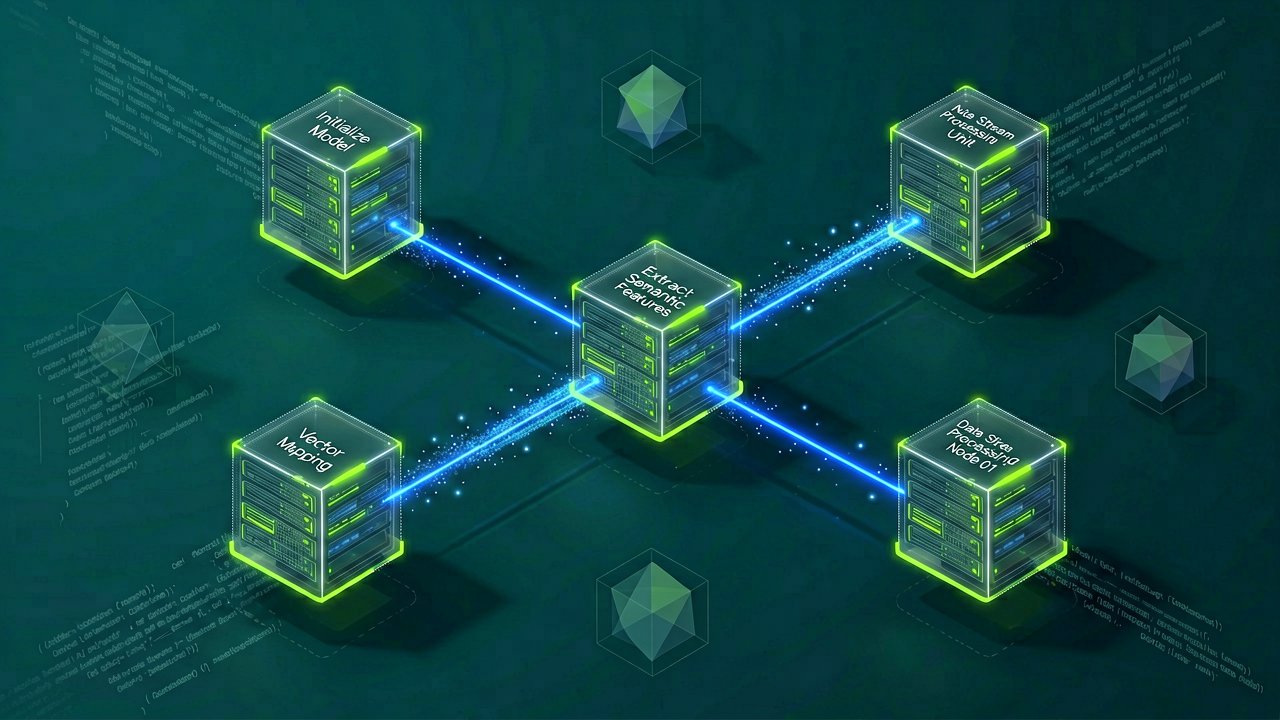
The landscape of software development is undergoing a seismic shift, moving away from rigid syntax and toward a more intuitive, conversational approach. Vibesies has officially entered the arena with its new AI-native hosting platform, designed specifically to support the growing "vibe coding" movement. This launch marks a significant milestone for developers who prioritize the creative "vibe" of a project over the granular complexities of backend configuration.
At its core, vibe coding—a term popularized within the developer community on platforms like X—refers to a workflow where high-level intent and natural language prompts drive the creation of functional code. Unlike traditional DevOps, which requires deep knowledge of containers and scaling, Vibesies automates the "plumbing," allowing creators to deploy applications as fast as they can describe them to an LLM. This shift represents a departure from the "code-first" mentality toward a "concept-first" reality.
The platform’s architecture is built from the ground up to be "AI-native." This isn't just marketing fluff; it means the environment is optimized for the erratic and iterative nature of AI-generated code. As noted by industry observers at TechCrunch, the rise of AI coding agents has created a desperate need for hosting that can handle rapid-fire deployments and instant rollbacks without the friction of manual CI/CD pipelines.
Vibesies solves the "last mile" problem of the modern stack. While tools like Cursor or Replit have mastered the art of helping users write code, the deployment phase often remains a bottleneck. By offering a "one-click" or even "zero-click" deployment path, Vibesies ensures that a successful prompt translates immediately into a live URL. It bridges the gap between a developer’s imagination and a user’s browser in record time.

The Architecture of Intuition
One of the standout features of the Vibesies platform is its integrated "Vibe-Check" diagnostic tool. Instead of cryptic log files that require a computer science degree to decipher, the platform uses its own internal LLM to explain errors in plain English. If a deployment fails because of a missing dependency or a logic loop, the system suggests the exact prompt the user should give their AI agent to fix the issue.
This approach aligns with the broader industry trend of "abstracting away the boring stuff." According to reports from The Verge, the tech industry is increasingly moving toward interfaces that favor natural language, making software creation accessible to a much wider demographic than ever before. Vibesies is positioning itself as the primary home for this new class of "non-traditional" developers.
Security in a vibe-coded world is often a concern, as AI can occasionally introduce vulnerabilities. Vibesies addresses this by implementing an automated security layer that scans AI-generated commits before they go live. This proactive "guardrail" system ensures that even if a developer isn't an expert in cybersecurity, their application doesn't inadvertently expose sensitive data or open backdoors.
The platform also introduces a unique pricing model based on "computational flow" rather than just raw CPU or RAM usage. This reflects the reality of AI-native apps, which may experience sudden bursts of activity as they iterate or interact with other agents. By tying costs to the actual "work" being done, Vibesies offers a more predictable financial path for experimental startups and solo "vibe coders."
The End of the DevOps Bottleneck
For years, the "DevOps" barrier has kept many creative ideas from reaching fruition. Developers often spend more time configuring YAML files than actually refining their user experience. Vibesies aims to kill the config file. By leveraging the same principles of the "Agentic Workflow" discussed by experts at Wired, the platform allows the hosting environment itself to act as an agent that manages its own resources.
Critics might argue that vibe coding leads to "sloppy" software, but Vibesies argues the opposite. By lowering the cost of failure and the time to iterate, developers can test more versions of their software in an hour than they previously could in a week. This rapid evolution cycle actually leads to more refined and user-centric products, as the "vibe" is constantly tuned based on real-world feedback.
Integration is another key pillar for the company. Vibesies has launched with native hooks for major LLM providers, meaning a developer can link their OpenAI or Anthropic API keys directly to their hosting dashboard. This creates a closed loop where the AI knows exactly where the code is running and can make real-time adjustments to the live environment based on performance metrics.
The platform is already seeing a surge in "micro-apps"—small, highly specialized tools built by individuals in a single afternoon. This trend mirrors the "App Store" explosion but with a much lower barrier to entry. As highlighted by Forbes, the democratizing power of AI in software development is expected to mint a new generation of "solopreneurs" who value speed and agility over traditional enterprise structures.
As we look toward the future, the success of Vibesies will likely depend on how well it can scale alongside the increasing intelligence of AI agents. If the platform can maintain its promise of "frictionless flow," it may very well become the standard for the next generation of the web. The era of manual infrastructure is fading; the era of the vibe has officially begun.
Ultimately, Vibesies isn't just selling a server; it's selling a faster path from thought to reality. In a world where the speed of execution is the only true competitive advantage, a platform built for the way we actually think—and "vibe"—is a powerful tool. Whether you're a seasoned pro looking to prototype faster or a newcomer with a great idea, the "Vibe-Native" future looks incredibly bright.
To see the platform in action or to start your first vibe-coded project, visit the official documentation and community forums. As noted by VentureBeat, the competition in the AI-developer tool space is heating up, but by focusing on the hosting layer, Vibesies has carved out a unique and vital niche in the ecosystem.
Peeling Back the Digital Curtain: The emergence of Vibesies did not happen in a vacuum, but rather as a calculated response to the "Great Abstraction" currently sweeping through Silicon Valley. While traditional cloud providers like AWS or Google Cloud offer infinite power, they also demand significant cognitive overhead that many modern developers are no longer willing to pay. Vibesies was founded by a collective of former infrastructure engineers and AI researchers who realized that the "hosting gap" was the single biggest hurdle for the burgeoning movement of agentic software creation.
The backstory of the company is rooted in the "Vibe Coding" cultural phenomenon that took over developer social circles in early 2024. This movement, characterized by using tools like Replit Agent and Claude 3.5 Sonnet to build full-stack apps via natural language, highlighted a glaring flaw: once the AI finished the code, the user was often left stranded in a world of SSH keys, DNS records, and environment variables. Vibesies was conceptualized specifically to be the "auto-pilot" for the deployment phase of this specific workflow.
Industry insiders suggest that the venture capital interest in Vibesies was driven by its unique approach to "stateful" AI deployments. Unlike static site hosts that simply serve files, Vibesies manages the entire lifecycle of an application, including its database and persistent storage, using an AI-managed orchestration layer. This allows a developer to say, "Add a user login system and store the data securely," and the platform handles the database provisioning and schema migrations automatically.
The Rise of the 'Vibe' Economy
The philosophical backbone of the company relies on the idea that "vibe" is a measurable proxy for user experience and rapid iteration. By focusing on how a developer *feels* during the deployment process, Vibesies has tapped into a demographic of creators who value psychological flow over technical pedantry. This "vibe-centric" philosophy has attracted partnerships from major AI labs who want to ensure their models' outputs have a reliable place to live on the open web.
One of the more secretive aspects of the Vibesies launch involves their "Compute-Optimized Edge" network. Unlike traditional content delivery networks that just cache data, Vibesies uses edge nodes equipped with specialized hardware to run inference locally. This means that AI-native apps hosted on their platform can process prompts and generate responses with significantly lower latency, as the logic is physically closer to the end-user than in a centralized data center.
The engineering team at Vibesies has also been vocal about their "Self-Healing Infrastructure" initiative. In this model, if an application experiences a spike in traffic that causes a memory leak, the platform doesn't just crash. Instead, an autonomous monitoring agent identifies the code block responsible for the leak, suggests a fix to the developer, and temporarily scales the resources to keep the "vibe" consistent until the patch is applied.
This proactive management style is what sets the company apart from legacy competitors. While a traditional host might send a generic "500 Internal Server Error" email, Vibesies provides a comprehensive post-mortem generated by an LLM, explaining exactly what happened in the context of the user’s recent prompts. This transparency fosters a unique level of trust between the creator and the infrastructure, reducing the "fear of the command line" that often stifles innovation.
Collaborations and Ecosystem Impact
Vibesies is also reportedly working on an open-source standard for "Vibe-Ready" code manifests. This would allow AI agents to generate a standardized file that tells any compliant hosting platform exactly what the app needs to run, regardless of the underlying language or framework. By championing open standards, Vibesies is positioning itself not as a walled garden, but as a core utility for the decentralized future of the AI-driven internet.
The impact on the education sector has been immediate. Coding bootcamps, which previously spent weeks teaching the intricacies of Linux server management, are now experimenting with Vibesies to allow students to deploy their capstone projects on day one. This shift is accelerating the rate at which "AI-literate" but "code-agnostic" individuals can enter the tech workforce and begin contributing meaningful products to the market.
Furthermore, the company has hinted at an upcoming "Vibe Marketplace," where developers can trade "agentic blueprints"—pre-configured deployment environments optimized for specific types of AI applications, such as autonomous financial bots or real-time creative writing assistants. This marketplace would allow creators to monetize the "vibe" of their infrastructure, creating a new secondary economy within the hosting space.
As the competition intensifies, Vibesies remains focused on its core mission: making the internet "prompt-able." The leadership team believes that in five years, the idea of manually configuring a server will seem as antiquated as manually dialing a telephone. By building the infrastructure for that future today, they are ensuring that when the "vibe" shifts, their platform is the one leading the dance.
The technical community remains divided on whether this level of abstraction is sustainable for enterprise-scale applications, but for the millions of "vibe coders" currently building the next wave of the web, Vibesies represents a liberation from the mundane. It is a bold bet on the idea that human creativity, when unburdened by technical friction, is the most powerful resource in the digital age.
In the coming months, Vibesies plans to expand its global footprint, with new data centers optimized for low-energy AI processing. This commitment to sustainability, combined with their radical approach to user experience, makes them a company to watch as the boundaries between "human-written" and "AI-generated" software continue to blur into a single, cohesive vibe.
Beyond the Hype Cycle: The launch of Vibesies represents more than just a new player in the crowded hosting market; it signifies the formal decoupling of "software creation" from "technical engineering." For decades, the barrier to entry for software was the mastery of syntax and infrastructure. By optimizing a platform specifically for the non-deterministic output of LLMs, Vibesies is effectively betting that the future of the web will be written in English—and that the underlying machines must learn to adapt to human ambiguity, rather than forcing humans to adapt to binary precision.
From a market perspective, this move puts immense pressure on legacy Platform-as-a-Service (PaaS) providers. Companies like Heroku or Vercel were built on the premise of simplifying the Git-to-Cloud pipeline for professional developers. However, Vibesies is targeting a different layer: the "Prompt-to-Cloud" pipeline. If the platform can successfully manage the inherent messiness of AI-generated code at scale, it could potentially capture the massive "long tail" of non-technical creators who are currently being ignored by enterprise-grade cloud solutions.
Analytically, the concept of "Vibe Coding" serves as a strategic marketing masterstroke that masks a deep technical shift toward autonomous infrastructure. By framing the service around a cultural trend, Vibesies has lowered the stakes of technical failure. In the "Vibe" economy, a bug isn't necessarily a systemic failure; it’s a prompt to be refined. This shift in developer psychology allows the platform to iterate alongside its users, creating a feedback loop where the infrastructure learns the common pitfalls of AI agents in real-time.
The Erosion of the DevOps Professional
One must consider the long-term implications for the DevOps profession. If Vibesies and its peers succeed, the role of the traditional "Systems Administrator" may undergo a radical transformation into something closer to an "AI Architect." When the platform itself acts as a self-healing, agentic entity, the need for human intervention in load balancing and resource allocation diminishes. We are witnessing the early stages of "commodity infrastructure," where the value is no longer in *how* you host, but in *what* your AI can conjure.
However, there is a significant "Analytical Red Flag" regarding the vendor lock-in potential of such platforms. By integrating so deeply with LLM providers and offering proprietary "Vibe-Check" diagnostic tools, Vibesies creates a high-gravity ecosystem. Moving an application out of an AI-native host and back into a traditional containerized environment might prove technically difficult, as the code itself may have been "vibe-tuned" for the specific guardrails and automated fixes unique to that platform.
We also need to look at the "Efficiency Paradox." AI-generated code is notoriously verbose and occasionally redundant. A platform that encourages rapid, unvetted deployments could lead to a massive bloating of digital waste. Vibesies’ "computational flow" pricing is a clever attempt to monetize this inefficiency, but from a global sustainability standpoint, the energy cost of constantly re-prompting and re-deploying "vibes" rather than writing optimized code remains an open question.
The Commoditization of Complexity
The strategic partnership potential here is also worth noting. Major cloud providers like AWS or Azure could easily acquire a niche player like Vibesies to bolster their "low-code/no-code" offerings. For a giant like Amazon, Vibesies represents a ready-made interface for the next billion users who want the power of AWS without ever seeing a single AWS Management Console screen. The platform is essentially a sophisticated "human-to-cloud" translator.
There is also the matter of security as a service. In an era where AI-generated malware is a real threat, an AI-native host like Vibesies becomes a critical filter. Their automated security layer isn't just a feature; it’s a necessity for the survival of the open web. If they can prove that "vibe-coded" apps are safer on their platform than manually-coded apps are on traditional servers, they will have found a value proposition that transcends mere convenience.
Furthermore, the data transparency of the platform provides a goldmine for LLM training. By observing which prompts lead to successful deployments and which lead to "Vibe-Check" errors, Vibesies sits on a data set that can be used to train even more capable coding agents. This makes the platform a vital part of the AI development lifecycle, not just an endpoint where code goes to live. They are effectively hosting the laboratory of the future.
In the broader context of the tech industry, Vibesies is a herald of the "Agentic Turn." We are moving away from tools that *help* us work toward agents that *do* work. A hosting platform that understands intent is the natural evolution of this trend. It suggests that in the very near future, the most valuable skill in tech won't be knowing how to write a function, but knowing how to articulate a vision clearly enough that the "vibe" translates into reality.
Ultimately, the success of Vibesies will be a litmus test for the maturity of AI-generated software. If the apps hosted there can withstand the rigors of real-world traffic and malicious actors, the skeptics of vibe coding will be forced to reconsider. It is a bold experiment in radical abstraction, and if it works, the command line might finally become a historical artifact, right next to the punch card and the floppy disk.
As we watch this space, keep an eye on the "deployment-to-user" ratio. If we see a surge in successful micro-apps that actually solve niche problems, Vibesies will have validated the idea that the "vibe" is more than just a trend—it's a new industrial standard for the speed of thought in the digital age.
“If the 2010s were about 'move fast and break things,' the 2020s are clearly about 'vibe hard and let the AI fix it.' Just remember: when your server starts quoting poetry instead of serving requests, you’ve probably pushed the vibe a little too far—but hey, at least the error logs will be beautifully written.”
Artūras Malašauskas is an AI Systems Integrator with 20+ years of production-grade web engineering experience. He has designed, shipped, and scaled enterprise Python/PHP systems for logistics, SaaS, and public-sector clients. For the past year, he has focused exclusively on AI integrations: deploying open-source LLMs, building generative media pipelines (image, audio, video), and engineering multi-agent workflows for real production environments. His standard: reproducibility, security, cost-efficient inference—no vaporware. He documents and evaluates emerging AI tooling, separating verified capabilities from marketing noise. Technical editor at: muza-ai.eu, ai-verslas.lt, ai-naujinos.lt Connect on LinkedIn
Comments