xAI Launches Grok Build: Elon Musk’s New Play for the AI Coding Crown

The race to automate software engineering just gained a high-octane competitor. Elon Musk’s AI venture, xAI, recently announced the early beta launch of Grok Build, a command-line interface (CLI) tool that transitions the company from simple conversational AI into the world of autonomous coding agents. This move follows a period of significant restructuring for the startup, which was recently folded into SpaceX to become part of a new division known as SpaceXAI.
Grok Build isn't just another chatbot; it is what the industry calls an "agentic" tool. Unlike standard LLMs that provide code snippets for you to copy and paste, Grok Build lives in your terminal and can actually execute changes across your codebase. According to early documentation, the tool allows developers to describe their requirements in natural language, which the agent then translates into a comprehensive implementation plan before writing a single line of code.
One of the standout features of this new release is its "Plan Mode." This specific workflow allows engineers to review, edit, and approve a logical roadmap generated by the AI. By giving developers a chance to vet the AI’s logic upfront, PCMag reports that the tool aims to reduce the "hallucinations" and logical errors that often plague simpler coding assistants. It’s a shift toward a more collaborative, supervisor-style relationship between the human and the machine.
Under the Hood: The Multi-Agent Architecture
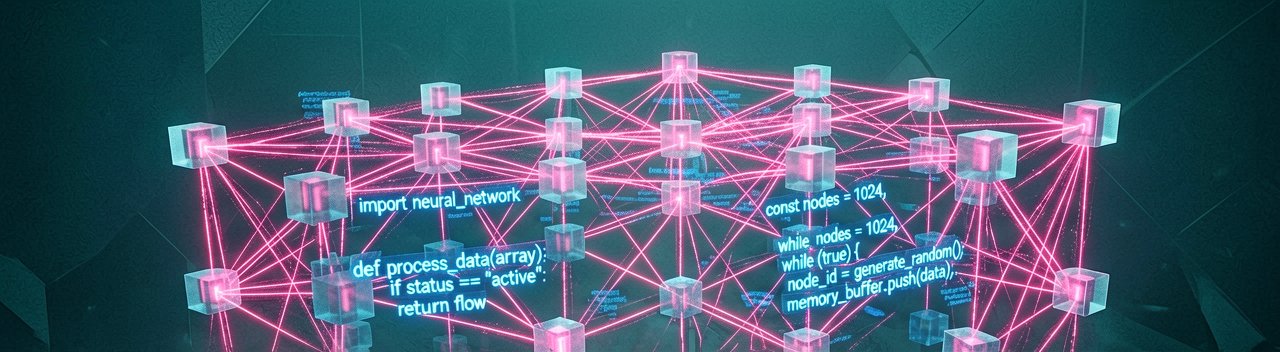
To handle the heavy lifting of modern software development, Grok Build employs a sophisticated multi-agent architecture. Instead of relying on a single model to do everything, it utilizes a "society of mind" approach where specialized sub-agents collaborate on tasks. These sub-agents can run in parallel, tackling different aspects of a project such as debugging, optimizing slow endpoints, or updating documentation simultaneously.
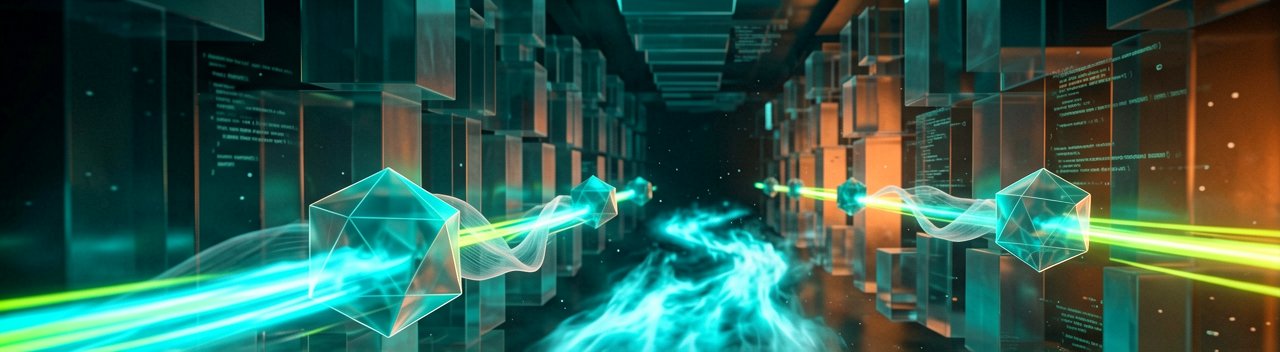
This parallel processing is visible to the user through a rich Terminal User Interface (TUI). When a command is issued, the TUI displays a live feed of active agents—sometimes dozens at a time—digging through the codebase. This level of transparency is designed to help professional developers manage large-scale projects where single-model "drift" can often lead to messy, unmanageable code changes over long sessions.
In addition to its interactive mode, Grok Build includes a "headless mode" intended for integration into existing CI/CD pipelines and automation scripts. By supporting the Agent Client Protocol (ACP), xAI is positioning the tool as an extensible platform. This means developers aren't just limited to the built-in features; they can use the CLI to build their own custom bots and orchestration apps, further embedding Grok into the enterprise dev stack.
The Competitive Landscape and Pricing
The launch of Grok Build sets up a direct confrontation with established players like Anthropic’s Claude Code and the popular AI-native editor, Cursor. Interestingly, while xAI is competing with these tools, it is also collaborating; the company recently signed a compute partnership with Anthropic and has a deal with Cursor to provide access to its massive Colossus supercomputer. It’s a "co-opetition" strategy typical of the rapidly evolving AI sector.
However, entering this ecosystem comes at a premium. Currently, Grok Build is exclusively available to "SuperGrok Heavy" subscribers, a tier that starts at a steep $300 per month. This high entry price suggests that xAI is targeting high-end professional engineers and enterprise teams rather than hobbyists. This pricing reflects the immense compute power required to run the agentic workflows, which can involve 1.5 to 2.5 times the overhead of a standard AI query.
Performance benchmarks suggest that the underlying engine—often identified as Grok-Code-Fast-1—is highly competitive. According to reports from DevOps.com, this model was trained specifically on a corpus heavy with programming content and real-world pull requests. It reportedly scores 70.8% on the SWE-Bench Verified metric, a standard measure of an AI's ability to solve real-world GitHub issues.
Building from the Foundations Up
The timing of the Grok Build release is also a signal of stability for xAI. Elon Musk recently noted that the company is being "rebuilt from the foundations up" after some initial leadership turnover. By shipping a high-utility developer tool like Grok Build, xAI is attempting to prove it can deliver more than just controversial social media commentary; it wants to be the primary engine for the next generation of software production.
For the average developer, the "SuperGrok Heavy" price tag might be a dealbreaker, but the technology inside the CLI points to a future where manual coding becomes more about orchestration and less about syntax. If Grok Build can successfully manage "clean diffs" and complex multi-file refactors as promised, it may justify the cost by significantly reducing the time-to-ship for critical features.
As the beta progresses, xAI has promised nearly daily updates and a feedback-driven development cycle. The company is actively encouraging users to use the /feedback command in the CLI to report bugs. This rapid iteration is a hallmark of the Musk-led venture, aiming to close the gap with OpenAI and Anthropic by leveraging the sheer scale of the Colossus supercomputer and the deep integration with the xAI ecosystem.
Ultimately, Grok Build represents a major pivot for xAI. It is no longer just about understanding the universe through a chat interface; it is about building the universe, one line of code at a time. Whether developers are willing to pay the premium for a "maximalist" AI agent remains to be seen, but the era of the terminal-dwelling AI engineer has officially arrived.
The Strategic Shift: Behind the rollout of Grok Build lies a significant pivot in how Elon Musk views the intersection of social media data and high-end engineering. Originally, the Grok project was framed as an "anti-woke" alternative to ChatGPT, prioritizing a humorous and uninhibited personality. However, the release of this developer-centric CLI signals that xAI is moving away from purely cultural positioning toward deep-stack utility, aiming to become the primary operating system for the next generation of software production.
The company’s recent integration into the SpaceX family, under the new SpaceXAI umbrella, provides a glimpse into the broader mission. By moving xAI closer to Musk’s aerospace operations, the goal appears to be the creation of an AI ecosystem capable of handling mission-critical, high-stakes engineering tasks. Grok Build is effectively the first public test of whether this specialized training can translate from the factory floors of SpaceX to the digital workspaces of global developers.
A key driver behind Grok Build's capabilities is the Colossus supercomputer, located in Memphis, Tennessee. This massive cluster, which utilizes 100,000 Nvidia H100 GPUs, provides the raw computational horsepower needed to run the "multi-agent" simulations required for complex coding tasks. While other AI companies rely on third-party cloud providers, xAI’s ownership of its hardware stack allows for lower latency and tighter integration between the model and the terminal interface.
The Agentic Engineering Frontier
The concept of "agentic" workflows represents the third wave of AI development. The first wave was basic autocomplete; the second was conversational assistance; and this third wave, spearheaded by tools like Grok Build, involves autonomous action. By allowing the AI to "plan" before it "acts," xAI is addressing the biggest bottleneck in current AI development: the lack of architectural foresight. Grok Build is designed to understand how a change in one file affects dependencies across an entire repository.
This autonomy is powered by what xAI calls "Grok-Code-Fast-1." This specific model iteration was fine-tuned on an unprecedented amount of synthetic and real-world code data. Unlike general-purpose models, this variant is optimized for long-context reasoning, allowing it to maintain a mental map of massive codebases. This is critical for the "SuperGrok Heavy" user base, who often work on enterprise-level projects that would overwhelm standard LLM context windows.
Furthermore, xAI is leaning heavily into the "open weights" philosophy for some of its base models, though Grok Build itself remains a proprietary service. This dual approach helps the company attract top-tier talent who are often skeptical of closed-loop systems. By providing a CLI that adheres to the Agent Client Protocol (ACP), xAI is ensuring that its tool can talk to other developer tools, preventing the kind of "vendor lock-in" that often frustrates the engineering community.
Market Positioning and the Enterprise Play
The decision to price the service at $300 per month is a calculated risk. It positions Grok Build not as a consumer gadget, but as a professional industrial tool. In the eyes of xAI leadership, if an agent can save a senior developer five hours of work per week, the subscription pays for itself within the first few days. This "ROI-first" marketing strategy is a direct challenge to the lower-cost, volume-based models of competitors like Microsoft and Google.
Interestingly, the collaboration with Anthropic and Cursor highlights a unique dynamic in the current AI arms race. While these companies compete for the same users, they are also interdependent. xAI provides the brute-force compute through Colossus, while Anthropic provides specialized reasoning models. This web of partnerships suggests that the future of AI development will not be a winner-take-all scenario, but a complex web of integrated services and hardware.
The "Plan Mode" in Grok Build is perhaps the most innovative aspect of this release from a user-experience perspective. By forcing the AI to show its work before execution, xAI is building a "trust layer" into the software. This transparency is intended to mitigate the fear of AI "breaking" code—a common concern among senior architects. It transforms the AI from a unpredictable intern into a junior partner whose logic can be audited in real-time.
Future Implications for the Dev Ecosystem
Looking forward, xAI has hinted that Grok Build is only the beginning of a suite of "Action Agents." These could eventually expand beyond coding into system administration, security auditing, and cloud infrastructure management. The goal is a unified terminal where an engineer can manage the entire lifecycle of an application through natural language commands, effectively lowering the barrier to entry for full-stack development.
The "society of mind" architecture used in Grok Build also points to a future where AI becomes increasingly specialized. Instead of one giant model trying to know everything, we will see dozens of smaller, highly efficient models working in tandem. This modular approach is not only more efficient in terms of compute but also allows for faster updates, as xAI can refine the "debugging agent" without needing to retrain the entire system.
As xAI continues its rapid iteration cycle, the industry is watching closely to see if the "Musk Factor"—characterized by speed, high capital investment, and disruptive pricing—can successfully upend the established developer toolchain. Grok Build is the first major salvo in what promises to be a very busy year for agentic AI. For now, the tool serves as a high-priced, high-performance sandbox for the world’s most ambitious engineers.
The Strategic Calculus: The launch of Grok Build is less about shipping a new feature and more about xAI claiming its territory in the high-stakes "Agentic Layer"—the emerging software tier where AI stops talking and starts doing. By bypassing the traditional GUI and heading straight for the terminal, xAI is attempting to capture the workflow of the elite engineering "power user." This is a high-conviction bet that the future of software development isn't just assisted by AI, but is fundamentally orchestrated by it, positioning Grok not as a mere assistant, but as a project-level manager.
From a market perspective, xAI’s "SuperGrok Heavy" pricing model is a fascinating experiment in price elasticity. At $300 a month, they aren't looking for mass adoption; they are looking for enterprise validation. This pricing creates a psychological "premium" that distances the tool from the "commodity AI" trap. It signals to CTOs and lead architects that this is a professional-grade asset, akin to a high-end Bloomberg terminal for the coding world, rather than a consumer-grade toy.
The "Society of Mind" approach used here—the multi-agent architecture—addresses the fundamental scaling problem of Large Language Models. Single-model systems often collapse under the weight of long-context reasoning. By delegating tasks to a swarm of sub-agents, xAI is effectively parallelizing the thinking process. This reflects a shift in AI philosophy from "bigger is better" to "orchestration is better," where the value lies in the intelligence of the routing and the precision of the sub-tasks.
The "Colossus" Advantage and Vertical Integration
One cannot analyze Grok Build without considering the sheer industrial might of the Colossus supercomputer. While competitors like Anthropic and OpenAI must negotiate for compute priority on AWS or Azure, xAI’s vertically integrated stack allows for a level of rapid iteration that is almost impossible for more bureaucratic entities. This allows xAI to push daily updates and optimize the model’s weight-precision specifically for coding-agent tasks without needing permission from a cloud provider.
This vertical integration also creates a unique feedback loop. Since Grok Build is likely being used internally to help build Grok itself, xAI is essentially its own best customer. This dogfooding process ensures that the tool's UX is refined by actual high-pressure engineering needs. When an agent fails at SpaceXAI, the engineers fixing it are the ones who built it, creating a hyper-compressed evolution cycle that could eventually leave slower-moving competitors in the dust.
However, the reliance on the Agent Client Protocol (ACP) shows that xAI is not being entirely isolationist. They recognize that for an agent to be truly useful, it must play well with existing IDEs, debuggers, and linters. By adopting open standards for agent-to-agent communication, xAI is positioning Grok Build to be the "central hub" of a developer's environment, even if the developer still uses VS Code or Cursor for the actual typing.
Risk Assessment: The Hallucination Ceiling
Despite the technical prowess, the biggest threat to Grok Build remains the "Hallucination Ceiling." No matter how many agents are in the society, if the underlying reasoning engine misinterprets a complex architectural dependency, it can introduce technical debt faster than a human can fix it. The "Plan Mode" is a clever mitigation strategy, but it places the cognitive burden back on the human supervisor, which may limit the promised productivity gains.
There is also the question of data moat. While xAI has access to real-time data from X (formerly Twitter), the value of social media data for high-level software engineering is marginal at best. The real battle is for high-quality, private codebase data. If xAI can convince large enterprises to trust Grok Build with their proprietary repositories—aided by the SpaceXAI reputation for security—it will gain a data advantage that public-web-trained models cannot match.
The timing of this launch also serves a narrative purpose. In the wake of concerns about AI models "plateauing," xAI is shifting the goalposts from model intelligence to agentic utility. It’s a move that says: "Even if the models don't get much smarter, the tools they use will." This pragmatism is likely to resonate with investors who are becoming weary of the high costs and abstract promises of general-purpose AI.
Conclusion: The Terminal-First Future
As we move into 2026, the developer's "desk" is becoming a digital cockpit. Grok Build is the first major attempt to automate the flight controls. If successful, it will redefine the role of a software engineer from a "writer of code" to a "reviewer of plans." This transition will be painful for some, but for the early adopters of the "SuperGrok" tier, it may offer a competitive edge that is simply impossible to replicate with manual labor.
Ultimately, xAI is betting that developers will value speed and autonomy over price. If a CLI can turn a three-day refactoring task into a thirty-minute supervisory review, the $300 monthly fee is a rounding error. The real test will be whether Grok Build can maintain its "clean diff" promise as projects scale into the millions of lines of code. For now, it is the most aggressive move yet toward a world where humans tell the computer "what" to build, and the AI figures out the "how."
The emergence of the "agentic developer" marks the end of the copy-paste era. We are entering the era of the supervisor. Whether this leads to a golden age of software production or a catastrophic mess of AI-generated spaghetti code depends entirely on how well these "societies of mind" can actually think before they act. xAI has laid down the gauntlet; now we wait to see if the rest of the industry can keep up with the terminal speed.
At this point, we’re paying $300 a month to let an AI do our jobs while we spend more time explaining to our bosses why the code works—which, ironically, is exactly what we were doing before, just with better formatting and significantly less coffee.
Artūras Malašauskas is an AI Systems Integrator with 20+ years of production-grade web engineering experience. He has designed, shipped, and scaled enterprise Python/PHP systems for logistics, SaaS, and public-sector clients. For the past year, he has focused exclusively on AI integrations: deploying open-source LLMs, building generative media pipelines (image, audio, video), and engineering multi-agent workflows for real production environments. His standard: reproducibility, security, cost-efficient inference—no vaporware. He documents and evaluates emerging AI tooling, separating verified capabilities from marketing noise. Technical editor at: muza-ai.eu, ai-verslas.lt, ai-naujinos.lt Connect on LinkedIn
Comments