The Ghost in the Machine: How Baldur’s Gate 3 is Shaping Ken Levine’s Judas

When the creator of BioShock speaks, the industry tends to lean in. Ken Levine, the mastermind behind some of gaming’s most philosophically dense experiences, has been relatively quiet since the closure of Irrational Games. However, his recent praise for Larian Studios and their opus, Baldur’s Gate 3, has reignited interest in his own mysterious project, Judas. Levine’s admiration isn't just professional courtesy; it’s a roadmap for where he believes the medium is headed.
In various recent discussions, Levine highlighted how Baldur’s Gate 3 managed to achieve something many thought impossible in a high-budget production: true reactivity. As reported by IGN, Levine was particularly struck by the game's ability to respect player choice without breaking the narrative logic. For a developer who has spent a decade chasing "Narrative Legos," seeing a peer execute a similar vision at such a massive scale served as both a validation and a challenge.
Levine’s current studio, Ghost Story Games, has been working on Judas for years, centered around the concept of modular storytelling. According to GameSpot, the core ambition of Judas is to create a story that reconfigures itself based on the player's specific actions, much like a deck of cards being reshuffled. While BioShock was a linear masterpiece with the illusion of choice, Judas aims to be a systemic engine where the plot is a living participant.
The Architecture of Choice
The success of Baldur’s Gate 3 proved to the market—and perhaps to Levine’s backers at Take-Two—that players have a massive appetite for complexity. Levine noted in an interview with Rolling Stone that modern audiences are tired of "golden paths." They want to see the world bleed when they cut it. This philosophy is baked into the DNA of Judas, which features a trio of "Leaders" who act as the game’s primary moral and mechanical compasses.
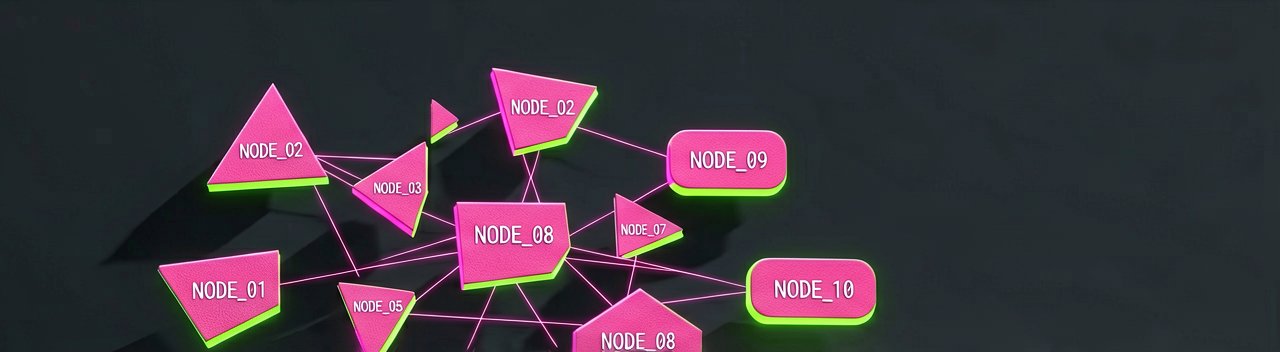
In Judas, players find themselves on a decaying space station where every alliance carries a heavy price. As detailed by PC Gamer, the game’s characters aren't just quest-givers; they are simulated entities that remember your betrayals and reward your loyalty. This echoes the intricate web of consequences found in the Forgotten Realms, where a single conversation in Act 1 can fundamentally alter the finale of the game.
Levine’s fascination with Baldur’s Gate 3 also stems from its technical bravery. Managing thousands of branching permutations is a logistical nightmare. Eurogamer notes that Levine has often spoken about the "narrative bottleneck" in game design—the point where the cost of creating content outweighs the benefit of choice. Larian smashed through that bottleneck, proving that a deep, systemic approach can be a commercial juggernaut.
Breaking the Narrative Bottleneck
The "Narrative Legos" concept Levine has been championing involves breaking down story beats into small, reusable chunks. By doing this, the game can theoretically generate unique sequences for every player. Sources at Bloomberg have previously hinted at the developmental struggles this ambition caused, but the emergence of BG3 has provided a modern proof-of-concept that such a feat is achievable with the right systemic foundation.
What makes Judas particularly intriguing in this context is its visual and mechanical pedigree. While Baldur's Gate 3 is an isometric RPG, Judas remains a first-person shooter. Transitioning that level of narrative depth into a high-octane action game is a different beast entirely. As Kotaku points out, maintaining the "immersive sim" feel while juggling a mutating script is Levine’s ultimate goal.

Levine’s praise also hints at a shift in how Judas might handle its ending. Historically, Levine’s games have relied on a "big twist" to anchor the experience. However, the multifaceted nature of Baldur’s Gate 3 suggests a move away from singular climaxes toward a more personalized conclusion. This aligns with the "fix what you broke" mantra that permeates the early trailers for Judas, as seen on via State of Play previews.
A New Standard for the Industry
The synergy between these two projects represents a turning point for AAA gaming. We are moving away from the era of cinematic "walking simulators" and back toward deep, systemic play. The Verge argues that Levine’s public endorsement of Larian’s work is a signal to other developers that the bar for "player agency" has been permanently raised. You can no longer just give the player two colored buttons at the end of the game.
There is also the matter of tone. Baldur’s Gate 3 didn't shy away from being weird, horny, or devastatingly dark. Levine’s work has always thrived in the uncomfortable fringes of the human psyche. By acknowledging the success of Larian's risks, Levine is likely emboldened to push the surrealist and satirical elements of Judas even further, as suggested by coverage in Polygon.
Ultimately, the connection between these two games is a shared belief in the player’s intelligence. Levine isn't just a fan of Baldur’s Gate 3; he’s a student of its success. As Judas moves closer to its projected release window, the influence of Larian’s breakthrough will likely be visible in how the game talks back to the player, ensuring that the legacy of Rapture and Columbia evolves into something even more reactive.
The wait for Judas has been long, but if it manages to capture even a fraction of the systemic magic found in Baldur’s Gate 3, it will have been worth it. Levine’s comments suggest a developer who is no longer working in a vacuum, but one who is inspired by a new golden age of RPG design. As GamesRadar summarizes, the dialogue between these creators is what will define the next decade of interactive storytelling.
The Architectural Blueprint: The intersection of Ken Levine’s design philosophy and the monumental success of Larian Studios marks a rare alignment of two different schools of immersive game design. While Levine pioneered the atmospheric, narrative-driven first-person shooter with BioShock, Larian Studios spent decades refining the complexity of the computer role-playing game (CRPG). The fact that Levine is looking toward Baldur’s Gate 3 as a source of inspiration suggests a significant evolution for Ghost Story Games, moving away from scripted spectacle toward a more granular, reactive systemic model.
Larian Studios, led by the charismatic Swen Vincke, took a massive gamble on Baldur’s Gate 3, remaining in Early Access for years to fine-tune its reactivity. This patient approach is something Levine surely respects, given that Ghost Story Games has been in a state of quiet iteration since 2014. As noted by Bloomberg, Levine’s transition from the massive Irrational Games to the boutique Ghost Story was intended to allow for this exact kind of experimental freedom, away from the rigid deadlines of blockbuster "content mills."
The "Narrative Lego" concept that Levine has discussed for nearly a decade is essentially an attempt to systematize the "Dungeon Master" experience. In traditional games, if you kill a character, a cutscene might change. In Levine’s new vision, killing a character might cause the game to procedurally redistribute that character’s narrative functions to other NPCs. This level of systemic flexibility is exactly what Larian Studios achieved through a massive, interconnected logic tree that tracks thousands of player variables simultaneously.
The Ghost Story Evolution
Ghost Story Games operates under the umbrella of Take-Two Interactive, yet it functions more like an independent laboratory. This unique positioning allows Levine to chase "impossible" design goals that wouldn't survive the scrutiny of a typical quarterly earnings report. According to IGN, the studio’s primary goal with Judas is to solve the problem of "one-and-done" narrative games, creating a story that is as replayable as a roguelike or a strategy game.
The technical challenge of this approach cannot be overstated. When a story is modular, the developers cannot rely on traditional cinematic pacing. Instead, they must build systems that understand emotional beats. Reports from PC Gamer suggest that Judas uses a "Priority System" to determine which dialogue or event is most relevant to the player’s current standing with the game’s various factions, ensuring the story never feels stagnant or disconnected.
Levine’s fascination with Baldur’s Gate 3 likely centers on how Larian managed to make these systems feel invisible. In many systemic games, the "math" behind the choices is obvious to the player, which can break immersion. However, as Eurogamer points out, BG3 maintains a high-fidelity cinematic feel despite its mechanical density. This is the "Holy Grail" for Levine: a game that feels like a scripted Hollywood epic but functions like a complex board game.
The Triple Threat of Judas
In Judas, the player interacts with three primary personalities—Tom, Nefertiti, and Hope. These characters aren't just allies or enemies; they are the architects of the player’s environment. As highlighted by GameSpot, your relationship with one directly affects the resources and narrative paths offered by the others. This "three-way tug of war" provides the structural skeleton upon which the modular story is hung, creating a localized version of the branching paths seen in Larian's work.
The setting of Judas, a space station called the Mayflower, serves as a petri dish for these interactions. Much like the city of Rapture, the environment is a character in itself. However, unlike Rapture, the Mayflower is designed to be disassembled and reassembled by the game's engine. Polygon has noted that this environmental reactivity is key to Levine’s vision of a game that "learns" from the player’s playstyle and adjusts its challenges accordingly.
Take-Two Interactive has been remarkably hands-off with Ghost Story Games, but the massive commercial success of Baldur’s Gate 3 has undoubtedly changed the internal conversation. When a complex, turn-based RPG becomes a cultural phenomenon, it proves to publishers that "niche" depth is actually a mass-market desire. This realization likely gives Levine more leverage to push the experimental boundaries of Judas, as documented in financial insights from MarketWatch.
Bridging the Immersive Sim Gap
The term "Immersive Sim" is often applied to Levine’s work, emphasizing player agency and emergent gameplay. Baldur’s Gate 3, while technically a CRPG, shares the immersive sim DNA by allowing players to solve problems in ways the developers never explicitly scripted. Levine’s praise is a nod to this shared lineage. As The Verge notes, both studios are fighting against the "linearization" of modern gaming, opting instead for complexity and player respect.
The collaboration between narrative and mechanics is where Judas aims to set a new standard. By using a "live" script that updates in real-time, Levine is attempting to eliminate the disconnect between gameplay and cutscenes. This mirrors the "Origin Story" system in BG3, where who you are fundamentally changes how the world talks to you. According to Kotaku, this level of personalization is the next frontier for the genre.
As we look toward the eventual launch of Judas, the shadow of Larian’s success looms large. It has set a benchmark for what a dedicated team can achieve when they prioritize systems over scripts. Levine’s public admiration for Baldur's Gate 3 is more than just a tweet or a quote; it is a declaration of intent. He is signaling that the era of the "static story" is over, and the era of the "living narrative" has finally arrived.
In the end, the success of both Judas and Baldur’s Gate 3 represents a victory for the "author-driven" blockbuster. In an industry increasingly dominated by safe sequels and live-service models, the bold visions of Ken Levine and Swen Vincke offer a different path. As GamesRadar concludes, the real winners are the players, who are finally being given the keys to the kingdom and told to drive.
The Paradigm Shift of Procedural Narrative: Analyzing Ken Levine’s fascination with Baldur’s Gate 3 reveals a deeper industry anxiety regarding the escalating costs of handcrafted content. For years, the AAA space has been locked in an unsustainable arms race of fidelity, where every branching path requires expensive voice acting, motion capture, and bespoke animation. Levine’s public pivot toward Larian’s model suggests that the future of high-budget gaming may lie in "systemic density" rather than "cinematic length." By praising a game that thrives on complexity, Levine is essentially making a case for the commercial viability of his own decade-long R&D into narrative modularity.
From a market perspective, Judas represents the ultimate test of whether the "BioShock formula" can survive in a post-linear world. The traditional immersive sim has often struggled with commercial longevity, frequently seen as a "one-and-done" experience. However, as noted by GamesIndustry.biz, Baldur’s Gate 3 shattered the myth that deep complexity is a barrier to entry. Levine is likely analyzing Larian’s UI and UX design to understand how they made thousands of variables feel intuitive rather than overwhelming to the average player.
The technical "Narrative Lego" approach is, at its heart, an algorithmic solution to a creative problem. By treating story beats as data points that can be triggered by systemic conditions, Ghost Story Games is attempting to build a narrative engine that scales without requiring an infinite budget. According to analysis by Digital Foundry, this shift requires a move away from static scripting toward a "state-based" logic where the game engine acts more like a conductor than a projector.
The Sustainability of Player Agency
One must consider the internal pressure within Take-Two Interactive. After years of development, Judas needs to be more than just a critical darling; it needs to be a structural innovator. Levine’s praise for Larian serves as a timely shield, demonstrating to stakeholders that the "systemic" approach is currently the highest-valued currency in the hardcore gaming market. As Bloomberg has highlighted, the industry is increasingly looking for "forever games," and a story that changes every time you play is a compelling answer to that demand.
There is also the "Larian Effect" on player expectations to consider. Before 2023, players might have forgiven a game for "invisible walls" or restricted dialogue options. Now, as PC Gamer argues, the standard for reactivity has been set so high that even a Ken Levine project will be scrutinized if it feels too curated. Judas is no longer competing with the legacy of BioShock; it is competing with the freedom of Baldur's Gate 3, which is a much more demanding benchmark.
Levine’s focus on "Leaders" in Judas—characters who react to player betrayals—is a direct play into the social-media-driven "emergent moment" economy. Games like BG3 went viral because players could share unique, bizarre outcomes that felt personal to them. By building Judas around a modular framework, Levine is ensuring that his game provides the same kind of "did that really happen?" watercooler moments that drive organic marketing in the modern era, as observed by The Verge.
Decoding the "Lego" Logic
Analytically, the "Narrative Lego" concept also addresses the "ludo-narrative dissonance" that has plagued action games for decades. In many titles, the character you are in cutscenes doesn't match the character you are during gameplay. By making the story a direct consequence of systemic actions, Judas aims to bridge this gap. IGN reports that this involves a high degree of "procedural dialogue," where lines are stitched together based on the player’s specific history with an NPC.
This approach isn't without significant risks. Procedural systems can often feel "thin" or "soulless" compared to hand-written arcs. Levine’s challenge is to inject the same philosophical weight found in BioShock into a machine-managed narrative. The success of Baldur’s Gate 3 proved that you can have both—depth and systems—but it required a level of polish that few studios can maintain. Ghost Story Games is essentially betting the house on their ability to solve this logic puzzle, as noted by GameSpot.
Furthermore, the move toward systemic storytelling reflects a broader trend in software development: the shift from "products" to "platforms." Levine isn't just making a game; he's building a story-delivery platform that could theoretically be reused for future titles. If Judas succeeds, the underlying "Lego" architecture could become Take-Two’s most valuable intellectual property, allowing for the rapid creation of highly reactive worlds across different genres.
The Final Verdict on Agency
The dialogue between Levine and the work of Larian Studios signals the end of the "Director’s Cut" era of gaming. We are entering an age where the player is a co-author rather than a passenger. Eurogamer suggests that this transition is necessary for the medium to distinguish itself from film and television. Levine, always a critic of "passive" storytelling, seems to have found his North Star in the chaotic, player-led systems of modern CRPGs.
We should also look at the competitive landscape. With other industry veterans like Hideo Kojima pushing toward "social" or "transmedia" experiences, Levine’s doubling down on "systemic narrative" keeps him relevant in a crowded field. The "analytic" win here is that Levine has recognized his competition isn't just other shooters; it's any experience that offers the player a sense of genuine autonomy, a sentiment echoed by Polygon.
In conclusion, the praise for Baldur’s Gate 3 is a strategic admission that the old ways of building blockbusters are dying. Whether Judas can actually deliver on its ambitious "modular" promise remains the industry’s most expensive question mark. But with Larian providing the proof-of-concept, the pressure is on Levine to show that his "Narrative Legos" can build something just as sturdy and twice as revolutionary.
“We’ve spent decades asking games to let us tell our own stories, and now that Ken Levine and Larian are actually doing it, we’re all collectively realizing that our ‘own stories’ usually involve accidentally blowing up our favorite NPCs within twenty minutes. Careful what you wish for—at least in a linear game, you could blame the writer for the tragedy; in Judas, the mess you make is legally yours to keep.”
Artūras Malašauskas is an AI Systems Integrator with 20+ years of production-grade web engineering experience. He has designed, shipped, and scaled enterprise Python/PHP systems for logistics, SaaS, and public-sector clients. For the past year, he has focused exclusively on AI integrations: deploying open-source LLMs, building generative media pipelines (image, audio, video), and engineering multi-agent workflows for real production environments. His standard: reproducibility, security, cost-efficient inference—no vaporware. He documents and evaluates emerging AI tooling, separating verified capabilities from marketing noise. Technical editor at: muza-ai.eu, ai-verslas.lt, ai-naujinos.lt Connect on LinkedIn
Comments