The Race to the Robot Phone: Honor Sets September Deadline for AI-Driven Flagship
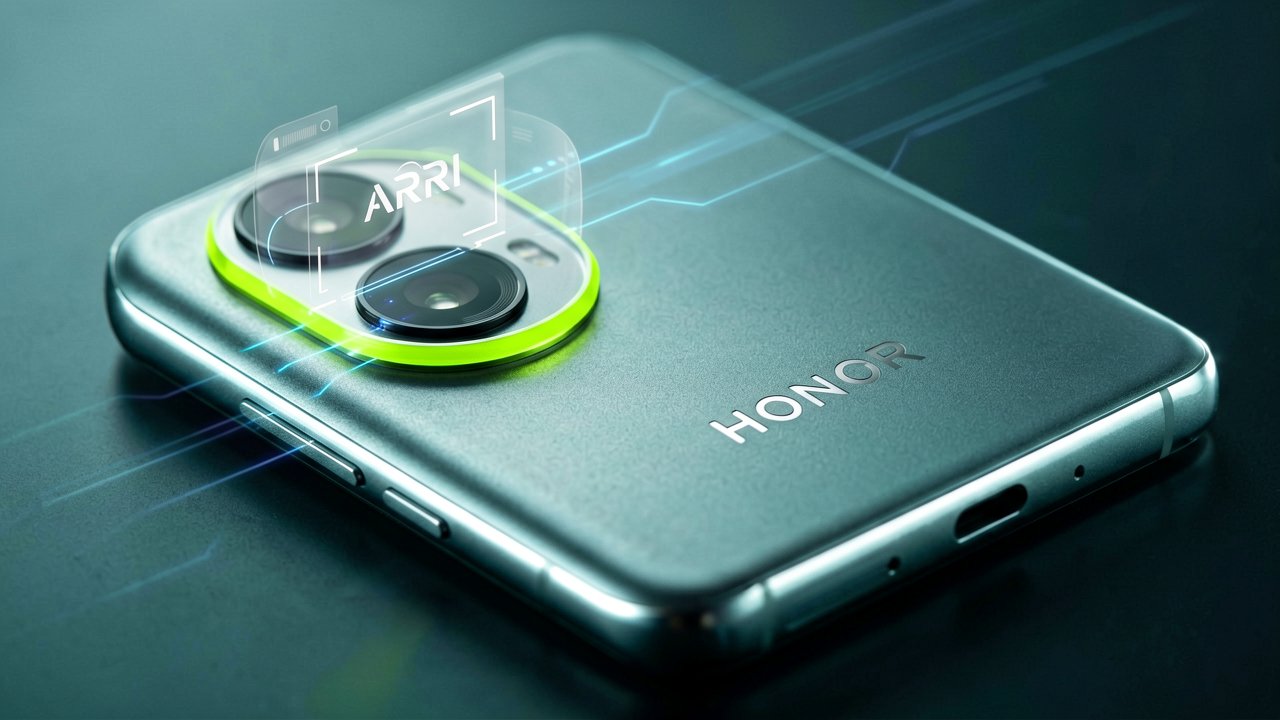
The smartphone industry is standing on the precipice of a hardware renaissance, and Honor seems determined to be the one to push it over the edge. According to recent executive briefings, the company is fast-tracking the release of what they are calling a "robot phone." This isn't just a marketing buzzword; the device is expected to integrate deep generative AI that anticipates user needs, moving the handset from a passive tool to an active assistant. Honor’s CEO has signaled that this milestone device will hit the market before the end of September.
Central to this launch is the promise of a "personal agent" residing within the silicon. Unlike the voice assistants of the past decade, this AI is built on a foundational model capable of understanding complex intent. Industry analysts suggest that Honor is leveraging its independence to outpace legacy competitors in the software-hardware integration space. This push is part of a broader strategy to redefine the smartphone as an autonomous digital entity rather than a mere window to the web.
While the AI brains are the headline, the "eyes" of the device are equally impressive. Honor has officially extended its partnership with ARRI, the world-renowned manufacturer of motion picture film equipment. For mobile photography enthusiasts, this collaboration represents a significant shift toward "cinematic" output. The upcoming flagship is rumored to feature professional-grade color science and lighting algorithms tuned by ARRI engineers to mimic the look of high-end Hollywood productions.
Cinema in Your Pocket

The partnership with ARRI isn't just about a logo on the back of the chassis. Reliable reports indicate that the new "robot phone" will include specialized video modes designed to handle dynamic range and skin tones with the same nuance found in Alexa cameras. By bringing ARRI’s optical expertise to the mobile sector, Honor aims to bridge the gap between amateur social media clips and professional cinematography, making high-fidelity storytelling accessible to the average consumer.
Strategically, the September launch window is no accident. By releasing before the month’s end, Honor is positioning itself directly against the annual refresh cycles of the industry’s biggest players. It is a bold move that suggests supreme confidence in their "robot" functionality. If the device can truly perform autonomous tasks—such as scheduling, intelligent photo sorting, or context-aware messaging—it may disrupt the typical upgrade fatigue currently felt by many flagship users.
The hardware under the hood is expected to be just as cutting-edge. To support the intensive on-device AI processing required for a "robot" experience, the handset will likely utilize the latest high-performance chipsets from Qualcomm. These processors are specifically designed to handle NPU-heavy workloads, ensuring that the AI agent responds in real-time without draining the battery or relying constantly on cloud servers, which also bolsters user privacy.
The Evolution of MagicOS

Much of the "robot" magic will be delivered through a new iteration of MagicOS. This software layer acts as the nervous system for the device, coordinating between the ARRI-tuned camera sensors and the AI logic. Early leaks suggest a "Magic Portal" feature that allows users to drag and drop content between apps with predictive accuracy. For example, dragging a restaurant name from a text directly into a ride-sharing app with a single gesture, bypassing several manual steps.
From a design perspective, we expect a blend of aesthetic elegance and functional durability. Honor has been pushing the boundaries of foldable technology and thin-and-light designs recently. Whether the robot phone will be a traditional slab or a new form factor remains to be seen, but the emphasis on ergonomics suggests a device intended for heavy, all-day interaction. The integration of advanced materials might also play a role in managing the heat generated by the ARRI camera's high-bitrate video processing.
Market reception will ultimately depend on whether the "robot" features feel like genuine utility or just another layer of digital noise. However, Honor's track record of rapid innovation gives them a fighting chance. By focusing on the dual pillars of high-end imaging and proactive artificial intelligence, they are targeting the two most used features of any modern smartphone. The synergy between a smart assistant and a world-class camera could be the "killer app" the brand needs.
Looking Toward a Post-App World
The concept of a robot phone hints at a "post-app" future where the OS handles the heavy lifting. Instead of navigating through a sea of icons, the user simply interacts with the agent. This shift aligns with broader industry trends seen at major tech conferences this year. Honor’s decision to move fast and break ground in September shows a desire to lead this paradigm shift rather than follow it, setting a high bar for the final quarter of the year.
As we approach the late September reveal, the tech community is buzzing with anticipation. Will the ARRI collaboration finally provide the "film look" that mobile users have craved? And will the AI truly act as a robotic assistant, or just a smarter Siri? The answers are only weeks away. One thing is certain: Honor is no longer content playing second fiddle, and their "robot" ambitions are a clear shot across the bow of the global smartphone market.
In conclusion, the intersection of cinematic history and futuristic AI makes this upcoming launch one of the most intriguing events of the year. With the deadline looming, all eyes are on Honor to see if they can deliver on the promise of a device that doesn't just sit in your pocket, but thinks on its feet. Stay tuned as we cover the official unveiling and put these "robot" claims to the ultimate test in the real world.
Inside the Silicon Shift: The transition from a static smartphone to a "robot phone" represents a fundamental pivot for Honor, a brand that has spent the last few years aggressively carving out its own identity after separating from its former parent company. This upcoming September event is not merely a product refresh; it is a declaration of independence through technical maturity. By positioning itself at the intersection of cinematic heritage and generative AI, Honor is attempting to capture the premium market segment that values both creative expression and extreme productivity.
The Legacy of ARRI and Mobile Optics
The collaboration with ARRI is particularly significant given the company's century-long history in professional filmmaking. ARRI has been the gold standard for Hollywood since the silent era, and their Alexa camera systems are the preferred choice for Academy Award-winning cinematographers. By integrating ARRI’s proprietary color science into a mobile chipset, Honor is targeting a specific niche of "prosumers" who are disillusioned with the overly processed, artificial look of standard smartphone photography.
This technical partnership focuses heavily on the "Image Processing Pipeline." Unlike basic filters, the ARRI integration involves hardware-level tuning of the Image Signal Processor (ISP). This allows the device to handle light and color with a logarithmic-like curve, preserving detail in high-contrast scenes that would typically be blown out on a standard handset. It is a move designed to appeal to the "aesthetic" movement in social media, where cinematic textures are currently trending over hyper-sharp digital clarity.
The Architect of the Robot Phone
Honor’s internal research and development teams have been working on the "Intent-based UI" for several years. The "robot" moniker refers to the phone’s ability to use "cross-app awareness." This means the device’s AI doesn't just wait for a command; it observes user patterns to predict the next logical action. If you receive a flight confirmation email, the phone may autonomously suggest a calendar entry, a packing list, and a weather update for your destination without you opening a single extra app.
To power these heavy computations, Honor has leaned into its long-standing relationship with Qualcomm. The two companies have collaborated to ensure the Snapdragon platforms used in these flagship devices are optimized for "low-latency AI." This is crucial because for a phone to feel "robotic" and responsive, the processing must happen locally on the device. Any delay caused by sending data to the cloud would shatter the illusion of a seamless personal assistant.
Strategic Market Positioning
The timing of the launch—scheduled before the end of September—is a tactical masterstroke aimed at the "Golden Week" in China and the lead-up to the global holiday shopping season. By launching just as competitors are releasing their own annual updates, Honor is betting that the unique ARRI branding and the "robot" software will be enough to lure away consumers who are tired of incremental hardware changes. It is a high-stakes gamble on the "value of intelligence" over the "value of specs."
Furthermore, Honor’s global expansion strategy relies heavily on these high-profile partnerships to build brand trust in Europe and other international markets. While the brand is already a household name in Asia, the association with a prestige European brand like ARRI helps elevate its status in the eyes of Western tech enthusiasts. This "East meets West" approach to engineering and marketing is becoming a hallmark of Honor’s recent corporate trajectory.
The Role of Generative AI
While many companies are simply adding chatbots to their operating systems, Honor is integrating generative AI into the OS kernel itself. This "MagicLM" (Honor’s Large Language Model) is designed to be multimodal. This means the "robot phone" can see through the camera, hear through the microphone, and "read" the screen simultaneously to provide contextually relevant help. It is the closest the industry has come to a truly proactive digital companion.
For instance, during the September unveiling, Honor is expected to demonstrate how the AI can assist in video editing. By analyzing the footage captured via the ARRI-tuned sensors, the AI can automatically identify the best "cinematic" moments, apply professional color grading, and suggest a soundtrack that matches the emotional tempo of the scene. This level of automated creativity is what Honor believes will define the "robot" era of mobile technology.
Privacy in the Age of Autonomy
With great power comes the need for great privacy, a topic Honor has been vocal about. For a "robot phone" to be effective, it needs access to a vast amount of personal data. To mitigate concerns, the company has implemented a "TEE" (Trusted Execution Environment) that keeps AI learning local to the device. This ensures that while the phone "knows" you better than anyone else, that data never leaves the hardware, aligning with modern data protection standards.
As we look toward the final reveal, the industry is watching to see if Honor can successfully bridge the gap between niche professional tools and mass-market consumer electronics. The "robot phone" is more than a product; it is a test case for whether AI can truly transform our primary communication tool into something more than just a screen. If successful, Honor may well be the architect of the next great evolution in personal computing.
Ultimately, the success of this launch will be measured by the "Magic" it brings to the user experience. By combining the century-old soul of ARRI’s cameras with the cutting-edge brain of modern AI, Honor is making a play for the future. The September deadline is fast approaching, and the tech world is ready to see if this "robot" can live up to the immense hype generated by its creators.
Reading Between the Lines: The arrival of the "Robot Phone" signals a pivotal shift from passive hardware to what Honor describes as "Embodied AI." By integrating a physical 4DoF (four-degrees-of-freedom) gimbal system—the smallest in the industry—into a handset, the company is attempting to solve the fundamental friction of mobile content creation: the need for external stabilization and manual tracking. This isn't just about adding a motor; it is about delegating the mechanical act of filming to an AI agent, allowing the user to remain a participant rather than just a cameraman.
The collaboration with ARRI is the analytical "anchor" that gives this mechanical experiment professional credibility. While other manufacturers have partnered with legacy camera brands for lens coatings or color filters, Honor is the first to integrate core elements of ARRI Image Science directly into a consumer device. This suggests a move away from the "computational look" of traditional smartphone HDR toward a more authentic, cinematic "roll-off" and color depth. It is a strategic play to capture the "prosumer" market that has traditionally viewed smartphones as inferior to dedicated cinema tools.
A Tactical Disruption of the Q3 Cycle
By confirming a launch window between July and September, Honor is positioning the Robot Phone as a high-concept alternative to the predictable iterative updates from market leaders. Analysts suggest that the device serves as a "halo product"—a showcase of technical prowess intended to elevate the entire brand's prestige. Even if sales volume is limited by its specialized nature, the Robot Phone establishes Honor as the primary innovator in "Intent-based" hardware, where the OS anticipates movement as much as it does text input.
The hardware architecture, likely featuring a high-performance Qualcomm Snapdragon NPU, is essential for the "robot" personality to function without lag. This on-device processing allows the phone to perform emotive gestures, such as "nodding" to agree or "shaking its head" to disagree, creating a more human-centric interface. This shift toward "Augmented Human Intelligence" reflects a broader industry trend where the device becomes an active digital twin, capable of managing tasks across an open ecosystem rather than just within siloed apps.
The Risk of Mechanical Complexity
However, the inclusion of a 360-degree rotating gimbal introduces significant mechanical risks that the industry has spent a decade trying to eliminate. Moving parts are traditional failure points for water resistance and long-term durability. Honor’s success will depend on proving that their micro-motor—smaller than a 10-cent coin—can withstand the rigors of daily pocket life. If the gimbal proves fragile, the "Robot Phone" risks being remembered as a brilliant but impractical novelty rather than a market-defining evolution.
From a software perspective, the integration of an always-on AI Agent poses a unique challenge for privacy and power management. To succeed, Honor must ensure that the "Robot" doesn't become a battery-draining surveillance tool. The company has leaned heavily on its privacy architecture to reassure users that the AI’s "learning" happens locally. This balance between proactive assistance and user security will be the ultimate litmus test for the device's viability in Western markets where data sovereignty is a top-tier consumer concern.
Defining the Post-Smartphone Era
Ultimately, Honor is betting that the "smartphone" as we know it has reached its ceiling. The Robot Phone represents the first step into a "post-app" world where the interface is fluid and physical. By merging professional cinema standards with autonomous robotics, they are creating a new category entirely. Whether the world is ready for a phone that can "dance" to the beat of music or track a hiker through a forest remains to be seen, but the bold September deadline ensures we won't have to wait long for the answer.
The synergy between the 200MP sensor and ARRI’s science could finally deliver on the elusive promise of "Hollywood in your pocket." For creators, the ability to record steady, professional-grade footage without a DJI Osmo or a tripod is a game-changer. For the average user, the "personality" of a nodding, responding phone might just be the spark needed to make technology feel personal again. As September approaches, the industry is less focused on the specs and more on the experience: can a phone really be a friend?
In the broader competitive landscape, this launch puts pressure on Apple and Samsung to move beyond software-only AI updates. If Honor can successfully commercialize a "moving" camera system, it renders traditional OIS (Optical Image Stabilization) obsolete for high-end video. The "Robot Phone" isn't just a new product; it's a challenge to the entire industry to think outside the slab. Honor is no longer just following the trend; they are building the robot that leads it.
Only time will tell if a phone that can do a backflip is the future of communication or just the most expensive desk toy ever made—but at least when it fails to find your keys, it can now shake its head in disappointment right along with you.
Artūras Malašauskas is an AI Systems Integrator with 20+ years of production-grade web engineering experience. He has designed, shipped, and scaled enterprise Python/PHP systems for logistics, SaaS, and public-sector clients. For the past year, he has focused exclusively on AI integrations: deploying open-source LLMs, building generative media pipelines (image, audio, video), and engineering multi-agent workflows for real production environments. His standard: reproducibility, security, cost-efficient inference—no vaporware. He documents and evaluates emerging AI tooling, separating verified capabilities from marketing noise. Technical editor at: muza-ai.eu, ai-verslas.lt, ai-naujinos.lt Connect on LinkedIn
Comments