Transfon Launches GenDiscover AI Agent Platform for Publishers

Transfon announced the launch of GenDiscover, an on-site AI agent platform designed to help digital publishers monetize generative AI interactions without losing traffic to external assistants. The platform deploys three distinct agents—Chat, Search, and Discover—directly onto publisher domains, creating a new revenue channel through conversational ads while retaining audience data and SEO equity.
The announcement came via PRWeb on May 14, 2026, positioning the launch as a direct response to the structural pressure publishers face from AI assistants that summarize content and pull readers away from source sites.
According to Bruce Dou, Director at Transfon, publishers are being squeezed between AI assistants that summarize their work and a display ad market under structural pressure. GenDiscover flips that dynamic by making the same AI that has been pulling readers off publisher sites become the engine that keeps them there longer—and monetizes every conversation.
The three agents serve distinct functions. AI Chat lets readers hold conversations grounded in the publisher's own articles, with the agent answering questions from the content library and linking back to full articles. AI Search replaces keyword-based site search with natural-language understanding—a reader who types "what happened with the merger" gets a direct, sourced answer rather than 50 keyword matches. AI Discover provides AI-powered recommendations that learn reader preferences in real time, with publishers reporting readers engage with 3x more articles per session compared with static "related articles" modules.

Each session serves conversational ads matched to real-time intent. This represents a fundamental shift from traditional display advertising. The ads appear inside the flow of a reader's questions, not in sidebars that readers ignore. Targeting matches the active query rather than historical browsing, and the system is cookieless by design—using conversation context with no third-party tracking.
Early deployments are generating materially higher yield than comparable display inventory. The conversational ads run alongside existing display placements, not instead of them, making the revenue additive rather than cannibalizing. Publishers join through a revenue-share model with zero upfront cost.
GenDiscover is not a syndication platform. The agents run on the publisher's domain, meaning publishers retain the audience, the first-party data, and the SEO benefit of deeper engagement. This distinction matters significantly in an era where many AI platforms extract value by pulling traffic to their own properties.
The platform is available now to selected digital publishers. Transfon works hands-on with each partner to deploy, tune, and grow revenue—this is not a self-serve banner network. Publishers can apply at publisher.gendiscover.com or learn more at gendiscover.com.
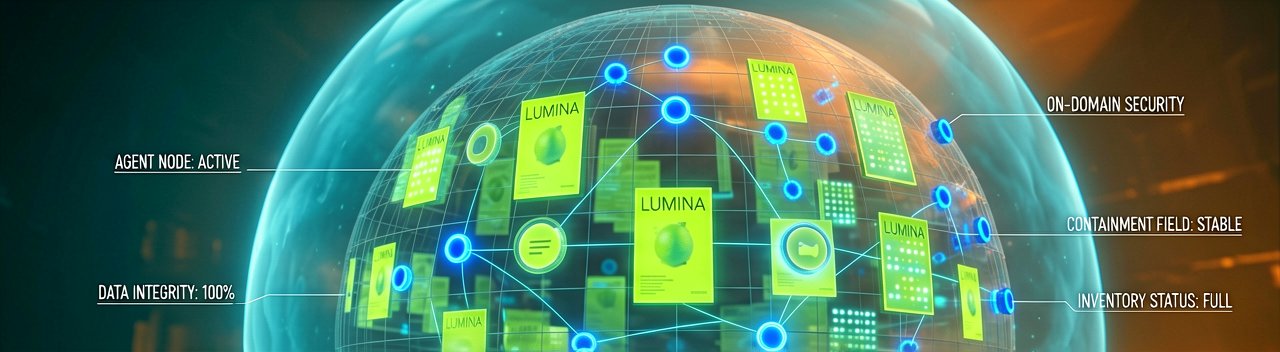
Transfon's broader product suite includes UniConsent (consent management platform), UniSignIn (first-party audience growth), PubPerf (performance and revenue analytics), BiddingStack (header bidding for web and apps), and now GenDiscover (LLM-native advertising and AI agents). The company builds end-to-end technology stacks for digital publishers, helping them stay compliant, grow first-party audiences, optimize ad revenue, and now monetize the AI-driven web.
The timing reflects a critical inflection point. As generative AI redirects audiences away from publisher sites and accelerates the decline of traditional display revenue, GenDiscover gives digital publishers a way to put AI to work on their own domains. The platform keeps the traffic, the first-party audience data, and the SEO equity of longer sessions, while opening a new revenue channel that grows as conversational usage grows.
From a technical implementation perspective, the deployment is straightforward. Publishers can go from zero to AI-powered in minutes by providing their RSS feed or adding a lightweight SDK. The widgets go live on the site, readers start interacting with AI, and publishers monitor engagement while earning revenue from chat ads.
The platform operates as an LLM SSP (supply-side platform) for publishers, providing AI Chat and AI Search ad inventory. For advertisers, it serves as an LLM DSP (demand-side platform) to buy contextual chat ad placements within AI conversations across a premium publisher network.
There are tiered options available. The Discovery Agent tier is completely free with ads, while the Full Agentic Suite operates on a revenue share model with advanced analytics and custom branding. A Content Partnership tier offers enhanced revenue share with full articles appearing on GenDiscover web and mobile apps.
The physical experience for readers changes noticeably. Instead of clicking through multiple search results pages, users type natural questions and receive direct answers sourced from articles. The interaction feels more like talking to a knowledgeable editor than browsing a database (which is exactly what most people want, honestly).
For publishers, the dashboard experience shifts from monitoring impressions and click-through rates to tracking conversation depth, session length, and intent-based ad performance. The metrics become more granular and more meaningful to actual reader engagement.
Whether this model scales beyond early adopters remains the real question. The hands-on deployment approach limits how quickly Transfon can onboard publishers, and the revenue-share model means the company's incentives align with publisher success—but only if the conversational ad format actually outperforms traditional display at scale.
The technology addresses a genuine problem: AI assistants are extracting value from publisher content without compensating creators. But the solution requires publishers to trust a new vendor with their content indexing and ad serving, which is a non-trivial decision for any media company.
Time will tell if conversational ads can sustain the yield improvements claimed in early deployments. For now, the platform represents one of the first serious attempts to turn AI from a traffic threat into a revenue opportunity—though whether readers will actually tolerate ads embedded in their AI conversations is another matter entirely.
Artūras Malašauskas is an AI Systems Integrator with 20+ years of production-grade web engineering experience. He has designed, shipped, and scaled enterprise Python/PHP systems for logistics, SaaS, and public-sector clients. For the past year, he has focused exclusively on AI integrations: deploying open-source LLMs, building generative media pipelines (image, audio, video), and engineering multi-agent workflows for real production environments. His standard: reproducibility, security, cost-efficient inference—no vaporware. He documents and evaluates emerging AI tooling, separating verified capabilities from marketing noise. Technical editor at: muza-ai.eu, ai-verslas.lt, ai-naujinos.lt Connect on LinkedIn
Comments