Work Optional Rebrands from Radiant AI, Targets Robotics by 2027

The AI automation firm Work Optional officially rebranded from Radiant AI on May 14, 2026, unveiling a new headquarters in Eagle, Idaho, alongside a multi-year roadmap that extends into applied robotics. The announcement, distributed through GlobeNewswire, marks a strategic pivot from proving a model to scaling it across construction, manufacturing, healthcare, and government sectors.
Christian Brown, Founder and CEO of Work Optional, framed the rebrand as a sharpened mission statement rather than a cosmetic refresh. "Radiant AI was where we proved the model. Work Optional is where we scale it," Brown stated. The company's new name doubles as its value proposition: when AI is implemented thoughtfully, work becomes optional. Not obligatory. The promise is straightforward—clients want their evenings back, margins protected, and teams focused on compelling tasks rather than repetitive workflows.
The physical footprint of this ambition now has an address. Work Optional's new office sits at 500 E. Shore Dr., 2nd Floor, Eagle, ID 83616. The space serves as the company's marketing, design, engineering, and client delivery hub. It will host client workshops, AI strategy sessions, and the growing teams behind the automation practice. This anchors the firm's commitment to building a leading AI automation presence in the Mountain West region.
Industry coverage from AiThority corroborates the scope of the announcement and the roadmap details. The coverage notes that Work Optional builds AI automation, custom AI agents, and tailored software for industries where time, accuracy, and trust are non-negotiable. Engagements begin with client discovery and automation assessment, then progress into custom-built AI software, agents, integrations, and proprietary systems.
The roadmap is organized around three distinct horizons. Horizon one, labeled "Now," focuses on proprietary AI software and AI automation. Work Optional designs and deploys 1-of-1 AI software and agentic AI workflows that take action across email, documents, line-of-business systems, and the web. These agents handle estimating support, document review, intake, scheduling, compliance, and back-office operations. The physical reality of this work involves clicking through dashboards, reviewing flagged documents, and managing exception cases that fall outside the automation's confidence thresholds.
Horizon two targets Q2 2027 with custom AI agents and multi-agent systems. The firm is expanding its custom AI agent practice, building purpose-built agents and software platforms for individual clients and verticals. Deep integrations into construction, manufacturing, healthcare, accounting, government, and excavation industries will connect to the systems firms already rely on. This is where the rubber meets the road—agents that don't just summarize data but actually execute workflows across multiple platforms simultaneously.
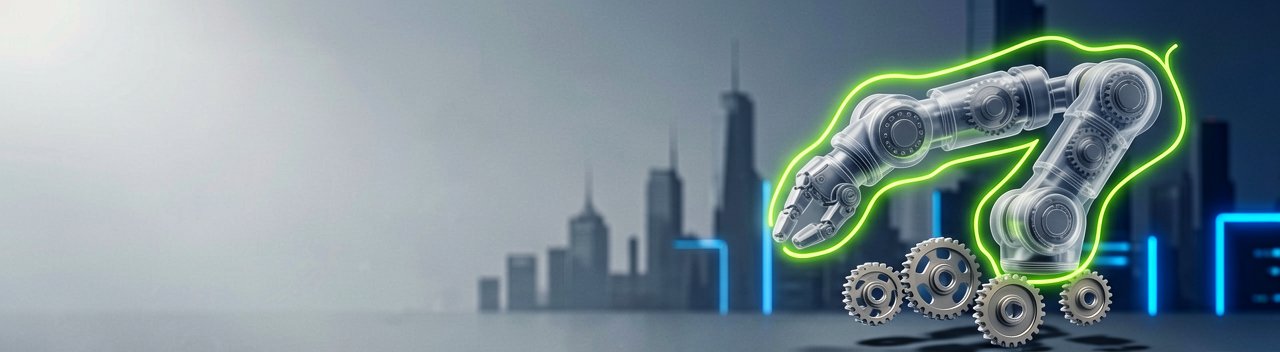
Horizon three arrives in Q4 2027 with robotics. Work Optional plans to extend its agentic AI capabilities into the physical world through applied robotics. Use cases will begin in construction, excavation, and manufacturing where digital agents and physical systems can work together on the job site and on the shop floor. This is the most ambitious stretch of the roadmap, moving from software that automates clicks to machines that move materials and perform physical tasks.
The industries served reflect a deliberate focus on sectors where accuracy and trust matter more than speed alone. Construction, excavation, manufacturing, accounting, healthcare, government, architecture, engineering, marketing, and education all appear on the list. These are industries where a wrong calculation or missed compliance requirement carries real consequences. The software needs to fit the way each client already works, not the other way around.

The new website, workoptionalai.com, showcases services, industry expertise, client success stories, resources, and the company's evolving point of view on agentic AI and the path to robotics. It serves as the public face of the rebrand, replacing the Radiant AI identity that proved the underlying model over previous years.
Press inquiries are handled by Jonathan Marshall, VP of Marketing at Work Optional. The contact email listed is [email protected]. This centralizes media relations as the company scales its public presence alongside its technical capabilities.
The rebrand timing aligns with broader industry shifts in how enterprises approach AI implementation. Many companies have invested billions in voice bots, chat deflection, self-service portals, and IVR routing over the past decade. But the people running operations behind those interactions received none of it. Work Optional's approach targets the back office and operational workflows that have been largely ignored by consumer-facing AI investments.
General-purpose AI tools haven't met this need. They solve for shallow extraction—summarize a call, tag a sentiment—but don't account for scoring rubrics or the workflows that connect an insight to a coaching plan, a quality trend, or a product fix. Work Optional's custom approach addresses this gap by building agents that understand the specific context and constraints of each client's operations.
The robotics component of the roadmap is particularly ambitious. Moving from digital agents to physical systems requires solving problems that go beyond software integration. Physical systems need to work safely alongside humans, handle unpredictable environments, and integrate with existing equipment and workflows. The Q4 2027 timeline suggests the company has already begun prototyping or partnerships in this space.
Whether the robotics timeline holds depends on factors beyond software development. Supply chains, regulatory approvals, and client readiness all play roles in when applied robotics can move from pilot to production. The company's focus on construction and manufacturing makes sense—these sectors have clear use cases for automation and the capital to invest in new systems.
The rebrand itself is less about marketing and more about positioning. Work Optional signals a shift from being an AI vendor to being a transformation partner. The name suggests an outcome rather than a technology. Clients don't buy AI; they buy time back, margins protected, and teams focused on work they're inspired by. That's what Work Optional delivers, according to Brown's framing.
Whether users actually pay for the robotics vision remains the real question. Software automation has measurable ROI. Physical systems carry higher costs, longer deployment times, and more complex failure modes. The company's success will depend on proving that the value proposition holds across all three horizons of the roadmap.
Time will tell if the Eagle, Idaho headquarters becomes a hub for AI innovation or just another office with a nice view of the Boise River. The technology is the easy part. The hard part is getting clients to trust machines with work that matters.
Artūras Malašauskas is an AI Systems Integrator with 20+ years of production-grade web engineering experience. He has designed, shipped, and scaled enterprise Python/PHP systems for logistics, SaaS, and public-sector clients. For the past year, he has focused exclusively on AI integrations: deploying open-source LLMs, building generative media pipelines (image, audio, video), and engineering multi-agent workflows for real production environments. His standard: reproducibility, security, cost-efficient inference—no vaporware. He documents and evaluates emerging AI tooling, separating verified capabilities from marketing noise. Technical editor at: muza-ai.eu, ai-verslas.lt, ai-naujinos.lt Connect on LinkedIn
Comments