Fiserv Launches agentOS: The Operating System for Agentic AI in Banking
Financial technology provider Fiserv launched agentOS on May 14, 2026, positioning it as the first operating system designed specifically for deploying and managing AI agents within regulated banking environments. The announcement came through an official press release distributed via GlobeNewswire, marking a significant shift from experimental AI pilots to enterprise-grade infrastructure.
According to the official Fiserv investor announcement, six financial institutions partnered with the company to co-develop the platform, with two already running agents in beta. The system is scheduled for wide availability by August 2026, giving banks roughly three months to prepare for deployment.
agentOS operates natively across Fiserv's existing platforms—core banking, payments, issuer processing, and servicing. This integration matters because it means banks don't need to rip out their current infrastructure. The platform embeds policy controls, auditability, and human oversight directly into the architecture rather than treating governance as an afterthought (a problem that has plagued users for years, frankly).
The platform includes the industry's first agent marketplace built specifically for banking workflows. Financial institutions can access four initial Fiserv-built agents, build their own, or deploy third-party agents within a controlled architecture. The marketplace will initially feature nine third-party agent partners supporting tasks spanning risk management, regulatory reporting, deposit operations, and back-office reconciliation.
The four inaugural Fiserv agents target high-volume, time-consuming workflows: Commercial Loan Onboarding, Daily Operational Analysis and Reporting, Agentic Deposit Intelligence, and Agentic AML Triage Analysis. These aren't abstract concepts—they're the actual screens and dashboards bank employees interact with daily. Think of the manual data entry, the spreadsheet cross-referencing, the regulatory form filling that consumes hours of an analyst's day.
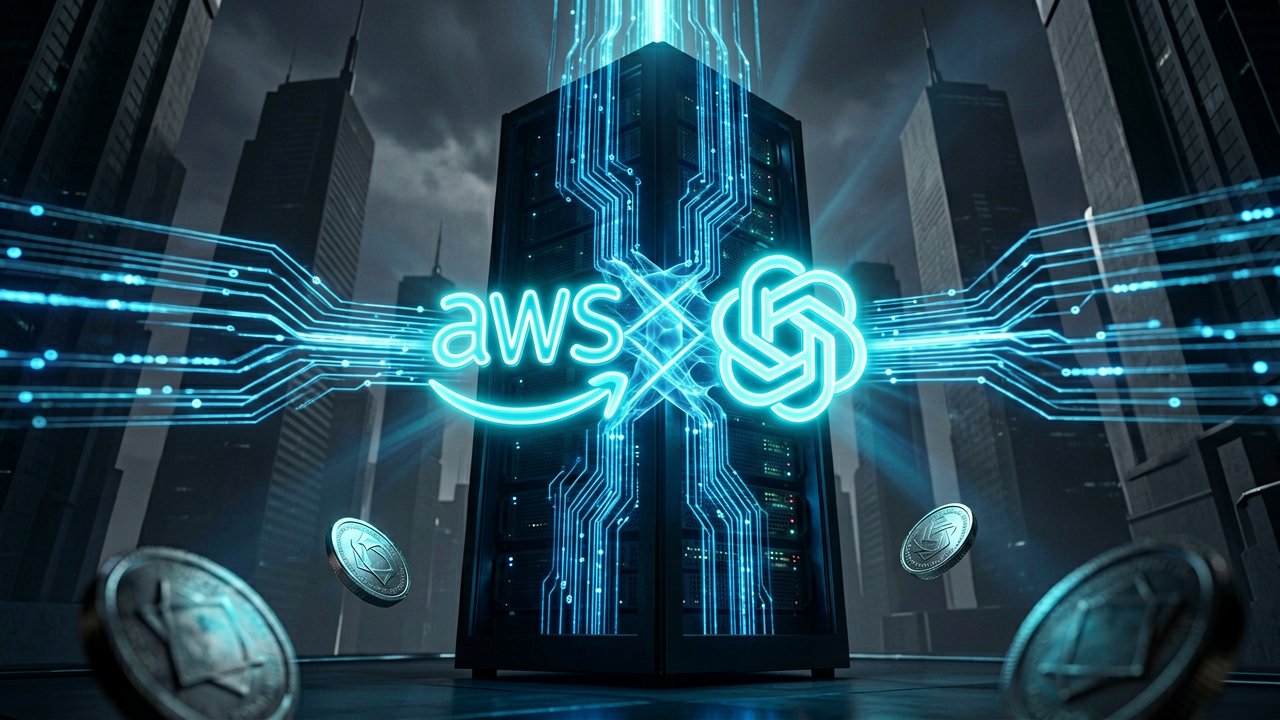
Strategic collaborations with OpenAI and Amazon Web Services (AWS) underpin the technical infrastructure. Fiserv is developing select first-party agents with OpenAI to bring frontier reasoning into workflows that move money across core, payments, issuer processing, and servicing. The collaboration extends beyond agent development to modernization, specialized banking AI, and cybersecurity capabilities.
agentOS leverages Amazon Bedrock AgentCore to provide secure access to leading AI models. This gives financial institutions flexibility as the technology evolves while maintaining the security standards required in banking. AWS's involvement brings enterprise-grade AI infrastructure and global scale to every institution Fiserv serves.
Early client adoption shows measurable results. First Interstate Bank and Boulder Dam Credit Union are running pilots on agentOS today. Steele Hendrix, President and CEO of Boulder Dam Credit Union, noted their initial use of a Daily Operational Analysis Agent is helping automate manual tasks, including cutting report times down from 10 minutes to a matter of seconds.
Four additional institutions—Salem Five, City National Bank, Bank OZK, and SouthState—are co-developing the next wave of agents with Fiserv, with deployments beginning this summer. Close collaboration with these institutions has been central to building an operating system that works for banks rather than forcing banks to adapt to the technology.
Dhivya Suryadevara, Co-President of Fiserv, stated that agentOS is the first place where banks can run Fiserv's agents, build their own, and deploy from a curated set of partners—all under the same governance, identity, and audit controls. The pilots are already proving it works, delivering measurable gains today.
Ashley Kramer, VP Enterprise at OpenAI, called agentOS an important step toward helping financial institutions deploy AI agents in a secure, governed, and scalable way. Scott Mullins, Managing Director Worldwide Financial Services at AWS, emphasized that few industries set a higher bar for security, resilience, and accountability than banking.
The platform addresses a fundamental challenge in financial services: moving from disconnected agentic pilots to enterprise-grade deployment. Most institutions have tested AI in pockets—like service chatbots and document processing—but haven't yet run AI in a scalable way that owns outcomes. Agentic AI changes the question from "What can AI suggest?" to "What can AI reliably execute, with the right oversight?"
When AI has the power to decide and act, rather than just suggest, it introduces entirely new levels of risk. Important decisions must be transparent and traceable. Actions must be attributable to human owners. And people and systems must be able to intervene, override, or stop an agent when needed. agentOS builds these guardrails into the foundation rather than layering them on top.
Whether banks actually adopt this at scale remains the real question. The technology exists, the partnerships are in place, and early pilots show promise. But financial institutions move slowly, and the difference between a working demo and a production system that handles millions of dollars is often measured in months of compliance reviews and security audits.
The marketplace model is clever, but whether third-party agents can meet banking's security standards without becoming bottlenecks is something time—and regulators—will decide.
Artūras Malašauskas is an AI Systems Integrator with 20+ years of production-grade web engineering experience. He has designed, shipped, and scaled enterprise Python/PHP systems for logistics, SaaS, and public-sector clients. For the past year, he has focused exclusively on AI integrations: deploying open-source LLMs, building generative media pipelines (image, audio, video), and engineering multi-agent workflows for real production environments. His standard: reproducibility, security, cost-efficient inference—no vaporware. He documents and evaluates emerging AI tooling, separating verified capabilities from marketing noise. Technical editor at: muza-ai.eu, ai-verslas.lt, ai-naujinos.lt Connect on LinkedIn
Comments