DAPPOS Launches xBubble: AI Agent That Builds Its Own Task Solutions
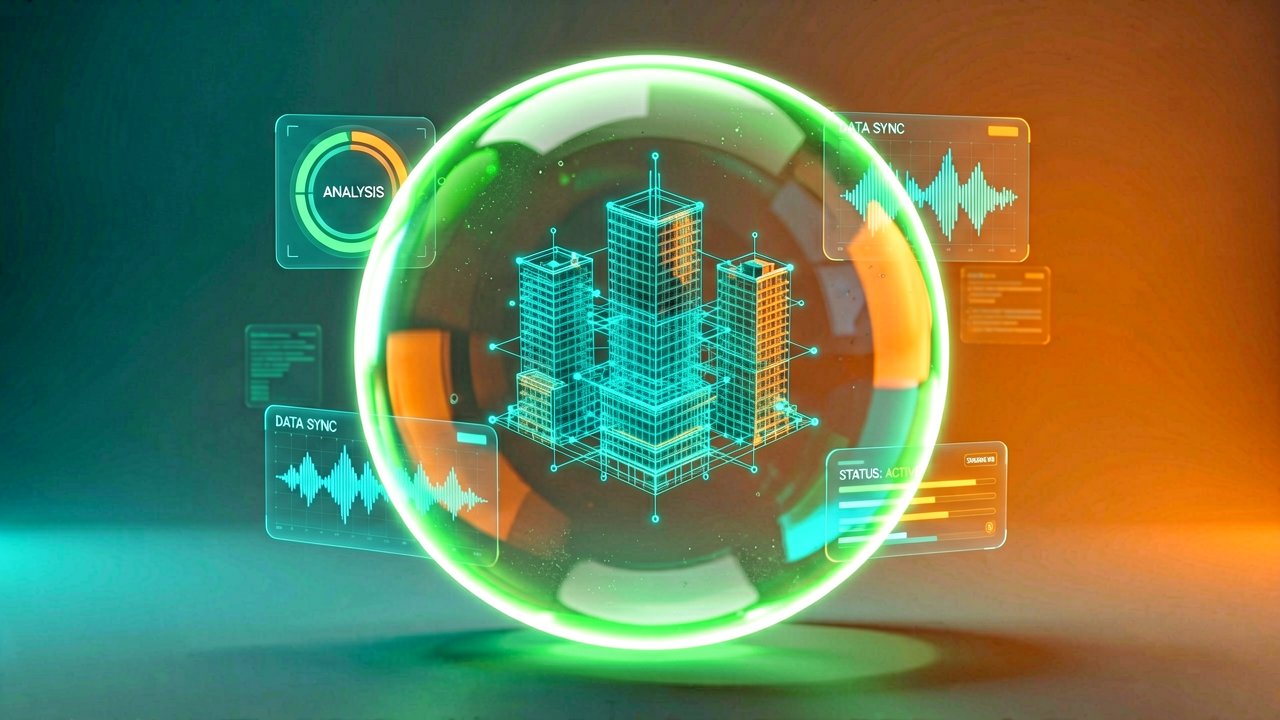
Singapore-based AI company DAPPOS has launched xBubble, an AI agent platform designed to eliminate the prompt-tuning burden that has become standard in generative AI workflows. The product, announced May 12, 2026, represents a structural shift from user-operated AI to AI-operated AI.
According to the official press release, xBubble automatically builds and dispatches task-specific AI agents based on simple user requests. The system handles model selection, tool chaining, and result testing internally, leaving users to state goals rather than engineer solutions.
The architecture rests on two core systems: Bubble Engine, which generates and tests task-specific Standard Operating Procedures (SOPs), and Bubble Pilot, which reads user intent and routes requests to pre-built solutions. This division of labor inverts the typical AI interaction model.
Most AI products hand users a blank interface and powerful tools, then expect them to decide which model fits, which tools to chain, and how to recover when outputs miss. xBubble replaces that decision tree with a dispatch layer. Bubble Pilot identifies task type and routes to a solution Bubble Engine has already validated.

The engineering approach is notable. Bubble Engine uses AI coding agents to generate solution variants, build test harnesses, combine candidate models and tools, and evaluate outputs against quality criteria. The strongest route becomes a reusable SOP dispatched whenever similar requests appear.
This changes the unit of progress. A generic AI agent requires time and effort to deliver reliable results. xBubble starts from solutions already designed for specific task types. The system evolves faster than any individual user can (which is the point, frankly).
xBubble launches with two operational modes. Bubble Computer serves as an end-to-end project workspace where a sandbox spins up and specialized skills load on demand. Within a single run, the system can research topics, draft documents, generate visual assets, verify claims, and deliver final output.
Bubble Personal operates across local files, browsers, apps, and schedules. It automates website operations requiring personal accounts, generates morning briefings from calendar and inbox data, organizes photos, or collects market data overnight. The mode uses sandboxed execution: installations and system-level changes happen inside cloud containers destroyed after task completion.

On the user's machine, only explicitly authorized actions execute. Heavy compute and risky operations stay in Bubble Cloud with clean results flowing back locally. This architecture addresses a persistent friction point in AI automation: trust in what the system actually does on your hardware.
Supported task types include voice dictation, text-to-speech, talking avatar generation, deep research, slides creation, document creation, fact-checking, scheduled tasks, poster creation, image creation, video creation, and website development. The platform runs in fast mode for simple daily tasks and work mode for stable, professional results using SOPs.
The company's thesis is explicit: AI should learn AI. AI should use AI. Users state goals. DAPPOS positions this as closing the usability gap that has widened alongside model capability improvements. Power users study model behavior, research tool combinations, and run debugging cycles. Ordinary users often get disappointing output from the same models.
DAPPOS has secured over $20 million from investors including Polychain, Binance Labs, Sequoia China, IDG Capital, and OKX Ventures. The funding supports continued development of Bubble Engine's ability to build solutions for increasingly complex tasks.
As more SOPs accumulate, xBubble routes more requests toward task-optimized execution. This delivers better performance and lower response time. The company states users should spend less time operating AI and more time using results.
The product availability is immediate. xBubble launches as a complete product, not a single-feature preview. This distinguishes it from many AI agent announcements that ship with limited capabilities and extended roadmaps.
Independent reporting from Decrypt corroborates the core architecture and launch timeline. The outlet's coverage aligns with the official announcement on GlobeNewswire.
The low-prompt approach addresses a real bottleneck. Model capability is no longer the constraint. The question is whether ordinary users can reliably turn goals into the right AI solution. xBubble attempts to answer yes by removing the burden of operating AI from the user.
Whether this actually works at scale remains to be seen. The system depends on Bubble Engine building accurate SOPs for diverse tasks. If the engine generates flawed solutions, users get consistent but wrong outputs. That's a different problem than inconsistent results, but still a problem.
The pricing model and access terms were not detailed in the announcement. For a product positioned as low-barrier, cost barriers could quickly undermine the value proposition. Users who want results without learning AI still need to pay for them.
Whether users actually pay for it remains the real question.
Artūras Malašauskas is an AI Systems Integrator with 20+ years of production-grade web engineering experience. He has designed, shipped, and scaled enterprise Python/PHP systems for logistics, SaaS, and public-sector clients. For the past year, he has focused exclusively on AI integrations: deploying open-source LLMs, building generative media pipelines (image, audio, video), and engineering multi-agent workflows for real production environments. His standard: reproducibility, security, cost-efficient inference—no vaporware. He documents and evaluates emerging AI tooling, separating verified capabilities from marketing noise. Technical editor at: muza-ai.eu, ai-verslas.lt, ai-naujinos.lt Connect on LinkedIn
Comments