SAP Launches Joule Work: AI Workspace That Executes Tasks

Enterprise software giant SAP unveiled Joule Work during Sapphire 2026, positioning it as more than a chatbot or copilot. The platform functions as a central workspace where users express goals in plain language, and AI orchestrates execution across SAP and third-party systems.
According to the official SAP product page, Joule Work represents the user engagement component of the broader Joule solution. It brings together fragmented, transactional interfaces into a unified experience that spans enterprise systems.
The architecture relies on two distinct layers: Joule Assistants and Joule Agents. Assistants act as functional team members organized by business area, understanding organizational context and directing Agents to automate complex tasks. This design means employees no longer manually coordinate work across multiple application interfaces.
Users interact through three access points: a cloud-based web client, a desktop app, and a mobile app. The desktop app runs locally with access to files, email, and documents on the user's machine—useful for tasks like analyzing data or drafting presentations from source material. The mobile app evolved from the SAP Mobile Start app and extends workflow direction to field environments.
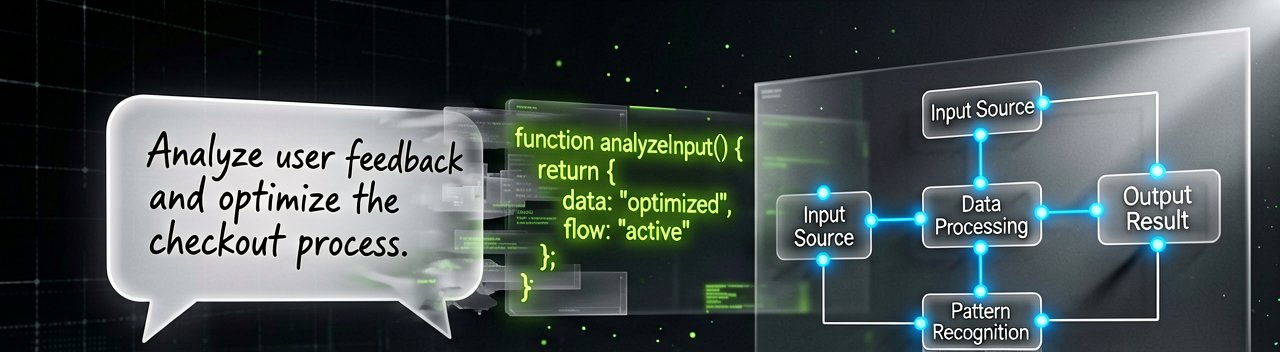
Integration capabilities extend beyond SAP's ecosystem. Joule Work connects with Microsoft Teams and Slack, supporting the Model Context Protocol (MCP) and Agent2Agent (A2A) protocol for third-party tool integration. The A2A capabilities enable bi-directional communication where external agents can securely call on Joule Agents within enterprise processes.
LiveKit partnership enables intelligent voice support in Joule. This addresses scenarios where keyboard-based work is impractical—production environments, field work, or hands-busy situations. Voice integration in the mobile app is available through the Early Adopter Care program, with general availability scheduled for H2 2026.
Availability follows a phased rollout. Joule Work is currently accessible to participants in the SAP Early Adopter Care program. The desktop app Early Adopter program launches Q2 2026, while general availability for both web and desktop is planned for H2 2026. The mobile app is generally available now.
The Sapphire 2026 Innovation News Guide frames Joule Work within SAP's Autonomous Enterprise vision. In this model, AI assistants and agents work alongside humans to meet global business demands, providing tailored, role-specific support for business workflows.

Technical implementation matters here. Unlike consumer AI assistants that primarily retrieve information, Joule Work executes actions. When a user states an intent, the system triggers Assistants to coordinate teams of Agents that surface insights and automate routine work across business domains. The workspace adapts in real time based on that intent (which is a significant departure from static workflow tools).
Industry coverage from Techzine Global notes the similarity to consumer AI like Claude and Gemini, but within the SAP ecosystem. The distinction lies in enterprise-grade security, data protection, and integration with existing business processes.
For finance teams specifically, Joule Assistants drive autonomous finance processes. The Financial Closing Assistant coordinates multiple agents to orchestrate the full close lifecycle across posting, accruals, journal validation, error resolution, and intercompany reconciliation. This reduces manual handoffs and shortens cycle times.
Security and data protection remain enterprise-grade throughout. The desktop app's local file access operates within robust data protection frameworks, addressing concerns about sensitive business information leaving controlled environments.
Whether organizations actually adopt this workflow shift remains the real question. Many enterprises have invested heavily in existing ERP interfaces and training. Asking employees to relearn how they interact with core business systems introduces friction that AI alone cannot eliminate.
The promise of reduced navigation and faster action is compelling. But the success of Joule Work depends less on the AI's capabilities and more on whether workers trust it enough to delegate actual business decisions to automated agents. Time will tell if the technology delivers or if it becomes another layer of complexity in already crowded enterprise stacks.
General availability lands H2 2026. Early adopters can test now, but widespread deployment hinges on whether the promised automation actually works in messy, real-world enterprise environments.
Artūras Malašauskas is an AI Systems Integrator with 20+ years of production-grade web engineering experience. He has designed, shipped, and scaled enterprise Python/PHP systems for logistics, SaaS, and public-sector clients. For the past year, he has focused exclusively on AI integrations: deploying open-source LLMs, building generative media pipelines (image, audio, video), and engineering multi-agent workflows for real production environments. His standard: reproducibility, security, cost-efficient inference—no vaporware. He documents and evaluates emerging AI tooling, separating verified capabilities from marketing noise. Technical editor at: muza-ai.eu, ai-verslas.lt, ai-naujinos.lt Connect on LinkedIn
Comments