Glean Unveils Framework for Controlling AI Agents

Enterprise AI has hit a familiar wall. Organizations spent the past year building AI agents, and now they're discovering that creating an agent is fundamentally different from running one in production. Glean addressed this gap on Tuesday with the Enterprise Agent Development Lifecycle (ADLC), a framework that codifies how companies should build, govern, and measure AI agents systematically.
The announcement comes from a company that has been wrestling with the same problem internally. After releasing autonomous agents last December, Glean found itself managing thousands of agents built across teams with no consistent governance or measurement approach. The ADLC is essentially their solution to their own problem, packaged as a platform capability for customers.
According to the official press release, the framework spans seven stages: Opportunity, Design, Performance, Input, Develop, Launch, and Monitor & Improve. The lifecycle moves from identifying business problems an agent should solve through designing workflows, defining success metrics, grounding agents in enterprise context, building and testing, launching with governance controls, and continuously improving based on adoption data.
Selene Kim, Product Manager (Agents) at Glean, told No Jitter that the core insight driving ADLC is straightforward: agents are just another type of software. Traditional software development lifecycle practices apply across different programming languages, and the ADLC applies the same logic across different models from different providers. (It's a simple observation that somehow took the industry a year to articulate.)
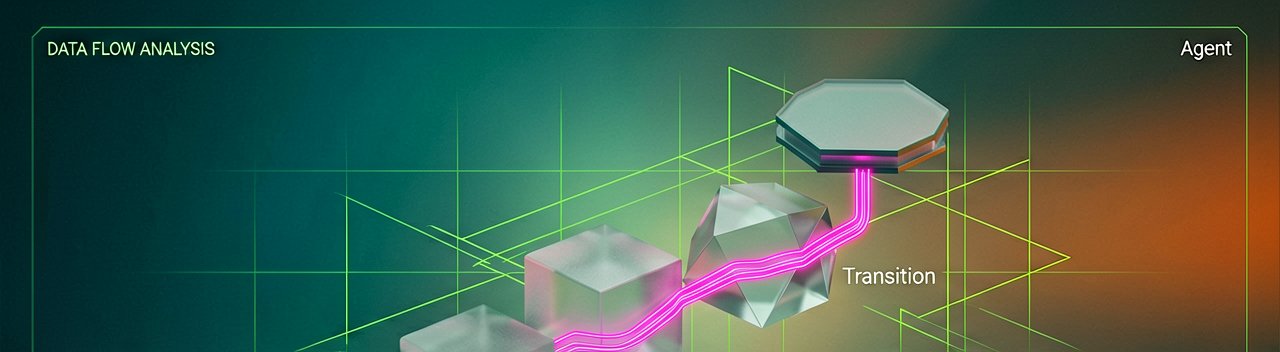
The framework isn't just theoretical. Glean is launching eight platform capabilities mapped to specific ADLC stages where enterprises typically get stuck. Auto Mode Agent Builder lets users describe what they want an agent to do in natural language, then the agent plans, reasons, and executes across the enterprise graph without predefined workflows. Debug & Trace Views provide full observability into every agent run, including inputs, tool calls, LLM decisions, and outputs—allowing developers to diagnose failures precisely rather than inferring from final output.
Other features include Sub-Agents for modular, production-grade architectures where parent agents coordinate specialized agents at runtime. The Expanded Agent Sandbox offers secure file system and code execution in the customer VPC. Content and Scheduled Triggers enable agents to react automatically to enterprise events like content changes, scheduled runs, and forms. New Agent Library controls add verification badges, featured agents, departmental categories, and soft-delete with admin restore. Agent Access Policies provide organization-wide guardrails that can block or flag sensitive content before an agent processes it.
Rich Archbold, SVP Agentic GTM Engineering at HubSpot, noted in the press release that successful agent adoption depends on giving AI the right enterprise context, creating structured enablement so employees know how to use it, and having a clear way to measure what is actually driving value. Glean has helped bring those pieces together as they scale AI across HubSpot, giving teams a trusted front door for building agents and accessing company context.
The availability timeline is staggered. Auto Mode Agent Builder, Debug & Trace Views, Sub-Agents, Agent Sandbox, and the new Agent Library Controls are generally available. Content Triggers and Agent Access Policies are in beta. The Updated Agent Insights Dashboard, which tracks adoption, top use cases, estimated hours saved, and feedback trends over time, is coming soon.

Emrecan Dogan, Chief Product Officer at Glean, framed the shift bluntly: enterprises spent the past year proving that agents can generate excitement. The next phase is proving they can generate results. Agents need a disciplined way to be defined, built, launched, governed, and improved over time. The ADLC gives CIOs a repeatable operating model for doing that.
The framework is intentionally platform-agnostic. Kim described it as Glean's "opinion piece" for the broader AI community, something any organization can adopt. But the company acknowledges its advantage lies not only in the framework itself but in the platform capabilities built to execute every stage—capabilities competitors would take time to replicate.
There's a practical tension here that the framework doesn't fully resolve. Kim noted that agents with too little context may succeed as a proof-of-concept and then fail in production, while those with too much context may fail because the underlying LLM cannot separate signal from noise. The recommendation is to start with more relevant context, get to a high-quality result, and then shave off what the agent can access to optimize performance.
Whether this framework becomes an industry standard or remains a Glean-specific play depends on adoption. The real test isn't whether CIOs can understand the seven stages—it's whether they can enforce them across teams that have already built agents in a dozen different ways. Time will tell if governance frameworks actually slow down AI sprawl or just give it a better filing system.
Artūras Malašauskas is an AI Systems Integrator with 20+ years of production-grade web engineering experience. He has designed, shipped, and scaled enterprise Python/PHP systems for logistics, SaaS, and public-sector clients. For the past year, he has focused exclusively on AI integrations: deploying open-source LLMs, building generative media pipelines (image, audio, video), and engineering multi-agent workflows for real production environments. His standard: reproducibility, security, cost-efficient inference—no vaporware. He documents and evaluates emerging AI tooling, separating verified capabilities from marketing noise. Technical editor at: muza-ai.eu, ai-verslas.lt, ai-naujinos.lt Connect on LinkedIn
Comments