Coupa Unveils Compose and Catalyst Agentic AI Platform at Inspire 2026

Enterprise spend management platform Coupa announced the launch of Coupa Compose and Coupa Catalyst at its annual Inspire 2026 conference in Las Vegas. The dual offering positions the company as an "Agentic-as-a-Service" provider, enabling organizations to build and orchestrate AI agents directly within their procurement, finance, and supply chain operations.
According to the official press release, Coupa Compose provides a unified environment for managing a digital workforce of AI agents. The platform includes three core components: Navi Agent Studio for no-code agent building, Smart Intake & Orchestration for request management, and Navi Connect for agent-to-agent communication across third-party systems.
Leagh Turner, Coupa CEO, framed the announcement as a fundamental architectural advantage over competitors. "While others are bolting AI onto aging systems, we have one platform that scales — with governance — for your data, your workflows, and your agents," Turner stated. The company claims its architecture rests on a foundation of $10 trillion in spend data, which it uses to justify its "AI-native" positioning.
The technical reality is more nuanced than the marketing suggests. Navi Agent Studio becomes generally available in May 2026, allowing organizations to configure custom agents using natural language interfaces. Smart Intake serves as the single entry point for all requests, triggering agents at each process step while preserving business context within Coupa's system of record. Navi Connect handles the connective tissue—enabling real-time ERP updates and cross-system actions (though third-party integration, MCP, and A2A features are expected September 2026, which is a significant delay for anyone expecting immediate deployment).

Coupa has already deployed more than 20 specialized persona-based agents across its platform. The May product release expands this catalog with agents for Sourcing Event Creation, Bid Comparison, Risk Sentinel, Sanctions Risk, Autonomous Opportunity Analysis, and Scenario Ranking. The company claims these agents deliver measurable gains including a 40% reduction in setup time and the ability to identify millions in hidden efficiencies.
Coupa Catalyst represents the services layer accompanying the software launch. Recognizing that activation—not vision—is the primary barrier to AI adoption, Catalyst provides Forward-Deployed Engineers (FDEs) and business solution architects who work side-by-side with customers. These consultants bridge the gap between product capability and actual AI value delivery through workshops and transformation strategies.
Salvatore Lombardo, Coupa Chief Product and Technology Officer, emphasized the change management aspect. "To win in the agentic era, your ability to absorb change must match the speed of the technology," Lombardo said. The company is also hosting Coupa AI DevCon for the first time, a developer conference preceding the main event where attendees can build custom AI agents through hands-on workshops.
The Inspire 2026 event itself runs May 11–14, 2026 at the ARIA Resort in Las Vegas. Customer-led sessions feature procurement and finance leaders from Deliveroo, NFI Industries, Xylem, Carnival, Mastercard, and Tyson Foods. Actor Kevin Bacon appears as a featured keynote speaker to illustrate the "network effect" concept, having founded SixDegrees.org.
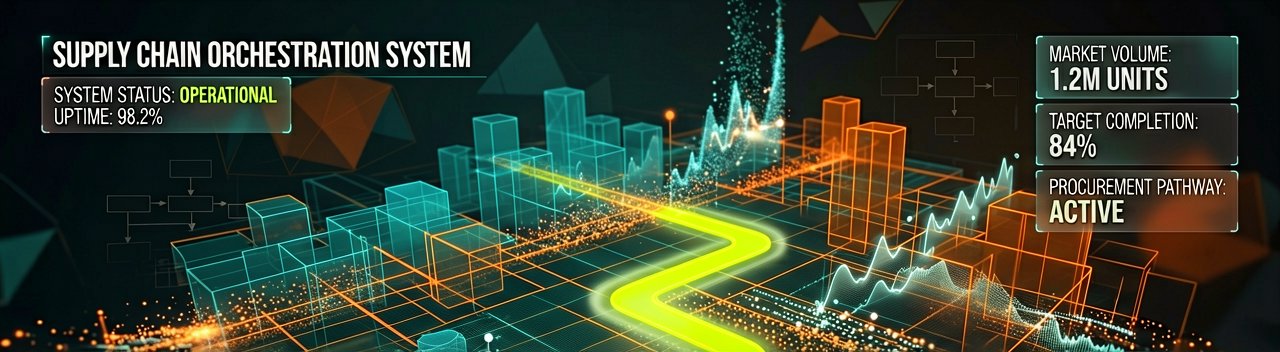
From a business perspective, the outcome-based pricing model represents a shift from traditional enterprise software licensing. Customers pay for results rather than seats or modules. This aligns vendor incentives with actual performance but also introduces complexity in measuring and attributing value across multi-agent workflows.
The September 2026 timeline for third-party integration and A2A capabilities creates a gap between announcement and full functionality. Organizations evaluating Coupa Compose need to understand that the "seamless" agent-to-agent communication described in marketing materials won't be fully operational for months. The physical experience of using Navi Agent Studio—clicking through no-code interfaces, monitoring agent activity dashboards, managing role-based access—will be available immediately, but the broader ecosystem integration remains pending.
Whether enterprises actually achieve the promised 40% setup time reduction depends on implementation quality, data readiness, and organizational willingness to cede control to autonomous agents. The technology exists. The real question is whether procurement teams will trust it enough to let it run.
Artūras Malašauskas is an AI Systems Integrator with 20+ years of production-grade web engineering experience. He has designed, shipped, and scaled enterprise Python/PHP systems for logistics, SaaS, and public-sector clients. For the past year, he has focused exclusively on AI integrations: deploying open-source LLMs, building generative media pipelines (image, audio, video), and engineering multi-agent workflows for real production environments. His standard: reproducibility, security, cost-efficient inference—no vaporware. He documents and evaluates emerging AI tooling, separating verified capabilities from marketing noise. Technical editor at: muza-ai.eu, ai-verslas.lt, ai-naujinos.lt Connect on LinkedIn
Comments