Arjan Brussee Announces European Game Engine Alternative
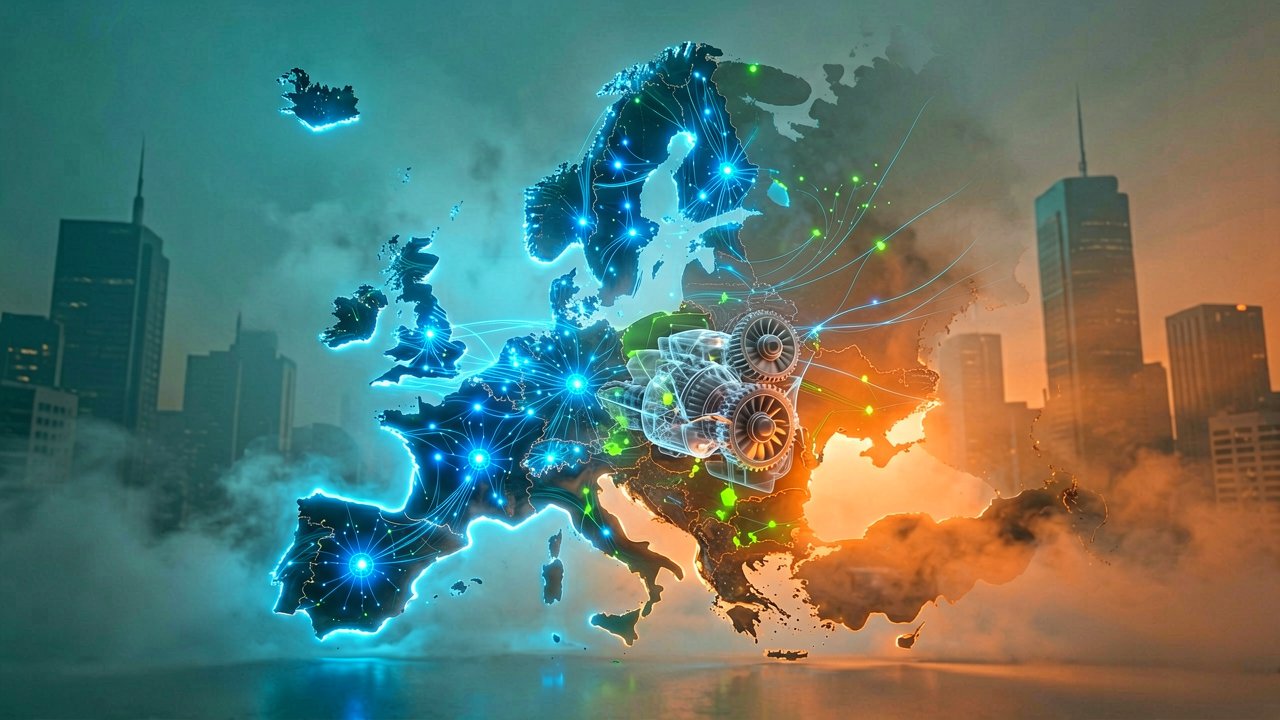
Guerrilla Games co-founder Arjan Brussee has announced plans to develop a new game engine positioned as a distinctly European alternative to industry standards like Unreal Engine and Unity. The project, called The Immense Engine, emerged from an interview on the Dutch podcast De Technoloog, with details subsequently reported by multiple industry outlets.
Brussee's core argument centers on regulatory and operational sovereignty. "No one is currently making an engine that is fully European-hosted, built by Europeans, and complies with European rules and guidelines," he stated, according to Video Games Chronicle. This positioning targets sectors beyond gaming, including defense and logistics applications where data residency and compliance matter.
The technical differentiator Brussee emphasizes is AI integration from the ground up. Current engines, he argues, were "made for and by people who have to click through a menu with a mouse. If you want to change something, it has to be done for the entire engine." The Immense Engine aims to replace that workflow with AI agent frameworks that could theoretically accomplish the work of ten or fifteen people.
Brussee's credentials for this venture are substantial. He spent eight years at Epic Games in various roles, including global director of product management for Unreal Engine. Before that, he co-founded Boss Key Productions with Cliff Bleszinski (which closed in 2018) and helped establish Guerrilla Games in 2000 alongside Martin de Ronde, Michiel Mol, and Arnout van der Kamp. His programming career began in the 1990s with the Jazz Jackrabbit games.
Industry coverage from GamesIndustry.biz corroborates the timeline and scope of the announcement. The engine is described as incorporating "new development principles" rather than incremental improvements to existing architectures. This matters because most engine development today involves patching legacy systems rather than rebuilding for modern paradigms (a problem that has plagued users for years, frankly).
The physical reality of current engine work involves mouse-driven interface navigation, menu traversal, and platform-wide modifications for single changes. Brussee's vision suggests a shift toward more declarative or AI-mediated workflows where developers specify outcomes rather than manually configuring every parameter. Whether this translates to actual productivity gains or just more abstraction layers remains to be seen.
Market timing is critical. Major publishers including Krafton, Square Enix, and Electronic Arts have already invested heavily in AI tooling for game development. A European engine with native AI integration could appeal to studios concerned about data sovereignty, regulatory compliance, or simply wanting alternatives to US-centric infrastructure.
Brussee's claim about European compliance is specific but unverified in detail. GDPR, AI Act requirements, and other EU regulations create genuine friction for non-compliant tools. However, the technical implementation of these requirements in a game engine context has not been publicly documented.
The announcement lacks concrete timelines, pricing models, or technical specifications beyond the AI integration claim. No release date, beta program, or partnership announcements accompanied the initial disclosure. This is typical for early-stage engine projects, but it also means the concept remains theoretical until code is available for evaluation.
Whether studios actually migrate to a new engine depends on migration costs, documentation quality, and community support. Unreal and Unity have decades of accumulated assets, tutorials, and developer familiarity. The Immense Engine must overcome that inertia with demonstrable advantages, not just regulatory positioning.
Brussee's background suggests he understands both the technical and business challenges. Having worked at Epic, founded studios, and navigated the industry through multiple cycles, he knows engine adoption is as much about ecosystem as it is about code. The question is whether a European angle provides enough differentiation to justify the migration effort.
Time will tell if the engine delivers on its promises. For now, it's another entry in a crowded field where the real competition isn't features—it's whether developers will actually use it.
Artūras Malašauskas is an AI Systems Integrator with 20+ years of production-grade web engineering experience. He has designed, shipped, and scaled enterprise Python/PHP systems for logistics, SaaS, and public-sector clients. For the past year, he has focused exclusively on AI integrations: deploying open-source LLMs, building generative media pipelines (image, audio, video), and engineering multi-agent workflows for real production environments. His standard: reproducibility, security, cost-efficient inference—no vaporware. He documents and evaluates emerging AI tooling, separating verified capabilities from marketing noise. Technical editor at: muza-ai.eu, ai-verslas.lt, ai-naujinos.lt Connect on LinkedIn
Comments