Auvera Chain Launches Public Testnet for AI Agent Finance Infrastructure
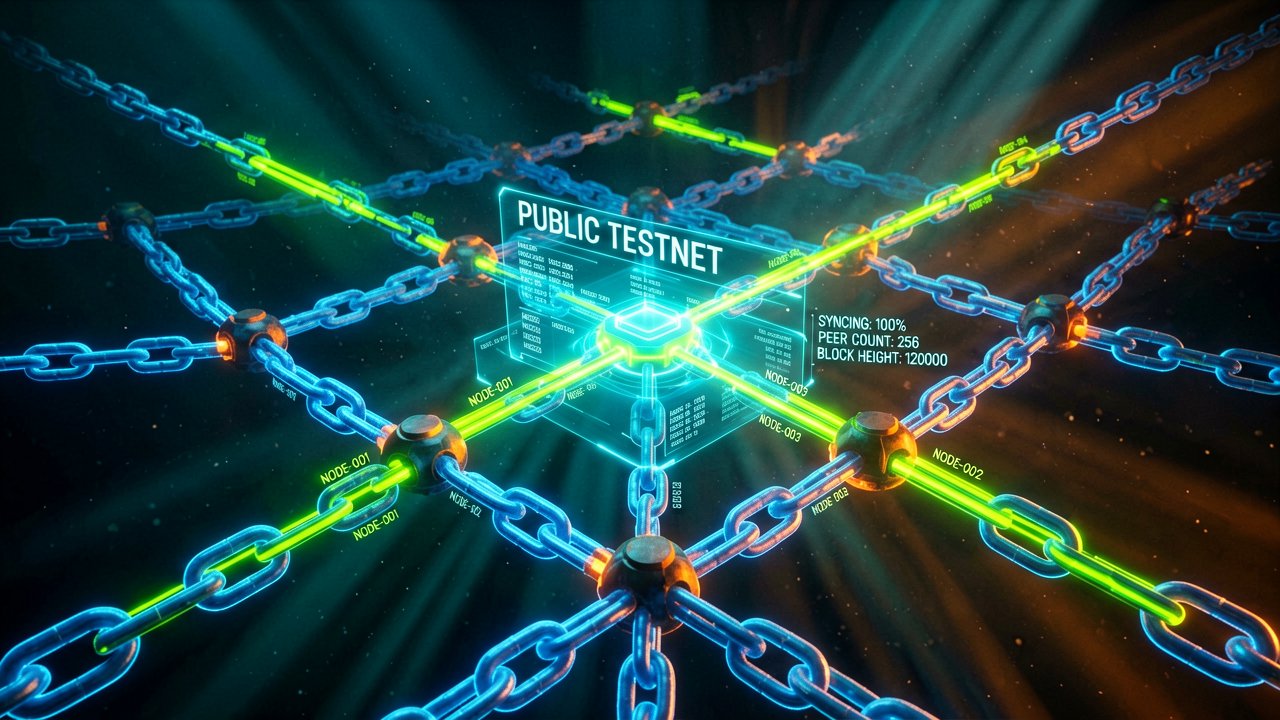
The blockchain infrastructure project Auvera Chain activated its public testnet in April 2026, marking a transition from roadmap documentation to live validation. The announcement, distributed via GlobeNewswire, positions the network as an EVM-compatible Layer 2 specifically architected for AI Agent economic execution.
This isn't another generic blockchain launch. Auvera Chain is attempting to solve a specific friction point: when AI Agents move from chat interfaces to task-execution actors, they need financial permissions, payment boundaries, and accountability records. The testnet validates infrastructure around on-chain identity, smart wallets, payment settlement, and operational auditability.
Technical architecture follows an Optimistic Rollup path with account abstraction at its core. The roadmap includes AgentRegistry, x402 payment compatibility, TEE security, cross-chain bridges, and DEX infrastructure. These capabilities move from narrative into concrete validation for developers and early users during this beta phase.
Independent coverage from Business Insider Markets corroborates the three application tracks: AI Agents, DePIN compute networks, and prediction markets. The testnet observes whether these demand types can form a closed loop on the same on-chain infrastructure.

Account abstraction and smart contract wallets enable Agents to operate within preset budgets, permission allowlists, session keys, and circuit breakers. This reduces financial and security risks in autonomous execution (a problem that has plagued users for years, frankly). The payment layer treats machine-payment protocols such as x402 as an important compatibility direction, exploring automated settlement paths from Agent to API, Agent to compute network, and Agent to other on-chain services.
TEE-based security mechanisms strengthen private-key protection, execution isolation, and audit credibility. Beta website and block explorer access are available for observers to watch transaction activity, Agent identity or smart wallet interactions, and testing depth across the DEX and cross-chain bridge.
Prediction markets serve as an early testing ground for AI Agent strategy execution and on-chain trading. They feature high-frequency interaction, public data, and verifiable outcomes. AI Box corresponds to the compute supply side, connecting task demand, idle compute, and AUV settlement.
Going forward, the real signal comes from whether x402 payment, TEE security, prediction markets, and AI Box applications generate real tasks and real consumption. If relevant data continues to emerge, Auvera Chain's three application tracks may form an infrastructure validation path around AI Agent execution, compute-resource calls, prediction-market interaction, and on-chain settlement.
The project aims to provide low-cost ownership, payment, settlement, and audit infrastructure for multiple types of on-chain actors. It serves creators, users, developers, compute providers, and future AI Agents. Gradual expansion targets AI Agent autonomous finance, prediction markets, and decentralized compute scenarios.
Whether developers actually build on this infrastructure remains the real question. Testnets are easy to launch; sustained activity is what separates infrastructure from vaporware. The block explorer will tell the truth eventually.
Artūras Malašauskas is an AI Systems Integrator with 20+ years of production-grade web engineering experience. He has designed, shipped, and scaled enterprise Python/PHP systems for logistics, SaaS, and public-sector clients. For the past year, he has focused exclusively on AI integrations: deploying open-source LLMs, building generative media pipelines (image, audio, video), and engineering multi-agent workflows for real production environments. His standard: reproducibility, security, cost-efficient inference—no vaporware. He documents and evaluates emerging AI tooling, separating verified capabilities from marketing noise. Technical editor at: muza-ai.eu, ai-verslas.lt, ai-naujinos.lt Connect on LinkedIn
Comments