Docusign Unveils Agentic AI for Legal Teams
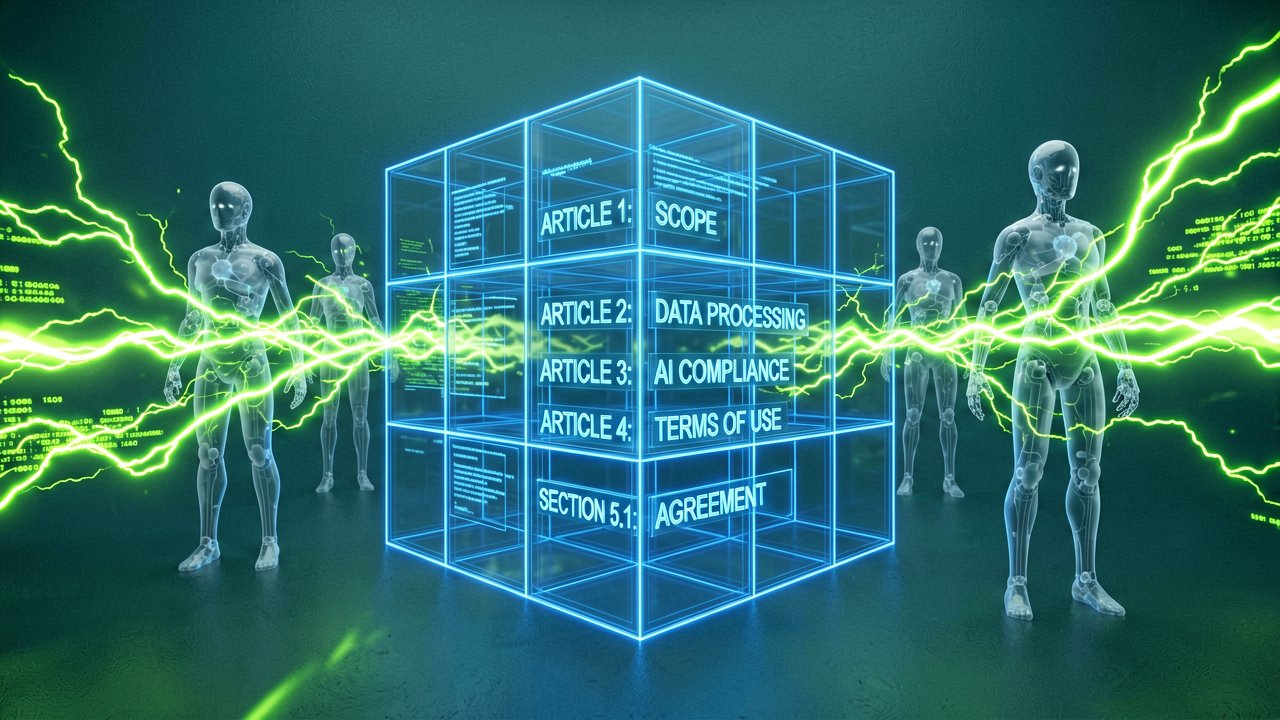
Docusign announced a new suite of AI-powered capabilities designed specifically for in-house legal departments on May 11, 2026. The update expands the company's Intelligent Agreement Management (IAM) platform with contract assistants and autonomous agents built on its Iris AI engine.
The announcement marks a strategic pivot beyond electronic signatures. Legal teams are increasingly burdened by fragmented workflows scattered across emails, PDFs, and disconnected tools. Contract data sits locked inside static documents while lawyers manually coordinate next steps across sales, procurement, HR, and finance departments.
Docusign's official blog post details the new features. The Iris assistant and agents can triage, review, and move agreements toward closing using full context from past negotiations, accepted terms, and company policies. Teams can invoke agents through chat or deploy them to run autonomously in the background 24/7.
Agent Studio represents a new custom workspace for building and testing agents focused on agreement automation and standardization. Human oversight remains in place where required (a non-negotiable for most general counsel, frankly).
Allan Thygesen, CEO of Docusign, emphasized the shift from passive document storage to active workflow execution. "Legal teams aren't just reviewing contracts, they're helping businesses move forward," Thygesen said. "What Docusign brings to legal AI is dynamic context across agreements, combined with intelligent workflows, that know how to act on that context."
The platform integrates with specialized legal AI tools including Harvey, Legora, and CoCounsel Legal by Thomson Reuters. These partnerships connect legal research and document analysis directly into agreement workflows rather than leaving them as isolated tools.
Through Model Context Protocol (MCP), the platform extends to frontier LLMs like Anthropic Claude and OpenAI ChatGPT, plus business applications including Microsoft Copilot, Salesforce, and Slack. Users can manage contracts within tools they already use daily.
The official press release cites Deloitte research claiming organizations using agentic workflows with end-to-end agreement platforms see nearly 30% higher ROI than those that do not. That metric will likely face scrutiny from legal operations teams who've seen similar claims before.

The physical reality of this shift matters. Instead of switching between five different tabs to review a contract, lawyers can ask questions, get cited answers, and trigger actions in one interface. The conversational experience grounds responses with citations rather than hallucinated clauses.
Docusign positions this as evolution from e-signature to system of record to system of action. The company serves over 1.8 million customers with more than a billion users across 180 countries. That scale gives the platform accumulated agreement context that standalone legal AI tools lack.
The Iris assistant and agents are coming soon, with a demonstration scheduled for Momentum in New York on May 20–21. Developers can explore integration details through Docusign's published guides.
Whether legal teams actually adopt these agents at scale depends on whether the automation handles edge cases without creating new compliance headaches. The technology works. The question is whether busy lawyers will trust it enough to let it run unsupervised.
Artūras Malašauskas is an AI Systems Integrator with 20+ years of production-grade web engineering experience. He has designed, shipped, and scaled enterprise Python/PHP systems for logistics, SaaS, and public-sector clients. For the past year, he has focused exclusively on AI integrations: deploying open-source LLMs, building generative media pipelines (image, audio, video), and engineering multi-agent workflows for real production environments. His standard: reproducibility, security, cost-efficient inference—no vaporware. He documents and evaluates emerging AI tooling, separating verified capabilities from marketing noise. Technical editor at: muza-ai.eu, ai-verslas.lt, ai-naujinos.lt Connect on LinkedIn
Comments