Screendragon Launches AI Hub for Marketing Workflow Automation
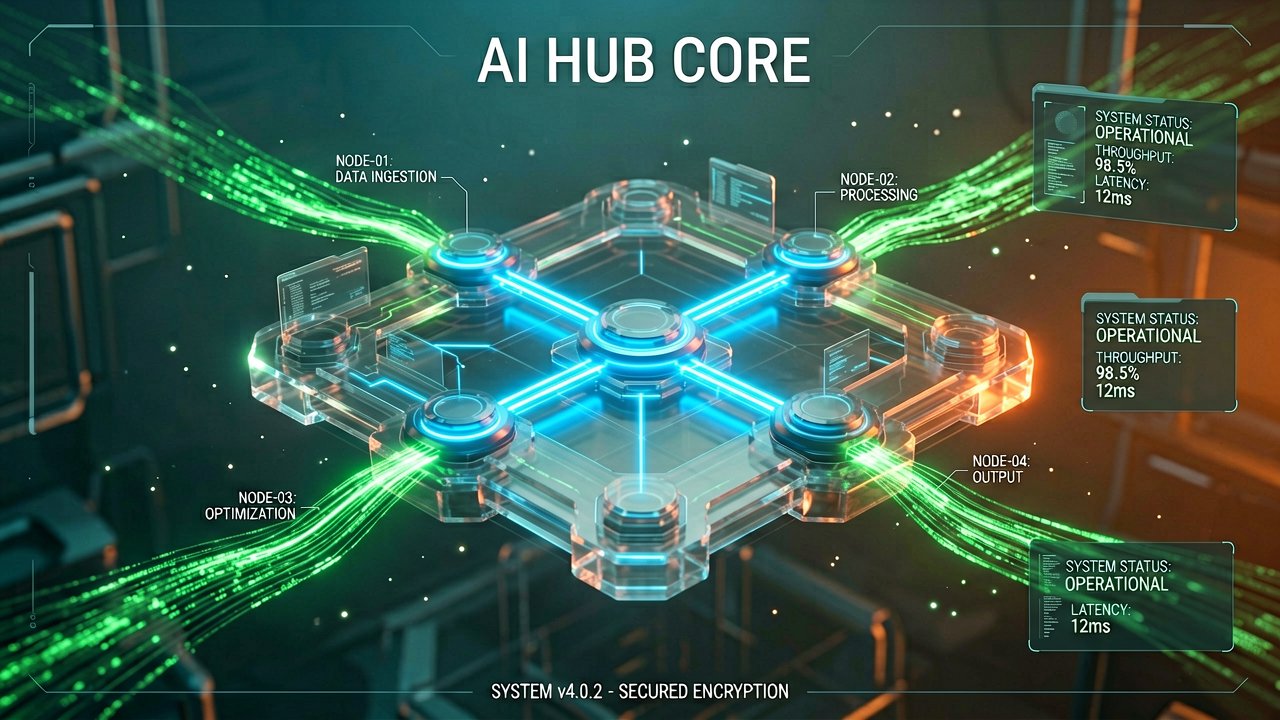
Screendragon announced the launch of AI Hub on May 11, 2026, a new capability within its Agentic Marketing Orchestration platform. The feature enables enterprise marketing teams and agencies to build, deploy, and govern their own AI agents directly inside live workflows.
The Cork, Ireland-based company positioned the release as a response to a specific market problem. Teams have access to AI tools, but lack control over how AI executes across business operations. AI Hub addresses this by embedding agents into existing workflows rather than treating them as separate experiments.
"The market is shifting from selling AI access to controlling AI execution," said John Briggs, CEO of Screendragon. "Teams have access to AI, but no control over how it runs across the business. AI Hub changes that. It puts AI inside workflows, with the guardrails needed to scale it properly."
According to the official press release, the platform is designed to move teams beyond experimentation and into real execution. Agents plug directly into live workflows, automate marketing and creative work, and keep outputs consistent, compliant, and on-brand.
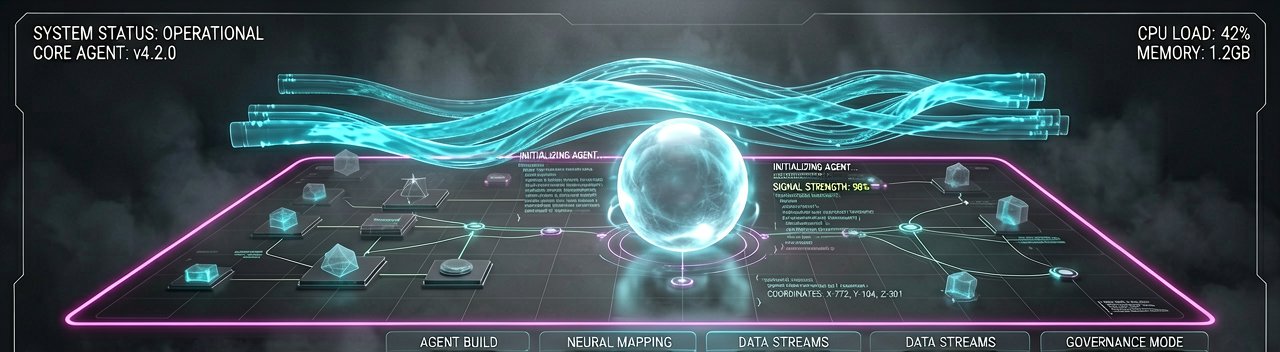
From a user experience perspective, this means AI becomes part of the process rather than another tab open on someone's laptop. The physical reality matters here. Instead of switching between tools, copying outputs, and manually checking compliance, agents operate within structured workflows and approval processes. This reduces friction and the cognitive load of managing disconnected tools.
AI Hub is part of a broader AI system running across the Screendragon platform. The wider offering includes Embedded AI Agents (pre-built agents for common tasks), AI Studio (advanced tools for designing and optimizing agents), and AI Foundry (expert support for bespoke AI-driven workflows). Together, these give teams a clear path from out-of-the-box solutions to fully customized enterprise-grade AI execution.
Cost control is another explicit design goal. AI usage grows fast, and costs can grow faster. The platform gives teams control by routing work across AI models based on cost, speed, and performance. Teams can use open-source models where it makes sense and avoid getting locked into one AI provider (a problem that has plagued users for years, frankly).
Pre-built agents available through the platform include a Briefing Agent for structured brief generation, a Proofing Agent for automated reviews and approvals, a Resourcing Agent for skill-based team assignment, and a Compliance Agent for brand and legal checks. Each operates within the workflow, not as a standalone tool.

The official Screendragon documentation confirms AI Hub is a no-code environment. Marketing, operations, and creative teams can design AI that reflects how they actually work without relying on developers. For advanced requirements, Screendragon's Foundry team supports bespoke agent design.
Anne Cogan, CMO of Screendragon, noted the internal impact. "We were using AI in pockets, but it wasn't scalable. Now it is built into how we work, improving speed while maintaining full control and compliance." This internal adoption validates the product before external customers deploy it.
AI Hub is available immediately to all Screendragon customers. The platform connects workflows, people, data, and AI into a single governed system. The goal is ensuring work runs properly and AI actually helps instead of getting in the way.
The real question isn't whether AI can automate tasks. It's whether embedding agents into workflows actually reduces the operational overhead of managing them. Screendragon's approach suggests the answer depends on governance, not just automation. Whether agencies and enterprise teams actually pay for this level of control remains the real question. Time will tell if the workflow integration is worth the platform dependency.
Artūras Malašauskas is an AI Systems Integrator with 20+ years of production-grade web engineering experience. He has designed, shipped, and scaled enterprise Python/PHP systems for logistics, SaaS, and public-sector clients. For the past year, he has focused exclusively on AI integrations: deploying open-source LLMs, building generative media pipelines (image, audio, video), and engineering multi-agent workflows for real production environments. His standard: reproducibility, security, cost-efficient inference—no vaporware. He documents and evaluates emerging AI tooling, separating verified capabilities from marketing noise. Technical editor at: muza-ai.eu, ai-verslas.lt, ai-naujinos.lt Connect on LinkedIn
Comments