Two99 Launches MarkGrid to Replace Agency Marketing with AI Agents

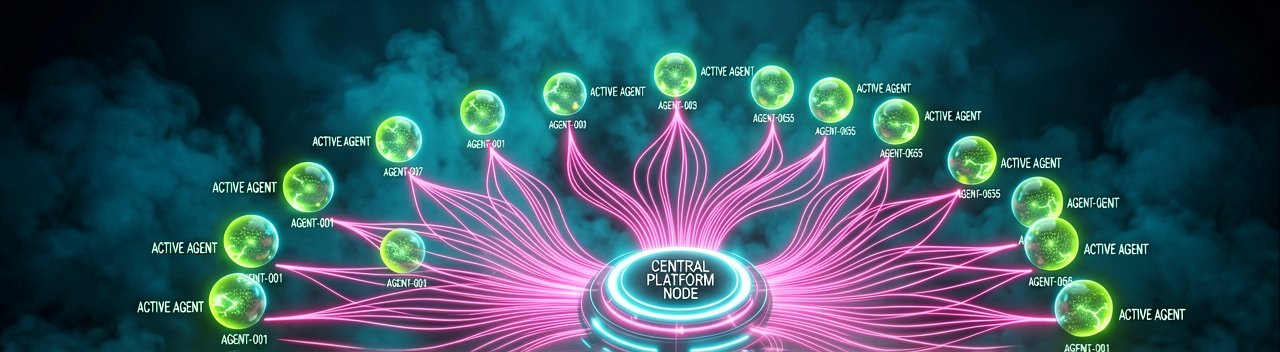
Two99 has announced the commercial launch of MarkGrid, an AI-native Marketing Economics Platform designed to replace the traditional agency-led services model with software that executes marketing work directly. The platform deploys 650+ specialized AI agents across 17 capability domains, handling everything from AI-search visibility and creative prediction to attribution, influencer compliance, and CFO-grade reporting.
The launch marks one of the most explicit signals yet of a structural transition the global marketing industry has been preparing for in private and resisting in public. MarkGrid is among the first platforms built natively for that shift, by a team that ran inside the agency model long enough to know exactly where it breaks.
Founded by Agam Chaudhary, Two99 has spent more than a decade building performance marketing infrastructure for high-growth Indian brands across D2C, FMCG, automotive, fintech, and lifestyle. Across hundreds of client engagements, the team consistently encountered the same challenges — fragmented data, attribution guesswork, CFOs who couldn't trust a single dashboard, and marketing leaders running a dozen disconnected tools that never talked to each other.
According to the official launch announcement, MarkGrid is engineered around six recurring failure modes documented across Two99's client work: an invisible buyer journey where 72% of the funnel goes untracked; last-click attribution that systematically misallocates revenue; content bottlenecks that leave creative teams perpetually behind; creator ROI measured in sentiment rather than pipeline; community engagement that generates vanity metrics but no commercial signal; and CFO reporting that depends on weekly spreadsheet heroics.
Each, Chaudhary argues, is a symptom of the same underlying problem — fragmented data, fragmented tooling, and a services model whose economics depend on opacity.
The platform's headline capabilities include Model Share, which measures how often large language models such as ChatGPT, Perplexity, Gemini, and Claude surface a brand versus its competitors when consumers ask product questions. This gives brands the first quantified view of their visibility inside the AI-driven discovery systems consumers now actively use. The AI Content Engine generates campaign briefs and creative roughly 400 times faster than manual workflows.
Dark Funnel Visibility surfaces the 72% of the buyer journey traditional analytics cannot see. The Real-Time Creator Audit reviews influencer videos against brand briefs and compliance guidelines before publication — protecting an estimated 25–40% of influencer spend currently lost to non-compliant content. Pre-Flight Creative Intelligence scores every creative on visual attention, emotional response, memorability, and cognitive load before media spend is committed. The AI Reporting Layer generates board-ready, CFO-grade reports in under three minutes.
The defining shift MarkGrid introduces is moving neuromarketing from a post-hoc explanation to a predictive system. While most platforms tell brands what happened, MarkGrid's neuromarketing engine predicts what will happen — scoring the cognitive triggers, emotional resonance, attention hotspots, and memorability of any creative before a single rupee of media is committed. Brands can kill underperforming creatives pre-flight, regenerate variants automatically, and ship only the ones an AI ranker predicts will outperform their last 90 days of work.
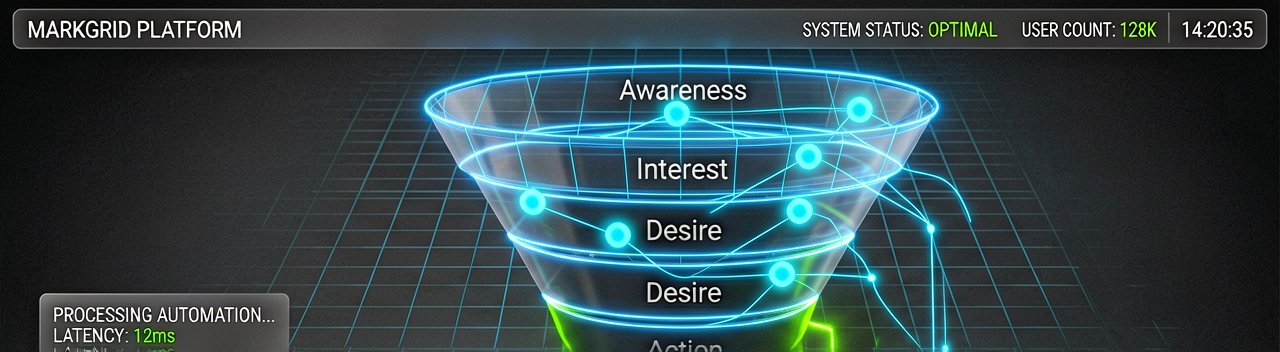
In early deployments, MarkGrid clients have recorded a 15%+ reduction in customer acquisition cost in the first 90 days, a 30x improvement in time-to-first-insight, a 10x lift in content output from the same team, and predictive lead-scoring accuracy above 80%. Onboarding from contract to first live insights takes 24 hours.
MarkGrid is available on a modular pricing structure starting at $1,500 per month, scaling to enterprise deployments with dedicated AI strategists, custom integrations, and concurrent access to the full agent suite. The platform is now live at markgrid.ai.
Chaudhary's perspective on the industry shift, detailed in an op-ed published by The Wire, frames the problem differently than typical vendor messaging. He argues that the traditional agency model — retainers, markups, monthly decks, quarterly reviews — was designed for a world where campaigns ran in discrete bursts, media was bought in advance, and the feedback loop between spend and result was measured in months. The model worked when the environment was slow enough for humans to keep up.
That environment is gone. Real-time performance data, infinite content surfaces, AI-mediated discovery, creator-led distribution, community-as-moat — none of this can be managed by a team of account managers in a spreadsheet. The speed advantage now belongs entirely to brands that have replaced human-in-the-loop workflows with AI-in-the-loop intelligence.
Consider the physical reality of what this means for a marketing team. Instead of waiting three weeks for a monthly performance deck that arrives as a PDF attachment (which you'll open, scroll through, and immediately forget), the AI Reporting Layer generates board-ready reports in under three minutes. The dashboard refreshes in real-time. You click through to see which creative variant drove the lift, and the system shows you the attention heatmap, the emotional resonance score, and the predicted lifetime value of that segment.
Or think about the influencer audit workflow. Previously, a brand manager would watch a creator's video, take notes, flag compliance issues, email the creator, wait for revisions, and hope nothing slipped through. Now, the Real-Time Creator Audit reviews the video against brand briefs and compliance guidelines before publication. The friction is gone. The risk is reduced. The spend is protected.
The platform replaces 8 to 15 disconnected tools, delivers first insights in 24 hours, and has demonstrated a >15% CAC reduction across clients in the first 90 days. But the technology is almost secondary to the mindset shift it represents. Marketing is no longer about managing campaigns. It is about owning intelligence.
The brands winning in 2026 are not louder. They are not spending more. They are operating with a quality of information that their competitors simply do not have. They know which creator drives the pipeline, not just reach. They know how often AI chatbots recommend them versus alternatives. They see the 72% of the buyer journey that everyone else is blind to. And they can prove every rupee of marketing spend to their CFO in 3 minutes, not 3 weeks.
Whether this actually scales beyond early adopters remains the real question. The pricing structure starting at $1,500 per month puts it out of reach for smaller brands, and enterprise deployments require dedicated AI strategists and custom integrations. The platform promises to replace the agency model, but it also requires a level of technical sophistication that many marketing teams don't currently possess.
MarkGrid is built by people who lived inside the problem long enough to understand it at the roots. That's a meaningful advantage. But the question is whether organizations will be the ones doing the changing, or the ones being changed. The black box is open. What you do with what's inside it is the only question that matters.
Time will tell if the 650+ AI agents can actually deliver on their promises at scale. Until then, the CAC reduction claims look impressive on paper — and that's where most marketing promises end up anyway.
Artūras Malašauskas is an AI Systems Integrator with 20+ years of production-grade web engineering experience. He has designed, shipped, and scaled enterprise Python/PHP systems for logistics, SaaS, and public-sector clients. For the past year, he has focused exclusively on AI integrations: deploying open-source LLMs, building generative media pipelines (image, audio, video), and engineering multi-agent workflows for real production environments. His standard: reproducibility, security, cost-efficient inference—no vaporware. He documents and evaluates emerging AI tooling, separating verified capabilities from marketing noise. Technical editor at: muza-ai.eu, ai-verslas.lt, ai-naujinos.lt Connect on LinkedIn
Comments