Circle Launches Agent Stack for AI Economic Infrastructure
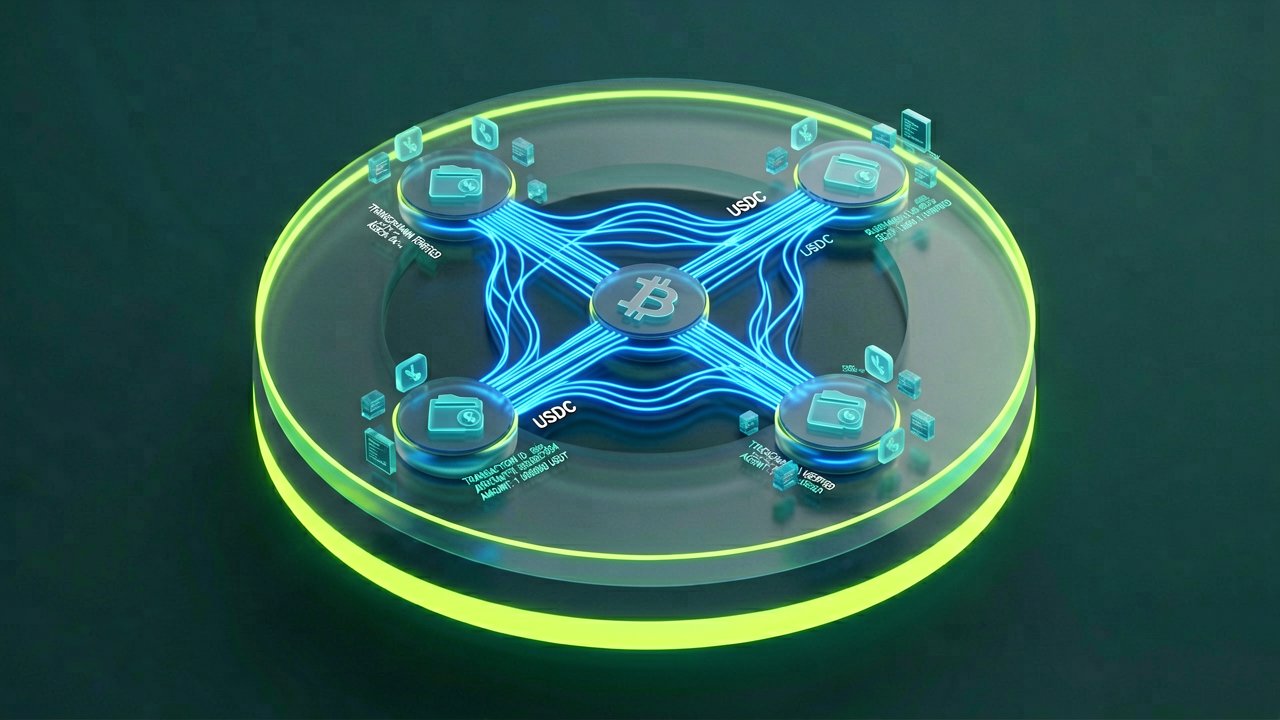
Circle Internet Group announced the launch of Circle Agent Stack on May 11, 2026, a suite of services designed to support autonomous AI agents as economic actors. The platform includes tools that let agents hold assets, discover services, and transact programmatically with USDC across supported blockchains.
The announcement comes from Circle's official pressroom, where the company details the initial product lineup: Circle CLI, Agent Wallets, Agent Marketplace, and Nanopayments powered by Circle Gateway. These products are immediately available at http://agents.circle.com, according to the official Circle press release.
Jeremy Allaire, Co-Founder, Chairman and CEO of Circle, stated that financial infrastructure has historically been built for people, with manual onboarding and approval flows never designed for software acting on its own. He positioned this as the first full suite of services where AI agents themselves are the customers, not just developers and enterprises.
The technical specifications matter here. Nanopayments powered by Circle Gateway enables gas-free USDC transfers as small as $0.000001 at machine-speed and scale. This is designed for high-frequency, sub-cent, machine-to-machine payment flows. For developers, this means no more wrestling with transaction fees that eat into micro-transaction margins (a problem that has plagued users for years, frankly).

Agent Wallets are permissionless, policy-controlled wallets optimized for agents to hold, send, and manage funds autonomously within predefined guardrails. Agents can sign-up and begin using these immediately. The physical reality of this is that developers no longer need to manually configure wallet permissions for each agent instance—they can set policy controls once and deploy at scale.
Circle CLI provides a command interface that lets developers and AI agents build applications on top of Circle's entire platform suite, with a deep focus on wallets, payments, and policy management for agents. This is a command-line tool, meaning developers interact with it through terminal commands rather than clicking through a graphical interface.
The Agent Marketplace functions as a curated directory of agentic services that both humans and AI agents can browse, evaluate and integrate with. This enables agents to discover and pay for services programmatically. Think of it as an app store where the customers are software agents, not humans with credit cards.
Nikhil Chandhok, Chief Product and Technology Officer at Circle, explained that USDC is uniquely well-suited for the agentic economy because it is internet-native, programmable, and always available. By combining trusted digital dollars with programmable wallets, service discovery, machine-readable controls, and payment infrastructure built for software, the company is helping developers build systems where agents can transact as seamlessly as software communicates.

Circle (NYSE: CRCL) positions itself as one of the world's leading internet financial platform companies, building the foundation of a more open, global economy through programmable blockchain infrastructure, digital assets, and payment applications. The company's platform includes the world's largest stablecoin network anchored by USDC, Circle Payments Network for global money movement, and Arc, an enterprise-grade blockchain designed to become the Economic OS for the internet.
The timing of this launch is significant. As AI agents play a more active role in economic activity, developers and autonomous agents need financial infrastructure built for machine-speed, extreme cost-efficiency and global availability and interoperability. Something that is only possible with stablecoins and onchain infrastructure, according to Circle's documentation.
Circle Agent Stack provides open, composable building blocks that help both developers and autonomous AI agents to hold assets, discover services, and transact programmatically within defined permissions, spending controls, and other guardrails. Together with Circle Skills, these products extend Circle's developer platform with the interface, tools and payment rails needed to support more autonomous participation in the emerging agentic economy.
The practical implications for developers are straightforward. Instead of building custom payment infrastructure for each AI agent, developers can now use Circle's pre-built tools. This reduces development time and eliminates the need to manage blockchain gas fees for micro-transactions.
However, the success of this infrastructure depends on adoption. Developers need to integrate these tools into their AI agent workflows, and businesses need to accept payments from autonomous agents. The technology exists, but the ecosystem needs to mature.
Whether the agentic economy becomes a reality or remains a niche use case depends on factors beyond Circle's control. Regulatory frameworks, enterprise adoption, and the actual utility of autonomous agents in economic transactions will determine if this infrastructure sees widespread use. The code is ready. The market remains to be convinced.
Artūras Malašauskas is an AI Systems Integrator with 20+ years of production-grade web engineering experience. He has designed, shipped, and scaled enterprise Python/PHP systems for logistics, SaaS, and public-sector clients. For the past year, he has focused exclusively on AI integrations: deploying open-source LLMs, building generative media pipelines (image, audio, video), and engineering multi-agent workflows for real production environments. His standard: reproducibility, security, cost-efficient inference—no vaporware. He documents and evaluates emerging AI tooling, separating verified capabilities from marketing noise. Technical editor at: muza-ai.eu, ai-verslas.lt, ai-naujinos.lt Connect on LinkedIn
Comments