Cloudera Launches Zero-Copy Connector for ServiceNow AI Workflows

At ServiceNow's Knowledge26 conference on May 5, 2026, Cloudera announced the Workflow Data Fabric Zero Copy Connector for ServiceNow, an integration designed to let AI agents query data where it already lives without requiring duplication or transfer.
The connector addresses a persistent bottleneck in enterprise AI deployment: data accessibility across fragmented environments. According to Cloudera's official press release, nearly 80% of organizations report their AI initiatives are hindered by incomplete data access. The company's internal research suggests this gap between strategy and execution is driving demand for architectures that eliminate data movement.
Traditional AI workflows often require copying data into centralized locations for processing. This approach creates redundant storage, increases costs, and complicates compliance for sensitive information like personally identifiable information, healthcare records, and financial data. The zero-copy connector bypasses these pipelines entirely, allowing ServiceNow AI agents to execute workflows while maintaining strict governance controls.
Leo Brunnick, Chief Product Officer at Cloudera, emphasized the traceability requirement for production-scale AI. "Enterprises cannot scale autonomous AI without being able to prove why decisions are made," Brunnick stated. "Without this traceability, organizations cannot safely deploy AI agents or meet regulatory demands." This concern is particularly acute for Chief Information Security Officers, Chief Data Officers, and Chief AI Officers who bear the compliance burden as AI moves from pilot to production.
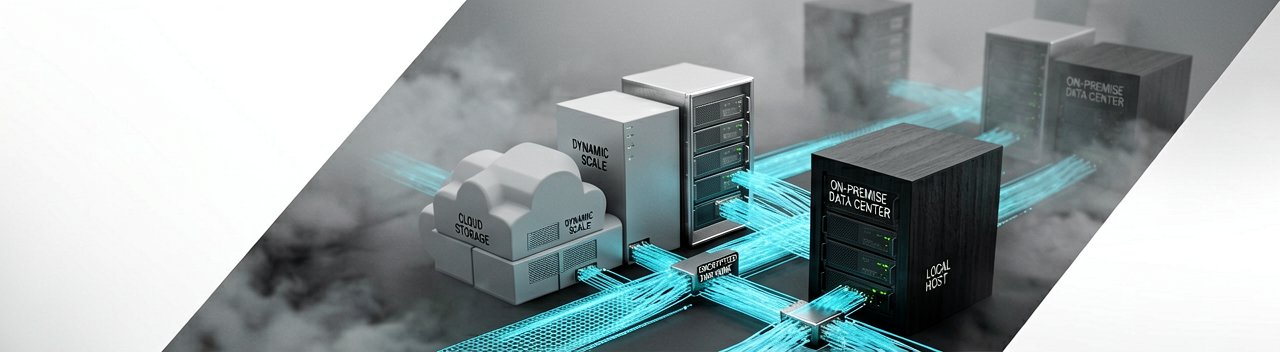
The integration supports compliance with regulations including the EU AI Act, DORA, and HIPAA. By keeping sensitive data within protected hybrid environments—whether on-premises, in public clouds, or at the edge—organizations can meet security requirements without sacrificing AI capabilities. The connector is positioned as the first-to-market solution delivering hybrid-native, true zero-copy AI governance integrated with ServiceNow.
ServiceNow joined Cloudera's Enterprise AI Ecosystem in 2025, and this connector extends that partnership. Pramod Mahadevan, VP of Data & Analytics Product Ecosystem at ServiceNow, noted that Cloudera breaks down data silos by bringing enterprise data into a single, governed platform. "By leveraging those high-quality insights, we're able to drive intelligent automation and workflows, enabling closed-loop remediation that helps organizations quickly identify, address, and resolve issues with greater efficiency and confidence on the ServiceNow AI Platform."
The technical architecture leverages Cloudera's hybrid platform foundation, which converges public clouds, on-prem data centers, and edge deployments. The company has also emphasized openness through Apache Iceberg, an open data lakehouse framework under the Cloudera platform umbrella. Apache Iceberg combines data lake flexibility with SQL and transaction performance of data warehouses, using open formats to reduce vendor dependence.
Cloudera's Data Lineage technology provides explainable AI capabilities by tracking the origin and transformation history of enterprise data. This functionality is part of Cloudera Shared Data Experience, the company's governance and metadata management layer. The ability to link every AI-driven action back to its source data without moving sensitive information is central to the connector's value proposition.
At Knowledge26, Cloudera participated in sessions including "Fuel ServiceNow AI Agents with Zero Copy Data" at 3pm on Tuesday, May 5, and "Cloudera Enterprise Data Meets ServiceNow AI for Agentic Workflow" at 2:30pm on Thursday, May 7. The company's booth was located at #4514.
Independent reporting from IT Brief highlights regional relevance, particularly in Australia and New Zealand where businesses face growing pressure to demonstrate AI transparency and auditability. Vini Cardoso, Chief Technology Officer for Cloudera Australia and New Zealand, noted that Australian organizations want faster AI adoption but remain cautious about data handling in highly regulated sectors like financial services and healthcare.
The connector's physical reality is straightforward: no more waiting for data pipelines to complete, no more managing redundant storage copies, no more worrying about where sensitive data sits during AI processing. The workflow executes against data in place, which drastically reduces latency (a problem that has plagued users for years, frankly).
Whether enterprises actually adopt this at scale depends on whether the governance benefits outweigh the complexity of integrating another layer into their data architecture. The technology solves a real problem, but the market will decide if it's worth the investment.
Artūras Malašauskas is an AI Systems Integrator with 20+ years of production-grade web engineering experience. He has designed, shipped, and scaled enterprise Python/PHP systems for logistics, SaaS, and public-sector clients. For the past year, he has focused exclusively on AI integrations: deploying open-source LLMs, building generative media pipelines (image, audio, video), and engineering multi-agent workflows for real production environments. His standard: reproducibility, security, cost-efficient inference—no vaporware. He documents and evaluates emerging AI tooling, separating verified capabilities from marketing noise. Technical editor at: muza-ai.eu, ai-verslas.lt, ai-naujinos.lt Connect on LinkedIn
Comments