AnySearch Launches Search Infrastructure Built for AI Agents

Hong Kong-based startup AnySearch officially launched on May 11, 2026, positioning itself as search infrastructure purpose-built for AI agents rather than human users. The company announced the release through a PRNewswire press release, marking what it describes as a fundamental shift in how AI systems access information.
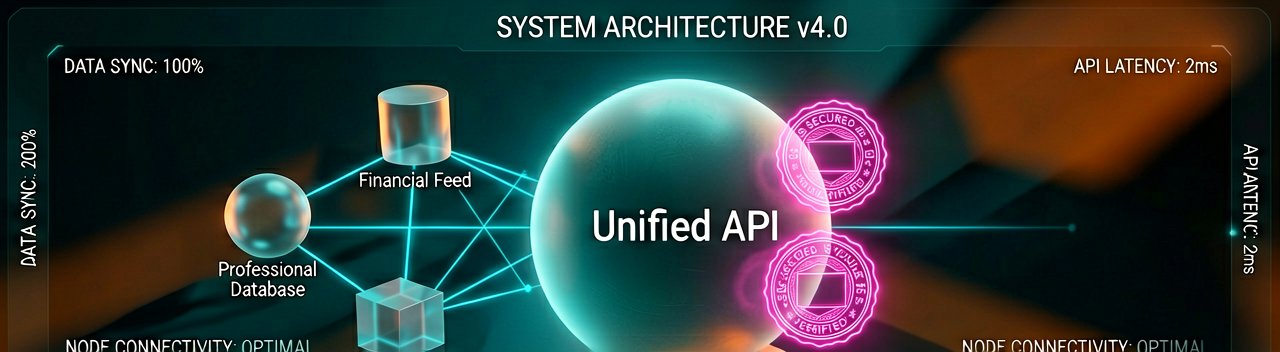
Unlike traditional search engines that crawl the public web, AnySearch operates on a different premise: much of the data AI agents actually need isn't publicly searchable. The platform aggregates authenticated professional systems including industry databases, real-time financial terminals, code repositories, academic platforms, and structured API services. This distinction matters because AI agents handling sophisticated tasks like security audits or software development require reliable, structured information rather than unstructured webpages.
The product delivers a single unified API that lets AI agents retrieve accurate, structured results without developers managing dozens of disparate data interfaces. AnySearch natively supports Skill, MCP, and API connectivity, enabling integration into AI agents, enterprise systems, and automated workflows. The team's stated goal is straightforward: traditional search engines access only a small fraction of the internet, but AI agents need secure, reliable, structured, and real-time information that supports reasoning and execution.
Vertical data sources span finance, legal, academic research, cybersecurity, energy, and corporate intelligence. Rather than sifting through vast amounts of unstructured web content, AnySearch intelligently routes queries to the most relevant specialized data sources and returns execution-ready results. This routing logic is the core differentiator (developers have been manually stitching together these connections for years, honestly).

Internal benchmark evaluations across Frames, FreshQA, and WebWalkerQA show AnySearch delivered stronger results than public-web-based AI search products in both answer accuracy and execution efficiency. In complex real-world scenarios including code retrieval, security analysis, real-time business decision-making, and industry research, agents integrated with AnySearch demonstrated stronger capabilities in information seeking and task completion.
The product is now available across multiple developer ecosystems including GitHub, skills.sh, ClawHub, SkillHub, and Glama. Users currently receive 1,000 free API calls per day. The company maintains a GitHub repository for developers to explore integration options and technical documentation.
Industry observers note AI is reshaping the underlying logic of search. For decades, search engines focused on helping people access webpages. As AI agents become more active across the digital ecosystem, the next generation of search infrastructure focuses on enabling AI systems to better understand the world and autonomously complete tasks. From this perspective, AnySearch positions itself as infrastructure for the AI era rather than just another AI search product.
The physical reality of this shift becomes apparent when considering developer workflow. Instead of clicking through multiple authentication portals, managing separate API keys for financial terminals, academic databases, and code repositories, developers now configure a single endpoint. The latency reduction alone (measured in seconds per query across multiple data sources) compounds significantly when agents execute hundreds of queries per hour.
Whether enterprises actually adopt this model at scale remains the real question. The infrastructure approach requires trust in centralized data routing, and the 1,000 free API calls per day will eventually hit limits for production workloads. Pricing details beyond the free tier weren't disclosed in the launch materials.
AnySearch's website at anysearch.com provides additional technical documentation and integration guides. The company's positioning suggests they're betting that AI agents will increasingly need structured, authenticated data access rather than open web crawling. Whether that bet pays off depends on whether developers find the unified API more valuable than maintaining their own data connections.
Artūras Malašauskas is an AI Systems Integrator with 20+ years of production-grade web engineering experience. He has designed, shipped, and scaled enterprise Python/PHP systems for logistics, SaaS, and public-sector clients. For the past year, he has focused exclusively on AI integrations: deploying open-source LLMs, building generative media pipelines (image, audio, video), and engineering multi-agent workflows for real production environments. His standard: reproducibility, security, cost-efficient inference—no vaporware. He documents and evaluates emerging AI tooling, separating verified capabilities from marketing noise. Technical editor at: muza-ai.eu, ai-verslas.lt, ai-naujinos.lt Connect on LinkedIn
Comments