Naughty Dog Uses AI Animation Tools, Sony Confirms
During a recent investor-focused results presentation, Sony executives confirmed that first-party PlayStation Studios are actively deploying artificial intelligence tools in game development. The announcement came from Sony Group CEO Hiroki Totoki and PlayStation Studios president Hideaki Nishino, who outlined the company's approach to integrating AI into production workflows.
The core technology at play is Mockingbird, an AI-powered system that generates character animations from facial gestures recorded during performance capture sessions. According to reporting from TheGamer, Naughty Dog and San Diego Studio have already adapted Mockingbird for their own use. This means the studio behind The Last of Us and Uncharted is now using machine learning to translate motion capture data into facial animations.
Nishino explained that the technology was primarily being used to speed up repetitive tasks and quality assurance. The distinction matters: this isn't generative AI creating entire character performances from scratch. Instead, it's processing existing human performance data more efficiently. The physical reality of this workflow involves actors wearing capture suits and head-mounted cameras, with AI handling the interpolation between recorded frames.
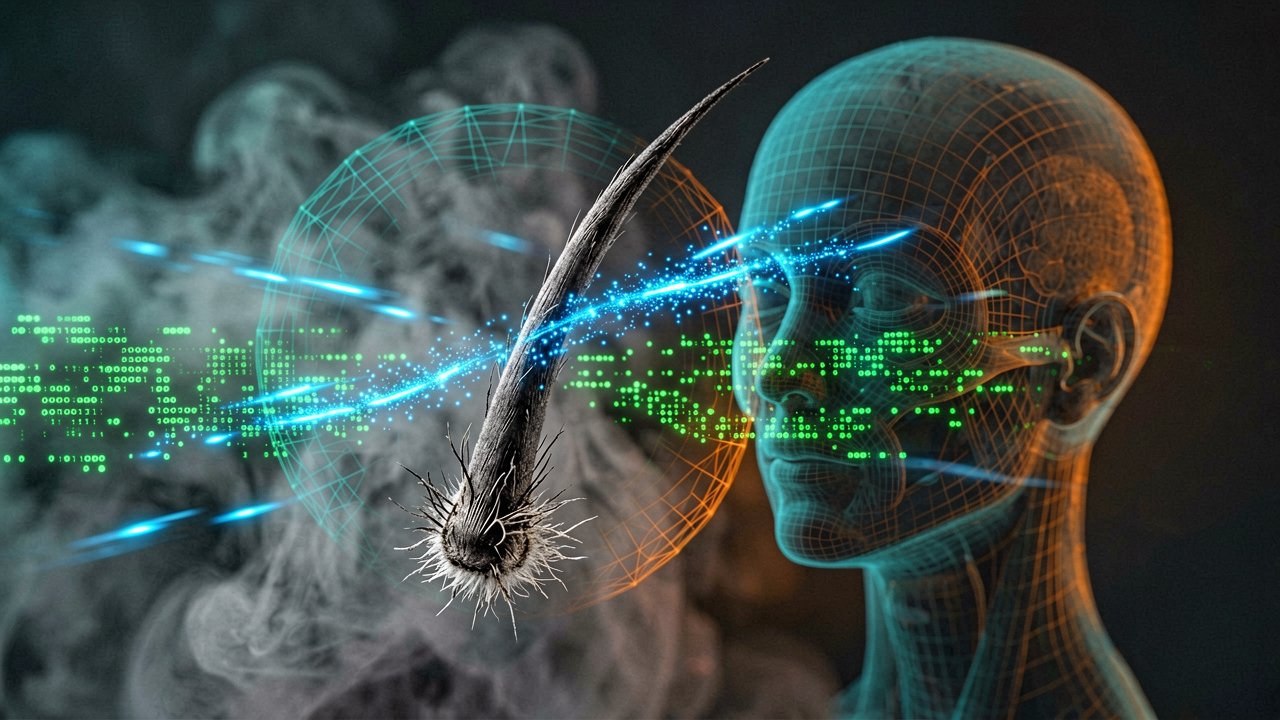
Separately, Nishino discussed how Horizon Zero Dawn Remastered had used another AI tool to model the hair of main character Aloy. Video footage of real-world hairstyles was converted into a detailed 3D model using the tool, slashing the time it would have taken to build such models by hand. This is the kind of technical detail that matters to animators—hair simulation has historically been one of the most computationally expensive aspects of character rendering.

Nishino also mentioned the use of AI to improve PS5 Pro visual fidelity, via the console's PlayStation Spectral Super Resolution (PSSR) technology, which allows for better visuals at improved frame rates. The machine learning models here analyze lower-resolution renders and upscale them in real-time, something users can witness in Saros and Ghost of Yotei.
"AI is a powerful tool, but it is not a replacement for artists or creators. It is an amplifier of human imagination and catalyst for new possibilities," said Totoki. Nishino echoed this sentiment, stating: "The vision, the design and the emotional impact of our games will always come from the talent of our studios and performers. AI is meant to augment their capabilities, not to replace them."
Independent reporting from IGN corroborates the timeline and scope of these changes. The outlet also noted that Sony had used AI-powered payment routing to generate an additional $700 million in revenue over recent years, simply by routing transactions over different payment networks. Machine-learning is also being used to build personalized purchasing suggestions, recommending games, subscriptions or merchandise to the fans most likely to buy them.
The practical implications for developers are significant. Facial animation pipelines have traditionally required hours of manual cleanup after motion capture sessions. Animators would sit through footage frame-by-frame, adjusting blend shapes and fixing artifacts where the capture data didn't translate cleanly to the 3D model. Mockingbird automates much of this grunt work (which is tedious enough that anyone who's done it will appreciate the time savings).
However, the technology isn't without controversy. Opponents argue the hardware and environmental costs are too high for the technology to be viable. Also, on a creative level, artists will gradually be influenced by gen AI, inevitably making the final game more derivative than it might've been if it was created wholly by human hands. The question isn't whether the tools work—they demonstrably do—but whether widespread adoption will homogenize the visual language of AAA games.
Sony Pictures has already invested over $50 million into AI tech, using algorithms for production planning, content protection, data analysis, and even 3D video conversion. Sony Music is working on an industry-wide standard for AI content labeling, just so everyone knows when a machine made something versus a human. The gaming division is following a similar playbook, though with more emphasis on production efficiency than content generation.
Whether this actually improves the final product remains to be seen. The tools are designed to save time and reduce costs, but the emotional resonance of a character's performance still depends on the actor's craft and the director's vision. AI can interpolate frames, but it can't decide what emotion should land in a particular scene. That's still human work.
For now, the industry watches to see if these tools deliver on their promises without eroding the creative pipeline. Whether players notice the difference in the final product is another question entirely.
Artūras Malašauskas is an AI Systems Integrator with 20+ years of production-grade web engineering experience. He has designed, shipped, and scaled enterprise Python/PHP systems for logistics, SaaS, and public-sector clients. For the past year, he has focused exclusively on AI integrations: deploying open-source LLMs, building generative media pipelines (image, audio, video), and engineering multi-agent workflows for real production environments. His standard: reproducibility, security, cost-efficient inference—no vaporware. He documents and evaluates emerging AI tooling, separating verified capabilities from marketing noise. Technical editor at: muza-ai.eu, ai-verslas.lt, ai-naujinos.lt Connect on LinkedIn
Comments