Coremail Unveils AI-Native Secure Email System for Enterprise Agents
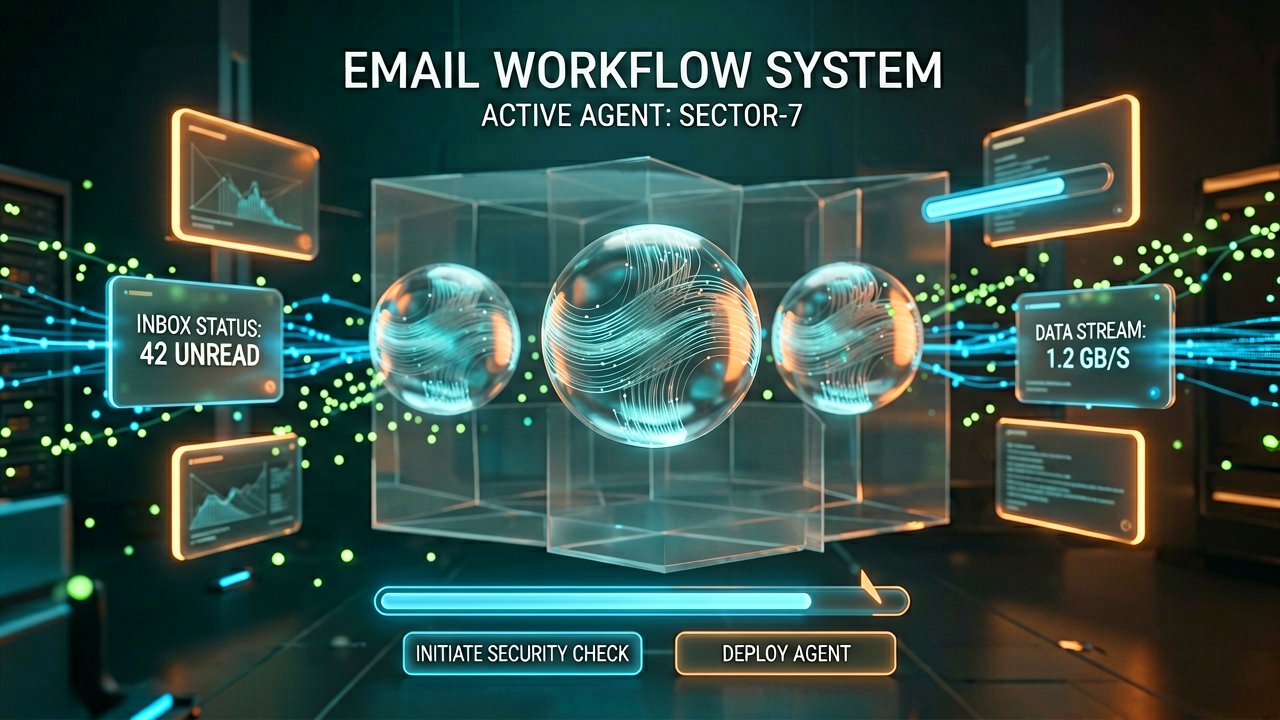
On April 30, 2026, Coremail officially unveiled its AI-Native Secure Email System at the 9th Digital China Summit in Beijing. The announcement positions the company's enterprise email platform as an intelligent collaboration hub rather than a traditional messaging tool. This shift reflects the broader industry movement toward what Coremail calls the "Year of the Agent" in 2026.
The system operates on a "Perceive-Think-Act" architecture, which Coremail describes as a CLI-driven model designed for agent-friendly operations. According to the official press release, the platform combines large language models as its cognitive engine with agents as the execution layer and enterprise data as the operational core.
Five distinct agent types handle specific enterprise scenarios: email classification, search, analysis, meeting scheduling, and system operations. The classification agent filters and prioritizes important messages. The search agent supports advanced retrieval for fast information discovery. The analysis agent organizes communication context and generates reports. The scheduling agent coordinates meetings to reduce repetitive communication. The operations agent performs intelligent troubleshooting and diagnostics.
Security remains the foundation of the architecture. The system implements a dual-layer sandbox isolation model built around user-level sandboxing and least-privilege access control. AI agents operate exclusively within independent encrypted execution environments. This design enables automated orchestration across complex email workflows while maintaining strict boundaries on data access and permissions (which is exactly what enterprise IT teams have been demanding for years).
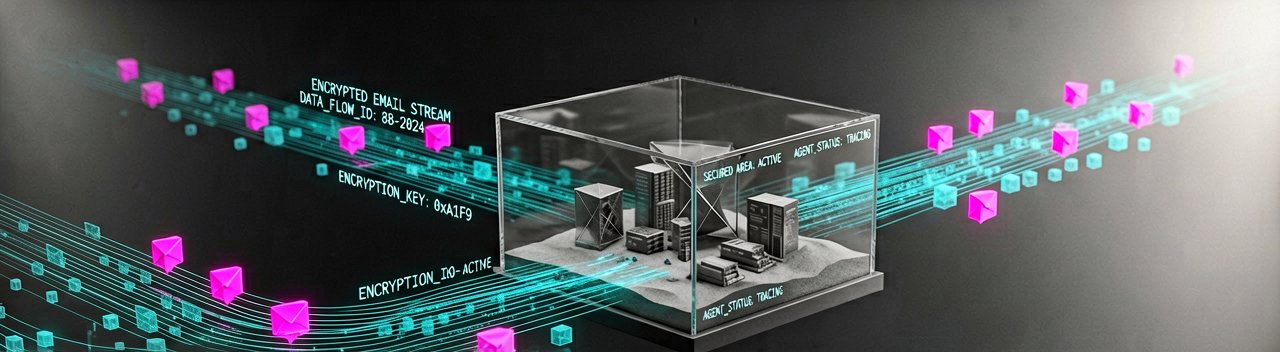
The platform supports the Model Context Protocol (MCP) for ecosystem integration. Third-party tools and APIs can be dynamically integrated within a secure sandbox environment on demand. This transforms email from a simple information container into a unified entry point for enterprise-wide workflow orchestration.
Marvin Wu, Vice President of Coremail, stated that "AI is reshaping enterprise productivity, and email is evolving from a communication tool into an intelligent collaboration hub." The company plans to continue advancing AI-native innovation to help enterprises build more secure and efficient digital workplaces.
User interface upgrades accompany the backend changes. The system introduces a three-pane information layout, optimized grouping logic, floating prompts, and quick-access functions. These features aim to streamline operations and create a more intuitive workplace experience. The smart dashboard automatically identifies business priorities and task urgency through user-profile and behavioral analysis.
Coremail's official website notes the company serves over 20,000 enterprise customers and supports more than 1 billion end users globally. The firm has operated for over 27 years with solutions adopted across government, finance, education, healthcare, and energy sectors. The company's product documentation highlights over 70 invention patents and more than 100 software copyrights focused on email systems, security, and data compliance.
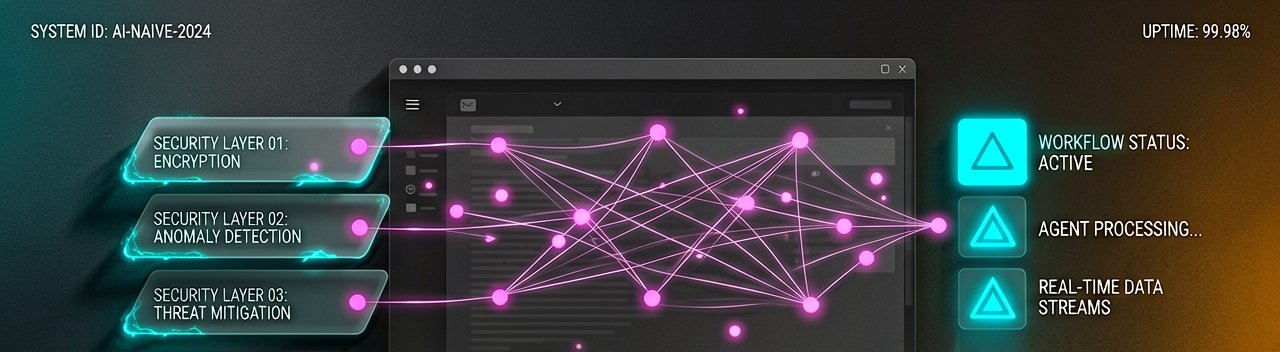
The system is designed to support six core enterprise scenarios: email classification, scheduling, approval workflows, workplace collaboration, email analytics, and system operations. Each scenario enables specific capabilities like advanced email retrieval, intelligent meeting coordination, automated analysis and classification, and AI-assisted operations management.
Whether organizations actually adopt agent-driven email workflows at scale remains the real question. The technology exists, but enterprise IT departments will need to verify that automated actions don't introduce new compliance risks or operational blind spots. Users will also need to trust that the system won't accidentally delete or misroute critical communications.
Coremail's approach balances innovation with the security constraints that enterprise customers demand. The dual-layer sandbox architecture addresses permission concerns, but the real test comes during deployment. Whether the promised efficiency gains materialize in actual workplace environments will depend on how well the agents handle edge cases and unexpected scenarios. The inbox of tomorrow is here, but it still needs to prove it won't break things.
Artūras Malašauskas is an AI Systems Integrator with 20+ years of production-grade web engineering experience. He has designed, shipped, and scaled enterprise Python/PHP systems for logistics, SaaS, and public-sector clients. For the past year, he has focused exclusively on AI integrations: deploying open-source LLMs, building generative media pipelines (image, audio, video), and engineering multi-agent workflows for real production environments. His standard: reproducibility, security, cost-efficient inference—no vaporware. He documents and evaluates emerging AI tooling, separating verified capabilities from marketing noise. Technical editor at: muza-ai.eu, ai-verslas.lt, ai-naujinos.lt Connect on LinkedIn
Comments