Sony SIE Chief Promises AI Gaming Revolution, But Where's the Proof?
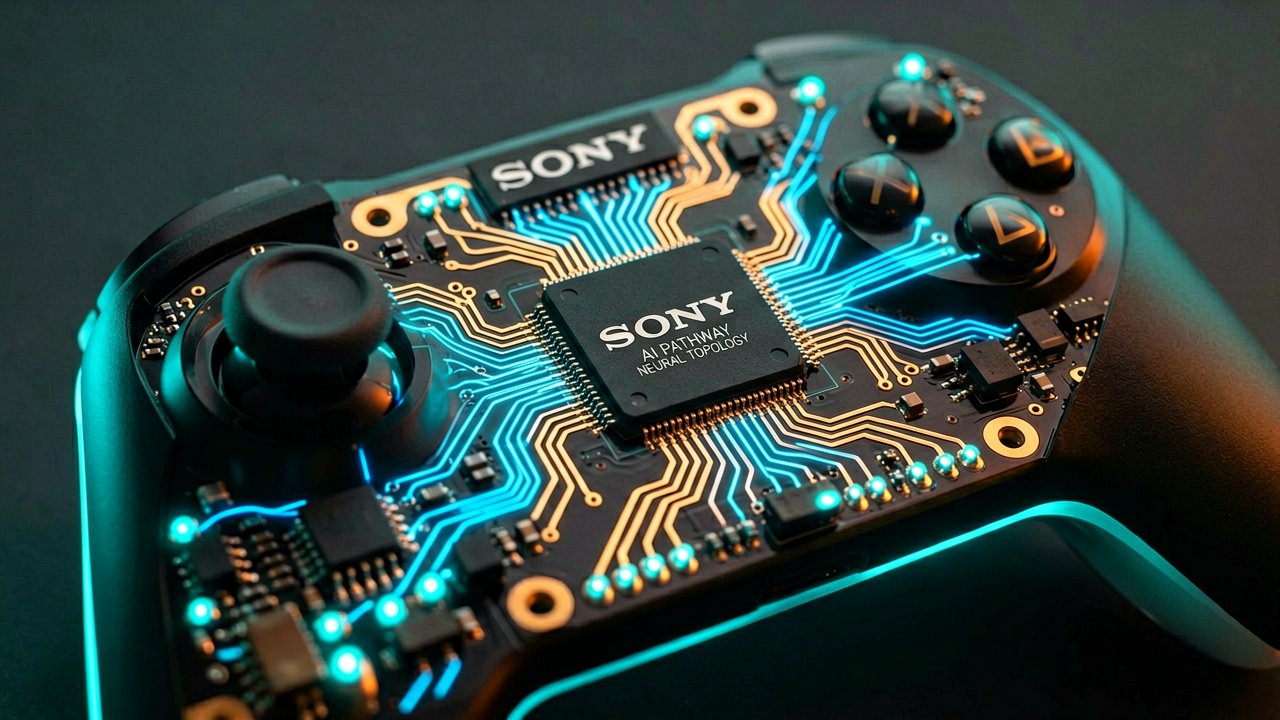
Sony Interactive Entertainment president and CEO Hideaki Nishino recently doubled down on artificial intelligence during the company's quarterly earnings presentation, declaring that AI will enable "gaming experiences like never before." The statement landed with the thud of another corporate promise in an industry that has been talking about AI transformation for years without much to show for it in actual shipped products.
Nishino's comments came during Sony's corporate strategy presentation, where he positioned AI as a "powerful tool" that would deliver "more immersion, more adventures, and fresh ways to enjoy [your] favorite characters." The language is familiar enough that you could almost hear the PowerPoint clicking through the slides. But buried in the enthusiasm were some actual specifics worth examining.
According to reporting from PC Gamer, Nishino detailed internal AI tools already deployed across Sony's first-party studios. The most concrete example: a facial animation system called "Mockingbird" that processes performance capture data to animate 3D facial models. Sony claims animation work that previously took hours can now complete in "a fraction of a second."
Naughty Dog and Santa Monica Studio have adopted the tool, with work appearing in titles including Horizon Zero Dawn Remastered. The company insists they're "not replacing human performers, but rather optimizing how we process the data from these live captures." That distinction matters, though the practical impact on employment remains murky (a problem that has plagued users for years, frankly).

The Verge corroborated the earnings presentation details, noting Sony's broader AI strategy extends beyond animation. The company has partnered with Bandai Namco to explore generative AI in video production, and Nishino emphasized AI's role in the platform business itself—everything from payment processing to storefront curation. "Our AI capabilities will evolve into a consumer-centric experience that not only suggests the next game a player might enjoy, but also the next gameplay moment, subscription, accessory, or merchandise that best reflects their passion."
Here's where the rubber meets the road: Nishino claimed AI models can "outperform manual curation." That's a bold statement for anyone who's ever received a PlayStation recommendation that felt like it was generated by someone who'd never played a game in their life. The physical reality of clicking through those algorithmic suggestions—watching the loading spinner, scrolling past titles you've already beaten, or worse, games you'd never touch—isn't exactly the "immersive experience" being promised.
The tension in Nishino's messaging is palpable. On one hand, he's selling AI as a creative liberator: "AI is lowering barriers to creation, accelerating development cycles, and enabling more creators to enter the market." On the other, the same technology that "optimizes" animation workflows also means fewer hours billed, fewer contractors hired, and potentially fewer full-time positions. The industry has been through this dance before with every new efficiency tool, and the outcome is rarely the utopian vision executives describe.
What's missing from the presentation is any timeline for consumer-facing AI features. The Mockingbird tool exists, but players won't notice it beyond smoother facial animations. The recommendation algorithms are already running in the background. The "gaming experiences like never before" remain abstract—more marketing language than concrete product roadmap.

Compare this to Sony AI's separate robotics division, which published research in Nature about Ace, a table tennis robot that can compete with elite human players. That's tangible, measurable, and demonstrable. The gaming AI promises? Still waiting on the actual games.
Whether users actually pay for these AI-enhanced experiences remains the real question. The hardware costs are already climbing, and the promise of "more immersion" doesn't always translate to better gameplay. Nishino concluded that "AI will unleash the creativity of our studios, power a more curated platform, and enhance the PlayStation experience for both players and creators." That's a lot of faith in technology that's still figuring out how to recommend games without suggesting the same thing twice.
Artūras Malašauskas is an AI Systems Integrator with 20+ years of production-grade web engineering experience. He has designed, shipped, and scaled enterprise Python/PHP systems for logistics, SaaS, and public-sector clients. For the past year, he has focused exclusively on AI integrations: deploying open-source LLMs, building generative media pipelines (image, audio, video), and engineering multi-agent workflows for real production environments. His standard: reproducibility, security, cost-efficient inference—no vaporware. He documents and evaluates emerging AI tooling, separating verified capabilities from marketing noise. Technical editor at: muza-ai.eu, ai-verslas.lt, ai-naujinos.lt Connect on LinkedIn
Comments