AI Industry Shifts to Agentic Commerce and Open Ecosystems in May 2026

The AI landscape shifted perceptibly during the first week of May 2026, with OpenAI, Meta, Apple, and Anthropic all announcing moves that signal a transition from conversational assistants to autonomous commercial agents. The MarketingProfs AI Update from May 8 captures the breadth of these developments, though the implications run deeper than the headlines suggest.
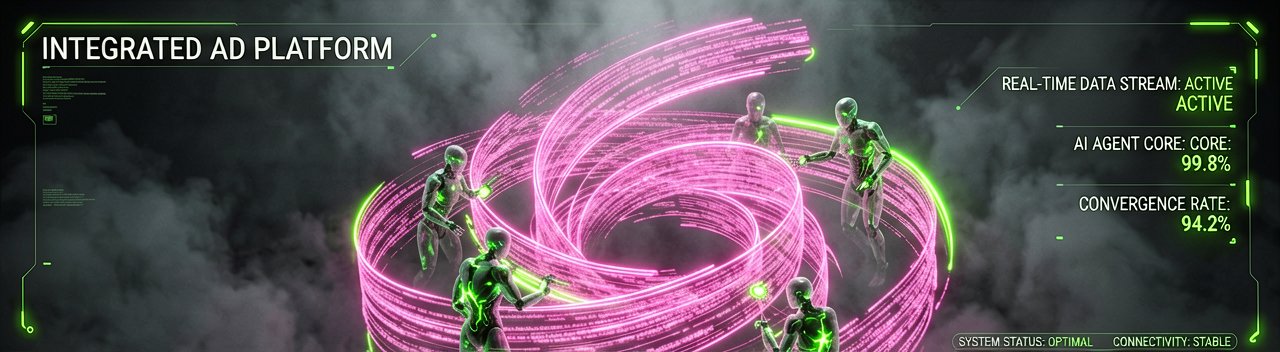
OpenAI launched a self-serve Ads Manager platform inside ChatGPT, allowing advertisers to create and optimize campaigns directly within the interface. The company reportedly targets $2.5 billion in ad revenue this year, with ambitions reaching $100 billion annually by 2030. The platform supports cost-per-impression and cost-per-click models, integrating with major agency holding companies including Dentsu, Omnicom, Publicis, and WPP. OpenAI insists ads won't influence organic outputs, but the friction of scrolling through sponsored responses alongside genuine answers is already visible in early user reports.
This advertising expansion marks ChatGPT's evolution from an information platform into a commercial advertising ecosystem. The physical reality of this shift means users now encounter paid placements embedded in conversational flows—a change that fundamentally alters how brands reach audiences through search and discovery. Whether this feels like helpful recommendations or intrusive monetization depends largely on how well the targeting works (and whether users can actually tell the difference).
Meta is reportedly developing an advanced agentic AI assistant powered by its Muse Spark model, designed to autonomously perform tasks across software and hardware environments with minimal human intervention. The company is also testing an internal agent called "Hatch" and plans to integrate agentic shopping features into Instagram before year-end. This push reflects Meta's escalating AI investment strategy despite investor scrutiny over infrastructure spending and declining engagement trends.

The sensory experience of agentic shopping differs markedly from traditional e-commerce. Instead of clicking through product pages and comparing prices, users will delegate purchase decisions to AI systems that navigate catalogs, negotiate terms, and complete transactions independently. The interface becomes invisible—replaced by confirmation notifications and occasional override prompts when the agent encounters ambiguity.
Apple is preparing a major platform shift that would allow users to select third-party AI providers such as Google and Anthropic to power Apple Intelligence features across iOS 27, iPadOS 27, and macOS 27. The capability, internally called "Extensions," would let AI providers integrate through App Store applications, giving users flexibility over which models handle text generation, editing, and image tasks. Apple expects to reveal details during its developer conference in June.
This move signals Apple's attempt to accelerate AI competitiveness after lagging behind Microsoft and Google in consumer AI deployment. A more open ecosystem could fragment AI experiences across devices while expanding opportunities for providers and developers seeking deeper integration into consumer workflows. The practical impact means users might run different AI models on their iPhone versus MacBook, creating inconsistent experiences across the Apple ecosystem.
Anthropic formed a $1.5 billion AI deployment venture backed by Blackstone, Goldman Sachs, Hellman & Friedman, Apollo, and General Atlantic. The venture will embed Anthropic engineers inside midsized businesses to implement AI systems including Claude Code. This reflects growing demand for specialized deployment expertise as companies struggle to operationalize AI at scale.
The deal signals how rapidly enterprise AI adoption is moving beyond experimentation into large-scale operational deployment. It also highlights the strategic value of AI implementation services and embedded engineering as organizations race to operationalize generative AI. The physical reality involves consultants sitting in client offices, configuring systems, and training staff—a far cry from the "plug-and-play" narrative that dominated early AI marketing.
Amazon Web Services, Coinbase, and Stripe launched AgentCore Payments, a system allowing AI agents to autonomously complete stablecoin-based micropayments while executing tasks. The platform uses Coinbase's x402 protocol and USDC stablecoins to let agents pay for APIs, data feeds, online services, and paywalled content without custom billing integrations. AWS says future versions could support travel bookings, ecommerce purchases, and merchant transactions.
Autonomous AI agents capable of independently conducting transactions could accelerate machine-mediated commerce and automated purchasing systems. Brands may eventually need strategies optimized for AI agents acting as purchasing intermediaries. The friction of traditional payment flows—entering card details, confirming addresses, waiting for authorization—disappears when agents handle these steps programmatically.
OpenAI also rolled out GPT-5.5 Instant as a new default ChatGPT model, designed to provide more accurate, personalized, and context-aware responses. The update reduces hallucinated claims by more than 50% in some high-stakes scenarios and expands the system's ability to use information from past chats, uploaded files, and connected services such as Gmail. OpenAI is introducing "memory sources" controls that show users which contextual information influenced responses.
Documentation from Wikipedia's GPT-5.5 entry notes the model released April 23, 2026, with GPT-5.5 Instant reaching free-tier users on May 5, 2026. The model showed improvements on benchmarks like Terminal-Bench 2.0 and FrontierMath over competitors including Claude Opus 4.7 and Gemini 3.1 Pro. However, testing by Tom's Guide found GPT-5.5 lost in all seven categories against Claude 4.7, praising speed but criticizing hallucination tendencies.
The industry's pivot toward agentic systems represents less of an evolution and more of a coat of paint on a rusted gate—familiar infrastructure repurposed for autonomous workflows. Whether users actually pay for these capabilities, or whether advertisers can meaningfully target AI agents instead of humans, remains the real question. The technology exists; the business models are still being written.
Artūras Malašauskas is an AI Systems Integrator with 20+ years of production-grade web engineering experience. He has designed, shipped, and scaled enterprise Python/PHP systems for logistics, SaaS, and public-sector clients. For the past year, he has focused exclusively on AI integrations: deploying open-source LLMs, building generative media pipelines (image, audio, video), and engineering multi-agent workflows for real production environments. His standard: reproducibility, security, cost-efficient inference—no vaporware. He documents and evaluates emerging AI tooling, separating verified capabilities from marketing noise. Technical editor at: muza-ai.eu, ai-verslas.lt, ai-naujinos.lt Connect on LinkedIn
Comments