Hotta Studio to Rework Generative AI Assets in Neverness to Everness
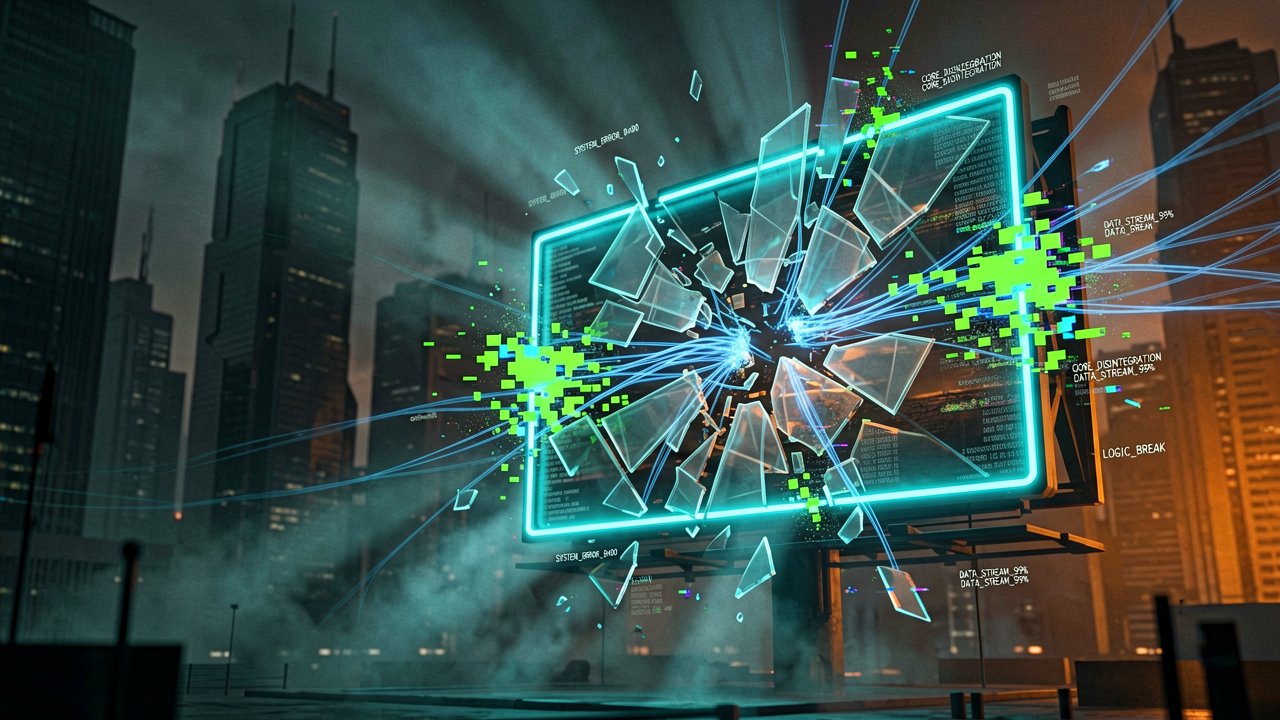
Open world gacha game Neverness to Everness (NTE) has encountered significant controversy after players identified generative AI-generated art assets scattered throughout the game's virtual city of Heathereau. The discovery triggered a public relations crisis that led to popular VTuber Ironmouse terminating her streaming contract with the title, citing deception about the technology's use.
Chinese developer Hotta Studio has now issued a formal response. The studio acknowledged that AI-assisted tools were deployed on a limited set of background and environmental assets, though they maintain the core characters, stories, and world design remain human-created work. One particularly problematic animation has already been removed from the live game while the team reworks it.
According to reporting from Push Square, the offending assets appeared primarily on advertising hoardings around the city. Players spotted strange artefacts consistent with generative AI output—glitchy text, malformed lettering, and visual inconsistencies that wouldn't appear in hand-crafted art. These weren't subtle. They stood out like a badly photoshopped celebrity endorsement in a luxury magazine.
The studio's statement reads: "Neverness to Everness is built on human creativity. The characters, stories, and world you experience are the work of artists, writers, and designers. AI-assisted tools were used only on a small number of background and environmental assets, not on the characters or stories that define this game."

This distinction matters. Generative AI trained on scraped artwork without compensation or credit has become a flashpoint in the industry. The technology doesn't create from nothing—it remixes existing human work at scale. When players notice the output, the friction becomes physical. You're scrolling through a menu, your thumb hovering over a button, and suddenly you see a billboard with gibberish text that looks like it was generated by a machine that's never seen a real advertisement. The immersion breaks. The illusion shatters.
Hotta Studio is committed to reviewing and reworking the flagged assets. The timeline for completion remains unclear, but the removal of at least one egregious animation suggests the patch pipeline is already moving. Whether this satisfies the community remains to be seen.
This isn't an isolated incident. Crimson Desert recently shipped with similar generated art assets that were promptly replaced after discovery. The pattern is becoming familiar: developers test the waters with AI-generated content, players catch it, studios scramble to fix it. The cycle repeats.
A poll at GDC earlier this year revealed over 30% of game developers are using generative AI in some capacity. That means we're increasingly going to see it wheedle its way into our favourite games (and nobody seems to be asking if players actually want this). The question isn't whether AI will appear in more titles—it's whether studios will be transparent about it.

The legal landscape remains unsettled. Generative AI models are trained on vast datasets of human-created work, often without permission. While the output is technically "original" in the sense that no single human drew it, it simply wouldn't exist without the labour of artists who came before. The environmental cost is also significant—running the server farms behind technologies like this requires enormous amounts of electricity.
Meanwhile, Sony has taken a different approach. During a Q&A following its latest financial results, Sony president and CEO Hiroki Totoki stated that "Human creativity must remain at the centre." CEO of Sony Interactive Entertainment Hideaki Nishino confirmed first-party teams are using AI solutions to automate repetitive workloads, improve software engineering productivity, and accelerate quality assurance, 3D modeling, and animations.
Nishino cited proprietary tools like Mockingbird, which uses machine learning to animate 3D facial models based on performance capture—a task that would otherwise take hours of manual work. Studios like Naughty Dog and San Diego Studio have adopted this technology, already deployed in released games such as Horizon Zero Dawn Remastered. Hair animation is another area where AI significantly eases workload, with teams taking videos of real hairstyles and having AI tools output 3D models with hundreds of strand models.
The key difference: none of these examples appear to utilize generative AI in the way NTE did. Sony's approach focuses on augmentation—making existing human workflows more efficient rather than replacing creative labour with algorithmic output. The vision, design, and emotional impact of games will always come from studio talent, Nishino emphasized.
Ironmouse's contract termination highlights the stakes. When creators feel misled about the technology powering the products they promote, the consequences are immediate and public. Streaming contracts are built on trust. Break that trust, and the relationship ends.
Hotta Studio's response walks a fine line. They're not denying AI use—they're contextualizing it. Background assets, not characters. Environmental details, not core content. This framing attempts to minimize the perceived violation while acknowledging the reality of what happened.
Whether players accept this distinction is another question entirely. For many, any undisclosed generative AI use feels like a breach of contract. You're paying for a human-crafted experience. If part of that experience is algorithmically generated without disclosure, the value proposition shifts.
The patch will arrive eventually. The assets will be replaced. The controversy will fade into the background of gaming news cycles. But the precedent is set: generative AI is now a live issue in shipped games, not just a theoretical debate. Studios that use it without transparency risk community backlash. Studios that are transparent risk accusations of using it at all.
Whether users actually pay for it remains the real question.
Artūras Malašauskas is an AI Systems Integrator with 20+ years of production-grade web engineering experience. He has designed, shipped, and scaled enterprise Python/PHP systems for logistics, SaaS, and public-sector clients. For the past year, he has focused exclusively on AI integrations: deploying open-source LLMs, building generative media pipelines (image, audio, video), and engineering multi-agent workflows for real production environments. His standard: reproducibility, security, cost-efficient inference—no vaporware. He documents and evaluates emerging AI tooling, separating verified capabilities from marketing noise. Technical editor at: muza-ai.eu, ai-verslas.lt, ai-naujinos.lt Connect on LinkedIn
Comments