LegalTechTalk Launches First Vibeathon for Non-Coder Legal Tech Builders
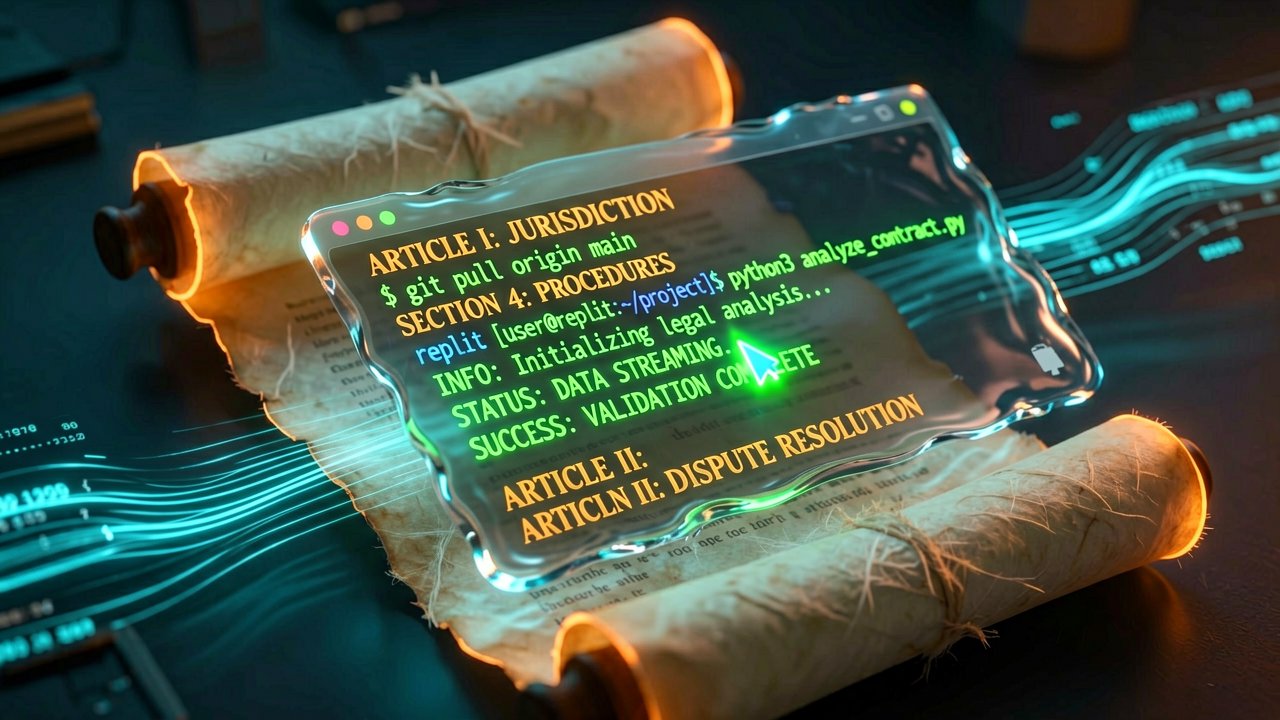
The legal technology conference circuit just got a new category of competition. LegalTechTalk announced its first Vibeathon, an event designed to let lawyers and legal professionals build working prototypes using natural language prompts instead of traditional coding skills.
This marks a notable shift from the conference's previous hackathon model, which required technical builders and developers to participate. The Vibeathon removes that barrier entirely. Attendees can walk in with an idea and use on-site AI tools to create something functional by the end of the event.
According to the announcement from Legal IT Insider, the event is being delivered in partnership with vibecode.law, Replit, and Herbert Smith Freehills Kramer. The organizers describe it as a "hackathon-style competition reimagined for the age of AI."
The mechanics are straightforward. Participants will use Replit's development environment, which allows users to code, publish, and host applications through natural language prompts. Vibecode.law provides the community platform and coaching infrastructure. This combination means someone who has never written a line of code can still produce a working prototype in a single day.
That's the physical reality of the shift. Instead of wrestling with syntax errors or debugging at 3 AM, participants type descriptions of what they want built. The AI handles the implementation. It's less of an evolution and more of a coat of paint on a rusted gate—except the gate actually opens now.
Vibecode.law itself launched in early 2026, founded by Chris Bridges (co-founder and COO of Tacit Legal), Matt Pollins (co-founder and CPO of Lupl), and Alex Baker (consultant and founder of the Legal Tech Collective). They also launched VibeAcademy this year, offering courses that take participants from zero to working prototype.
The Vibeathon runs across three competition tracks: lawyer training, access to justice, and freestyle. The freestyle category encourages experimentation with entirely new legal AI concepts. Participants can compete solo or in teams, drop into guided sessions, and build at their own pace throughout the event.
Stephanie Barrett, director of legal technology at HSF Kramer, noted the reframing at play: "What excites me about the Vibeathon is how it reframes coding as a creative skill, not a technical obstacle. By opening it up to non-technical minds, we create space for entirely new ideas and approaches that can shape the future."
Bradley Collins, CEO and co-founder of LegalTechTalk, emphasized the accessibility angle. "We want to show people just how easy it now is to take an idea, experiment with AI tools, and build something meaningful. The Vibeathon isn't just about showcasing new technology – it's about encouraging more people across legal to actively shape what comes next."
Throughout the event, vibecode.law and HSF Kramer will host demos, coaching sessions, and "surgeries" to help participants troubleshoot. The team stresses that no advance preparation is needed—attendees can arrive with just an idea. Of course, you do need a ticket for LegalTechTalk itself.
Participants upload finished prototypes to vibecode.law. A judging panel selects winners from each category, who are recognized live on stage at LegalTechTalk. Winners gain access to exclusive post-event masterclasses covering product and development learning, investor insights, and go-to-market strategy.
Pollins told Legal IT Insider about the broader context: "In the last six months, we've really seen the rise of vibe coding in legal. LinkedIn has been full of lawyers and legal professionals building apps and solving problems." The Vibeathon brings that distributed activity into one physical space.
He also highlighted the practical focus. "There is an issue around junior lawyers and how are they going to learn if they don't sit in a dark meeting room for two weeks with a lever arch file? How might we solve that with tech?" The event structures around real problems rather than vibe coding for its own sake.
The timing matters. LegalTechTalk's previous hackathon required technical builders who could code or know technical design. The Vibeathon flips this requirement entirely. Subject matter expertise now matters more than syntax knowledge. (Which is good, because most lawyers would rather argue a case than argue with a compiler.)
This reflects a broader industry shift. Legal tech products historically required developers, technical teams, or coding expertise. Now lawyers and other subject matter experts are building working prototypes themselves using AI. Removing the need for a "translator" between expertise and output can be invaluable, though the proliferation of tools creates its own management challenges.
The event takes place June 17–18, 2026, as part of LegalTechTalk's main conference. Registration for the Vibeathon requires separate interest registration beyond the base conference ticket.
Whether this actually produces viable products or just more demos remains to be seen. The real test comes when these prototypes face actual clients, compliance requirements, and the friction of real-world deployment. But for now, the barrier to entry has dropped significantly.
Artūras Malašauskas is an AI Systems Integrator with 20+ years of production-grade web engineering experience. He has designed, shipped, and scaled enterprise Python/PHP systems for logistics, SaaS, and public-sector clients. For the past year, he has focused exclusively on AI integrations: deploying open-source LLMs, building generative media pipelines (image, audio, video), and engineering multi-agent workflows for real production environments. His standard: reproducibility, security, cost-efficient inference—no vaporware. He documents and evaluates emerging AI tooling, separating verified capabilities from marketing noise. Technical editor at: muza-ai.eu, ai-verslas.lt, ai-naujinos.lt Connect on LinkedIn
Comments