Digits Embeds AI-Native Accrual Schedules Inside General Ledger

Accounting platform Digits announced two product updates on May 7, 2026, that embed accrual workflows and AI connectivity directly into its general ledger. The company introduced Digits Schedules, a system that automatically detects, drafts, and manages accrual-supporting schedules inside the ledger so accountants can confirm, modify, or dismiss proposed treatments before journal entries post. According to the official press release, schedules and supporting documents now live natively in the ledger rather than in spreadsheets or bolt-on modules.
Supporting schedules have long been a core part of accounting but remained outside the system of record, relegated to spreadsheets and workpapers. While the ledger captures transactions, schedules determine how those transactions are recognized over time, requiring accountants to identify what needs scheduling, recalculate balances, and manually create journal entries for each close cycle. Digits Schedules redefines that model: the ledger generates and manages schedules, bringing both the detection and execution of accrual workflows into the core system of record.
Key capabilities include proactive detection of transactions requiring accrual accounting, full accountant control over proposed treatments, automated recurring journal entries once finalized, and native storage in the general ledger. Schedules can also be created directly from any transaction or source document in seconds. Every schedule traces from the source transaction through each posted journal entry to the balance sheet, creating a single, continuous system of record.
Separately, Digits launched the Digits MCP Server, a connector that gives read-only access to ledger data inside AI tools such as Claude, ChatGPT, and Cursor. The April 21 press release states Digits auto-books 95%+ of transactions and that the MCP Server and API are free and available on all plans. This means accountants can query structured ledger objects without wrestling with CSV exports or API rate limits (a problem that has plagued users for years, frankly).

Industry reporting from CPA Practice Advisor corroborates the timeline and scope of the changes. The coverage notes that when schedules live outside the ledger in spreadsheets, bolt-on tools, or loosely connected modules, reconciliation gaps are inevitable. Digits eliminates that fragmentation by keeping everything in one place.
From a physical interaction standpoint, the change is tangible. Instead of switching between a ledger interface, opening Excel, copying balances, recalculating depreciation, and manually entering journal entries, accountants now click through proposed schedules within the same interface. The mouse movements are fewer. The tab switching stops. The mental load of tracking which spreadsheet version is current disappears.
Jeff Seibert, CEO and Founder of Digits, stated that supporting schedules are one of the most persistent workflows still living outside the ledger. Every firm spends hours every month identifying transactions, rolling spreadsheets forward, recalculating balances, and hand-creating journal entries for work that's almost entirely deterministic. Digits flips that model by having the ledger manage the schedules and handle the math, so accountants can focus on the judgment and advisory work their clients actually value.
Craig Walker, Head of Product Strategy at Digits and former Co-Founder & CTO at Xero, noted that QuickBooks can't do this. Xero can't do this. Even mid-market ERPs sell it as a separate product that takes months to implement before the first journal posts. Digits just made it the default behavior of the general ledger.
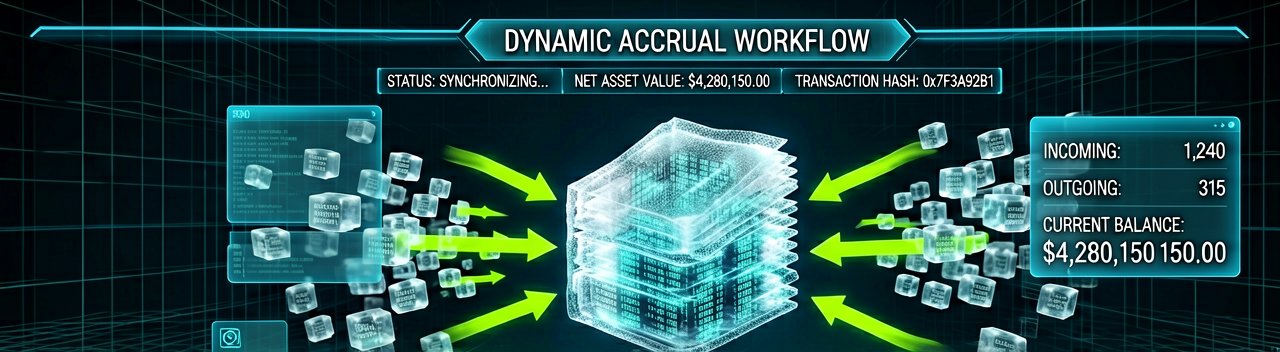
Digits Schedules launches with support for fixed assets and prepaid expenses, with revenue recognition and accrued expenses coming soon. It's now available for accounting firms on Digits for Firms plans. The company, launched in 2025, manages $850B in financial activity across hundreds of accounting firms and thousands of businesses. Digits was founded by serial entrepreneur Jeff Seibert and is backed by almost $100M from leading VCs, including Benchmark, SoftBank, and GV.
For practitioners, two patterns matter. First, embedding schedules natively reduces the need for external reconciliation steps when schedules drive recognition timing. Second, connectors that surface structured ledger objects to LLM-based tools reduce pre-processing overhead that typically precedes model-driven analysis. Both patterns shift effort earlier in the data lifecycle, toward data modeling and object identity management.
Observers should monitor three indicators to judge operational impact. One, whether independent audits or early adopters document reduced close-cycle effort or misstatements after moving schedules into the ledger. Two, how connectors handle access control and audit trails when AI tools query ledger objects, given the press releases state read-only access by design. Three, whether the claimed auto-booking rates hold across diverse customer charts of accounts and transaction types.
From a tooling perspective, practitioners will watch integrations with payroll, fixed-asset systems, and tax engines, since accrual schedules often span those domains. Trade outlets will likely surface early implementation stories that clarify end-to-end benefits and friction points. Whether firms actually adopt this workflow at scale remains the real question.
Artūras Malašauskas is an AI Systems Integrator with 20+ years of production-grade web engineering experience. He has designed, shipped, and scaled enterprise Python/PHP systems for logistics, SaaS, and public-sector clients. For the past year, he has focused exclusively on AI integrations: deploying open-source LLMs, building generative media pipelines (image, audio, video), and engineering multi-agent workflows for real production environments. His standard: reproducibility, security, cost-efficient inference—no vaporware. He documents and evaluates emerging AI tooling, separating verified capabilities from marketing noise. Technical editor at: muza-ai.eu, ai-verslas.lt, ai-naujinos.lt Connect on LinkedIn
Comments