Mississippi Government AI Adoption Slows After 2025 Surge
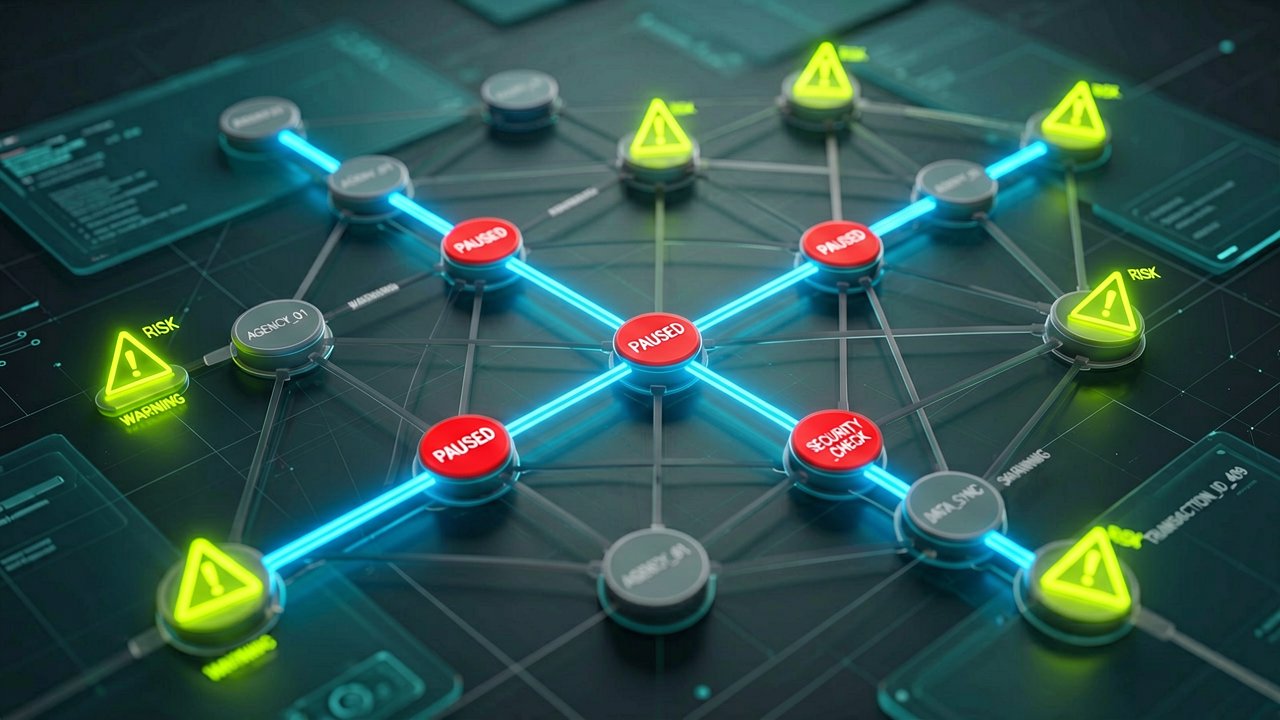
Mississippi state agencies are quietly integrating artificial intelligence into daily operations, but the rollout has hit a plateau. According to reporting from The Clarion-Ledger, the number of AI projects in state government climbed to 232 in 2025, only to add eight more projects in 2026.
The state's approach is deliberately conservative. Dr. Kollin Napier, director of the Mississippi Artificial Intelligence Network (MAIN), describes the current focus as removing mundane tasks from employees' plates. Run-of-the-mill emails, expense reports, and reimbursement checks are being handed to algorithms that can process them faster and cleaner than a person typing through a spreadsheet at 4:30 p.m. on a Friday.
"There are lots of ways that AI is being experimented with to take the mundane out of the day-to-day," Napier said. "We're looking at finance and accounting, checking things like reimbursements … Lots of things can get missed by a human, but there is always a human in the loop."
That human oversight requirement is non-negotiable. Stephanie Hedgepeth, chief strategy officer for the Department of Information Technology Services (ITS), emphasized that cybersecurity takes priority in systems being tested by the Board of Nursing and Department of Mental Health. The acceptable use policy from ITS walks agencies through exactly how they can deploy AI in their offices without compromising sensitive data.

The physical reality of this adoption is less about flashy chatbots and more about backend friction reduction. State employees still click through the same interfaces, but the algorithms are pre-filling forms, flagging anomalies in financial documents, and sorting incoming correspondence before it hits an inbox. It's invisible work that saves minutes here and there, which compounds over a fiscal year.
Medical agencies are bumping up their AI usage, though the idea of algorithms handling health information remains jarring to most Mississippians. Early adopters beyond healthcare include the employment security and environmental quality departments, as well as the arts commission. The spread is uneven, which is intentional.
Gov. Tate Reeves has worked to elevate Mississippi as one of the leaders in AI development, boosted by billions of dollars invested in data centers throughout the state. Yet the government's own adoption hasn't been full-throttle. The stagnation in 2026 reflects a recognition that employees need to adapt alongside the technology.
"Just as much as we're working on upgrading and building new tools, we need to do upskilling to show people how to use AI," Napier said. "Workforce development has to be parallel to economic development."
The UPSKILL program, passed into law this legislative session, offers free community college courses to adults in areas the state highlights as economic priorities. AI was promoted by several of the bill's proponents and echoed by Reeves. The state is betting that training workers on AI tools will keep them employed rather than displaced.
Job security concerns are real. Neither Napier nor Hedgepeth guaranteed that increased AI in state government would not lead to layoffs. But both emphasized that current policy requires a human to oversee any generated work. The role is being redesigned, not eliminated.
"When we talk about AI in the workplace, think of it as redesigning the role," Napier said. "You are in the role, because you are the knowledge expert. You have the final say-so."
He offered a slightly odd comparison: "Think of AI like an intern. A new intern has a lot of questions and the enthusiasm to solve issues, but you need to explain to them how you want things to be done and be very specific. The system is learning the human just as much as the human is learning the system."
That metaphor lands better than most corporate AI analogies. An intern makes mistakes, needs direction, and requires supervision. Treating AI as an intern rather than a replacement worker sets realistic expectations for what the technology can actually do in a bureaucratic environment.
Regulatory developments are also shaping the landscape. Mississippi Today reported that the state currently has two laws dealing with AI, with three more proposed. Senate Bill 2046, the Mississippians' Right to Name, Likeness and Voice Act, would give residents civil protections against unauthorized digital use of their identity. The bill passed the Senate on February 11 and has been referred to the House Judiciary A Committee.
Oliver Roberts, who teaches an AI course at Mississippi College School of Law, noted that the bill treats a person's name, likeness, and voice as transferable intellectual property. This creates a damages framework around unauthorized digital use, which could impact how state agencies handle AI-generated content.
The regulatory tension is real. President Donald Trump signed an executive order last year to promote AI industry growth and prevent state laws from impeding innovation. Roberts thinks SB 2046 is an unlikely target for federal intervention because it doesn't regulate foundational AI models themselves.
Whether the state's moderate AI adoption strategy actually improves efficiency or just adds another layer of complexity remains to be seen. The eight-project increase in 2026 suggests momentum has stalled, and the workforce development piece is still catching up to the technology deployment.
Napier said AI is not going anywhere. "AI is the most accessible technology we've ever had," he said. "And we have a commitment from the state to ensure that all Mississippians prosper and have the opportunity to engage with it."
That commitment sounds good in a press release. Whether state employees actually want to engage with AI tools that add another step to their workflow is a different question entirely. The technology will be there, but adoption depends on whether it makes their actual day easier or just creates more things to manage.
Artūras Malašauskas is an AI Systems Integrator with 20+ years of production-grade web engineering experience. He has designed, shipped, and scaled enterprise Python/PHP systems for logistics, SaaS, and public-sector clients. For the past year, he has focused exclusively on AI integrations: deploying open-source LLMs, building generative media pipelines (image, audio, video), and engineering multi-agent workflows for real production environments. His standard: reproducibility, security, cost-efficient inference—no vaporware. He documents and evaluates emerging AI tooling, separating verified capabilities from marketing noise. Technical editor at: muza-ai.eu, ai-verslas.lt, ai-naujinos.lt Connect on LinkedIn
Comments