Qwen PC Client Adds Voice Input; ByteDance Unveils Doubao-Seed-2.0-lite
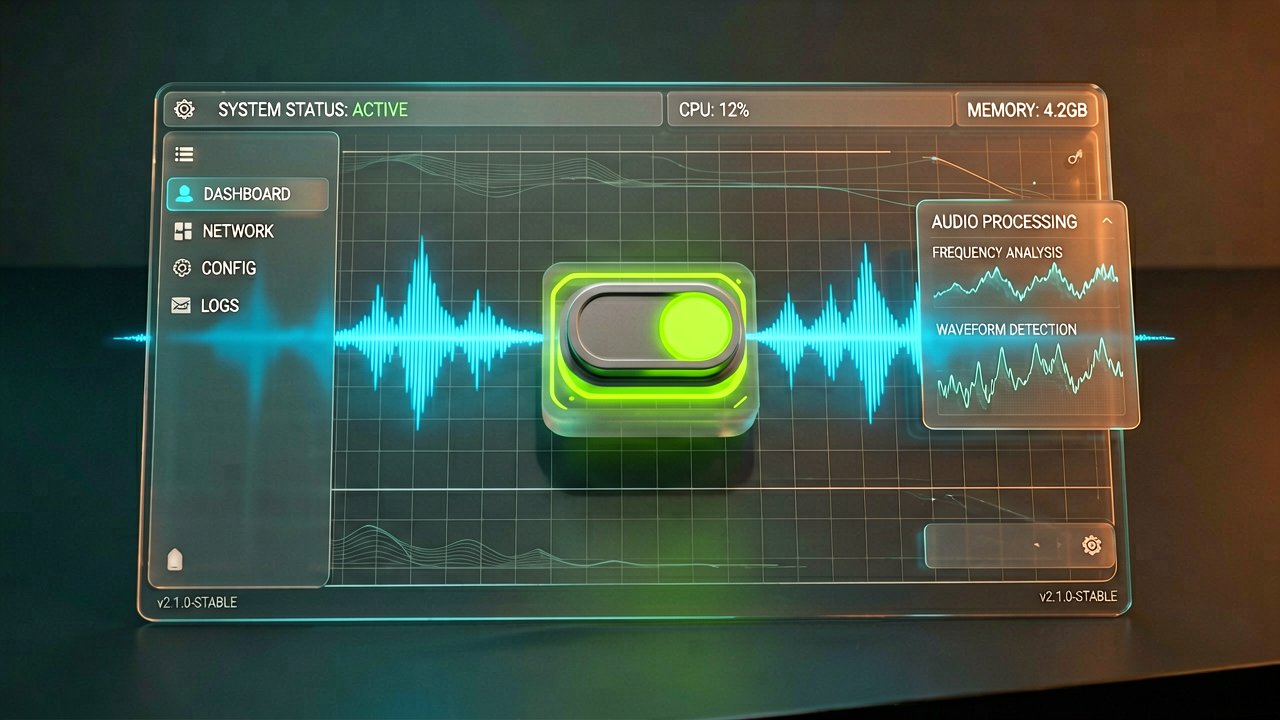
Two significant AI product updates emerged this week from China's tech sector, targeting different ends of the user experience spectrum. Alibaba's Qwen PC client launched a voice input feature that operates across desktop applications, while ByteDance released Doubao-Seed-2.0-lite, a full-modal large model with integrated GUI execution capabilities.
The Qwen voice input function activates through shortcut keys, allowing users to speak directly into any desktop application without switching windows. The feature filters filler words like "um" or "that" in real time and corrects speech errors before outputting structured text. For instance, a rambling voice command about a meeting time gets cleaned into a formatted message: "Boss Wang, the meeting is scheduled at 3 p.m., the location is the old meeting room, please bring the market research report."
This isn't just transcription. The system performs semantic summarization based on context, organizing scattered verbal thoughts into structured weekly reports or minutes. Users can also issue commands like "Insert the national GDP data for 2025" while writing in an editor, or select text and say "Translate it for me" when reading English papers. The feature currently generates email replies for DingTalk, WeChat, or standard email clients based on verbal instructions.
According to AIBase reporting, the Qwen voice input function is fully open to all users through the PC client. The physical interaction is straightforward: press a shortcut key, speak, and the system handles the rest. No microphone calibration screens, no waiting for cloud processing indicators to spin (a problem that has plagued users for years, frankly).

ByteDance's announcement carries more technical weight. The Doubao-Seed-2.0-lite model, released by Volcano Engine on May 6, achieves native unified understanding of video, images, audio, and text. This marks a shift from sequential multimodal processing to simultaneous comprehension. The model outperforms the Pro version released in February on complex reasoning tests in physics and medicine.
The most notable capability is integrated GUI understanding and execution. The model can recognize buttons, menus, and interface elements in web pages or applications, then perform operations like clicking, dragging, and inputting. This creates a closed loop from understanding the interface to completing tasks end-to-end. Documentation from ByteDance's official Seed platform shows the model navigating FreeCAD to create parametric 3D models through visual recognition and mouse operations.
Audio processing supports transcription in 19 languages including Chinese and English, with translation between 14 languages. The model captures emotional fluctuations and ambient sounds in speech, making its understanding closer to human natural cognition. In e-sports scenarios, AI can analyze match videos and voice for up to 25 hours, automatically generating tactical review diagrams.
Both announcements reflect a broader industry trend: moving AI from chat interfaces into actual workflow integration. Qwen's voice input reduces the friction of switching between applications and typing commands. Doubao-Seed-2.0-lite goes further by attempting to automate the GUI interactions themselves. The physical reality matters here—users don't want to describe what they want done; they want the system to click the right buttons.

ByteDance has also launched a more efficient Doubao-Seed-2.0-mini version for cost-effective enterprise deployment. The technology is already applied in online education and cross-border e-commerce. Whether these capabilities translate to reliable real-world performance remains to be seen. AI agents that can theoretically click buttons don't always handle the edge cases of actual software interfaces gracefully.
The competitive implications are clear. Chinese AI companies are racing to embed intelligence directly into productivity workflows rather than building standalone chat products. Qwen's voice input competes with system-level dictation tools but adds semantic processing. Doubao-Seed-2.0-lite positions ByteDance against emerging AI agent platforms that promise autonomous task completion.
Neither announcement includes pricing details or enterprise API availability. Qwen's feature is free for PC client users. Doubao-Seed-2.0-lite appears focused on internal ByteDance applications and select enterprise deployments. The real test comes when these features face the messy reality of actual user workflows—where software updates break automation scripts and voice recognition struggles with background noise.
Whether users actually pay for this level of integration remains the real question. Voice input and GUI automation sound impressive in demos, but adoption depends on reliability, privacy concerns, and whether the features solve genuine friction points or just add complexity to already cluttered workflows.
Artūras Malašauskas is an AI Systems Integrator with 20+ years of production-grade web engineering experience. He has designed, shipped, and scaled enterprise Python/PHP systems for logistics, SaaS, and public-sector clients. For the past year, he has focused exclusively on AI integrations: deploying open-source LLMs, building generative media pipelines (image, audio, video), and engineering multi-agent workflows for real production environments. His standard: reproducibility, security, cost-efficient inference—no vaporware. He documents and evaluates emerging AI tooling, separating verified capabilities from marketing noise. Technical editor at: muza-ai.eu, ai-verslas.lt, ai-naujinos.lt Connect on LinkedIn
Comments