Sysdig Launches Headless Cloud Security Platform for AI Agents

Sysdig announced headless cloud security on May 6, 2026, positioning it as the first cyberdefense platform designed specifically for the agentic AI era. The company's press release details a fundamental shift away from dashboard-first security toward programmable interfaces that equip AI agents as primary operators of machine-speed defense.
The announcement comes from Sysdig's official channels, with the core documentation available through their press release archive. This isn't a feature add-on to existing tools. It's a complete architectural reimagining where security capabilities decouple from vendor-defined user interfaces entirely.
Here's what actually changes: traditional cloud security platforms assume a human sits at a dashboard, triaging alerts and deciding next steps. That model breaks when attacks compress from days into minutes. Sysdig's data shows vulnerabilities now get weaponized within 10 hours of disclosure, compared to an average of 23 days just last year. (The speed difference is less evolution and more like swapping a bicycle for a fighter jet.)
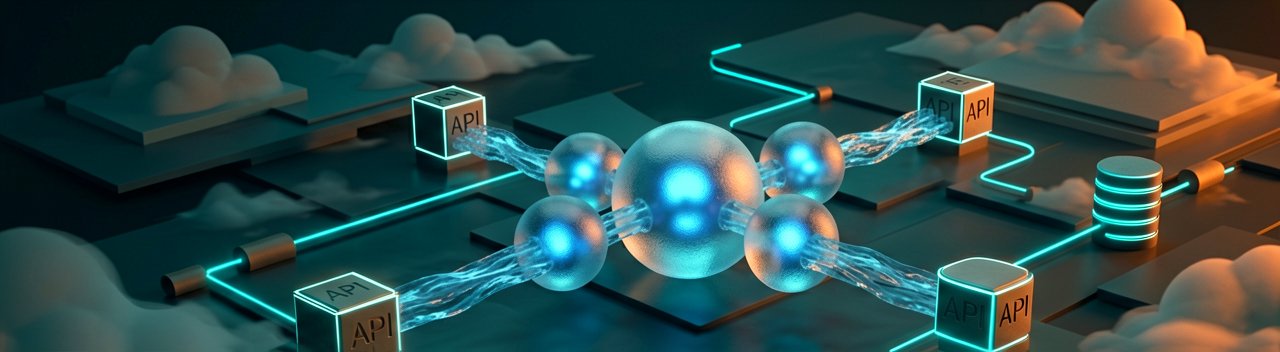
Headless cloud security delivers full CNAPP capabilities through APIs, command line interfaces, and Model Context Protocol services instead of a graphical interface. AI coding agents like Claude Code, Codex, and Cursor consume security data directly where work happens. The platform routes through existing workflows in Slack, Git, Jira, and CI/CD pipelines without requiring context switches to separate security dashboards.
Loris Degioanni, Sysdig Founder and CTO, stated the company is "rewriting security without the UI." The quote appears verbatim in the official announcement. Degioanni's point centers on outcomes over interfaces: security teams don't need more dashboards, they need better results delivered at machine speed.
The architecture rests on four layers. The extension layer exposes capabilities through MCP servers and APIs. The data architecture layer ingests and stores security telemetry. The agentic layer packages procedural knowledge into reusable skills for specific workflows. The secure control plane coordinates multiple agents working cooperatively on complex tasks. Each layer designed for programmatic consumption from the start, not retrofitted.
Runtime telemetry forms the foundation. Sysdig's signals come from kernel-level instrumentation rooted in open source Falco, the standard for cloud-native runtime threat detection. This deterministic, real-time view of cloud activity powers agents with high-fidelity signals. When an agent queries for vulnerability prioritization, it receives signals grounded in actual execution context: what's running, what has network exposure, what's exploitable in that specific environment.
Every action taken using a CNAPP skill logs and remains auditable. Human approval gates support throughout the workflow. The agent proposes, the human decides. This isn't a feature; it's a core architectural principle. Enterprise security teams cannot adopt autonomous workflows without full transparency into what happens and why.

Initial capabilities include vulnerability management where agents prioritize real risk and generate fixes, posture management with policies that autonomously adapt to business needs, runtime threat investigation that surfaces high-signal events with immediate automated response, and guided onboarding across cloud and Kubernetes environments. These aren't theoretical. They ship with the initial launch.
HPCwire covered the announcement, corroborating the timeline and technical specifications. The outlet's reporting confirms Sysdig's positioning as industry-first for headless cloud security built for AI agents. Independent coverage helps verify the claim beyond company messaging.
The physical reality of using this differs from traditional security tools. No more logging into a separate dashboard, clicking through tabs, waiting for pages to load, then copying findings into ticketing systems. Instead, an agent surfaces a finding inside your IDE, drafts a remediation, opens a pull request, and routes it for approval. The friction disappears. The work happens where code lives.
Agent skills encode domain expertise into reusable units. A skill for vulnerability triage captures what an experienced engineer would do. Anyone on the team invokes it. New environments, new tools, new team members all draw on the same procedural knowledge. The expertise scales beyond team size.
Customers further along their AI journey already moved in this direction. They want coding agents that triage alerts, generate Jira tickets, and open pull requests with proposed fixes. They want to route critical events to the right people without switching tools. They've started pulling Sysdig data via API and feeding it into custom orchestration layers. Headless cloud security makes the full workflow possible: not just data access, but expertise, guardrails, and end-to-end integration that turns signals into action.
The Sysdig UI remains available for teams who prefer it. Headless cloud security targets teams who moved beyond the UI as their primary control surface. The shift to headless already happening across enterprise software broadly. The interface separates from the platform, and AI agents become primary operators of complex systems. Security isn't exempt from this shift. If anything, security is where it's most urgent because attackers already operate at machine speed.
Whether organizations actually adopt this model depends on trust in autonomous workflows and willingness to cede control from human operators to AI agents. The technology exists. The question becomes whether security teams feel comfortable enough to let agents take action without human review at every step. That's the real barrier, not the architecture.
Artūras Malašauskas is an AI Systems Integrator with 20+ years of production-grade web engineering experience. He has designed, shipped, and scaled enterprise Python/PHP systems for logistics, SaaS, and public-sector clients. For the past year, he has focused exclusively on AI integrations: deploying open-source LLMs, building generative media pipelines (image, audio, video), and engineering multi-agent workflows for real production environments. His standard: reproducibility, security, cost-efficient inference—no vaporware. He documents and evaluates emerging AI tooling, separating verified capabilities from marketing noise. Technical editor at: muza-ai.eu, ai-verslas.lt, ai-naujinos.lt Connect on LinkedIn
Comments