Twilio Unveils Agentic Era Platform at SIGNAL 2026

Twilio kicked off its annual SIGNAL conference on May 6, 2026, by unveiling a next-generation platform built for what the company calls the "agentic era." The announcement marks a strategic shift from traditional communications infrastructure toward a persistent conversation layer that maintains context across channels, humans, and AI agents.
The core of the update includes four new capabilities: Conversation Memory, Conversation Orchestrator, Conversation Intelligence, and Agent Connect. All four are generally available as of the announcement date, according to the official press release.
Here's the problem Twilio is trying to solve: customers currently explain their issues on chat, then repeat them on a phone call with an agent who has no record of the previous interaction. The conversation ends, and the cycle restarts from zero with the next touchpoint. It's like walking into a store where every employee pretends you've never been there before.
Conversation Memory addresses this by extracting and maintaining customer history, preferences, behavior, and conversation state across every channel. The system helps each interaction pick up where the last one left off, so customers don't have to repeat themselves and every agent—human or AI—engages with the right context.
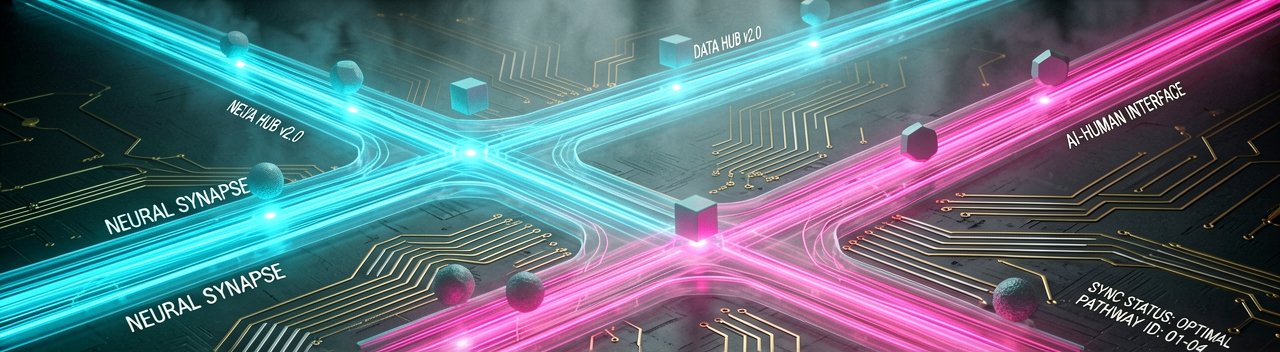
Conversation Orchestrator turns individual calls and messages into a single, continuous conversation thread. It delivers routing, escalation, state management, and seamless handoffs between humans and AI. Businesses can maintain one continuous conversation regardless of how many channels, agents, or systems are involved.
Conversation Intelligence leverages generative AI language operators to turn live conversations into actionable, real-time intelligence. It enhances human agents and triggers immediate actions like automated workflows across voice and messaging channels. This isn't post-call analysis—it's happening while the conversation is still in progress (which is actually where the value is).
Agent Connect is an open-source, model-agnostic framework that connects businesses' AI agents and models directly to Twilio's voice and messaging channels. It handles the complex physics of communications such as real-time voice streaming, session and identity management, and agentic integrations. Companies can choose and switch their preferred AI agents without changing their Twilio channel integration.
Khozema Shipchandler, Chief Executive Officer at Twilio, framed the announcement around the convergence of AI agents and human participants in customer conversations. "The agentic era is here. Agents are joining conversations alongside the people they represent, and modern customer engagement requires an infrastructure that serves both equally," Shipchandler said.
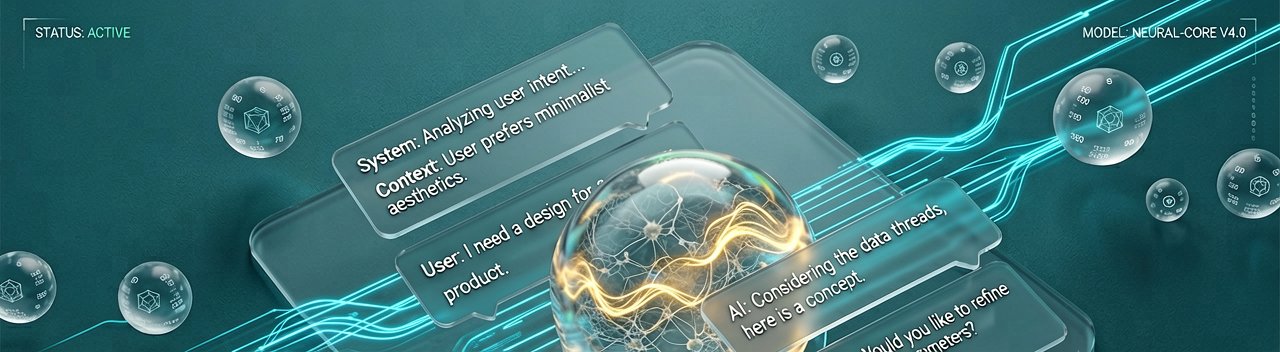
Inbal Shani, Chief Product Officer and Head of R&D at Twilio, noted that most brands still treat every conversation with a customer like it's the very first one. "Twilio is changing that at the infrastructure layer, so every business built on Twilio can remember, learn, and respond like they actually know their customers," Shani said.
The company also completely redesigned its console from the ground up. The new Twilio Console serves as a single place to log in, navigate products, and manage communications workloads. It introduces Workbench, a specialized workspace built for developer productivity, alongside an integrated AI assistant for real-time support. Customers can try Twilio products directly within the interface while managing compliance and billing in one centralized command center.
Additional announcements include Twilio Email reaching general availability, Apple Messages for Business entering private beta, and Data Residency for SMS in the EU launching in public beta. Conversation Relay enhancements add PCI compliance, HIPAA eligibility, Insights, and support for Deepgram Flux for smarter turn detection.
Mila D'Antonio, Principal Analyst for Customer Engagement at Omdia, characterized the move as Twilio redefining what a Customer Engagement Platform looks like. "At the center of the CPaaS, CCaaS, CDP, and AI convergence, Twilio is redefining what a Customer Engagement Platform looks like—one that remembers, adapts, and orchestrates across every touchpoint," D'Antonio said.
From a technical standpoint, the platform remains model-agnostic. Twilio positions itself as infrastructure rather than a prescriptive solution. Developers pick the model and agent runtime. They own the data. The company partnered with Microsoft, AWS, and others to create blueprints that support faster development.
For developers, this means more flexibility. For businesses, it means less lock-in and the ability to get value from existing investments. For partners, it means more ways to build with Twilio. The open-source Agent Connect toolkit lets teams connect agents built on any LLM or framework directly to Twilio's infrastructure.
The new Console experience will roll out to customers automatically over coming months. Users can also opt in to gain early access. The redesign brings communications, identity, and data into one experience with one login, consistent logs across every surface, an intelligent Console Assistant, transparent billing insights, and streamlined compliance workflows.
Stripe Projects integration enables developers and AI agents to seamlessly provision Twilio within Stripe Projects in a single, programmable CLI workflow. This reduces friction for teams already working within the Stripe ecosystem.
Enterprise customers should note that Data Residency for SMS in the EU enables teams to manage personal data locally to support regional data requirements. This matters for organizations with strict compliance obligations around where customer data physically resides.
The strategic positioning here is clear: Twilio is moving beyond CPaaS tooling toward an always-on customer engagement infrastructure platform. Simply delivering messages and calls isn't enough when AI agents become active participants in customer conversations. Businesses require shared memory, context, and orchestration to manage continuous conversations across humans, AI agents, and systems.
With a traditional CPaaS model, providers can deliver a text or initiate a call, but they don't inherently understand who the customer is, what happened in previous interactions, or what should happen next. Businesses stitch together customer context, conversation history, routing logic, analytics, and AI workflows, creating fragmented experiences that struggle to support continuous, agent-driven conversations at scale.
This also limits how effectively businesses can deploy AI, because AI agents need access to context, memory, and workflow logic to deliver useful outcomes. Messaging and voice infrastructure are increasingly competitive and can become commoditized over time, with many providers able to deliver communications at scale.
Staying solely in CPaaS could risk Twilio being seen by enterprise customers as an interchangeable infrastructure vendor rather than a strategic platform partner. The new capabilities function as add-on infrastructure layers that extend Twilio beyond its traditional CPaaS products.
Whether this actually translates to better customer experiences depends on implementation. The infrastructure is now available, but businesses still need to configure it correctly and integrate it with their existing systems. The technology solves the conversation gap, but adoption will vary by organization.
For now, the platform is live and generally available. Developers can start building with the new capabilities immediately through the updated Console. Whether users actually pay for it remains the real question.
Artūras Malašauskas is an AI Systems Integrator with 20+ years of production-grade web engineering experience. He has designed, shipped, and scaled enterprise Python/PHP systems for logistics, SaaS, and public-sector clients. For the past year, he has focused exclusively on AI integrations: deploying open-source LLMs, building generative media pipelines (image, audio, video), and engineering multi-agent workflows for real production environments. His standard: reproducibility, security, cost-efficient inference—no vaporware. He documents and evaluates emerging AI tooling, separating verified capabilities from marketing noise. Technical editor at: muza-ai.eu, ai-verslas.lt, ai-naujinos.lt Connect on LinkedIn
Comments