Utah Researchers Bridge AI Development and Ethics Gap

Researchers at the University of Utah convened for a first-of-its-kind AI and Ethics Workshop on April 3, 2026, tackling questions that neither technologists nor humanists can solve alone. About 75 faculty members filled the University Guest House to discuss how generative artificial intelligence reshapes clinical judgment, economic power, and global surveillance.
The event, organized by the One-U Responsible AI Initiative, brought together people who build AI systems with scholars who study their societal impact. Philosophy professor C. Thi Nguyen and computer science professor Jeff Phillips led the daylong session, which included an experimental open problem format borrowed from computer science conferences.
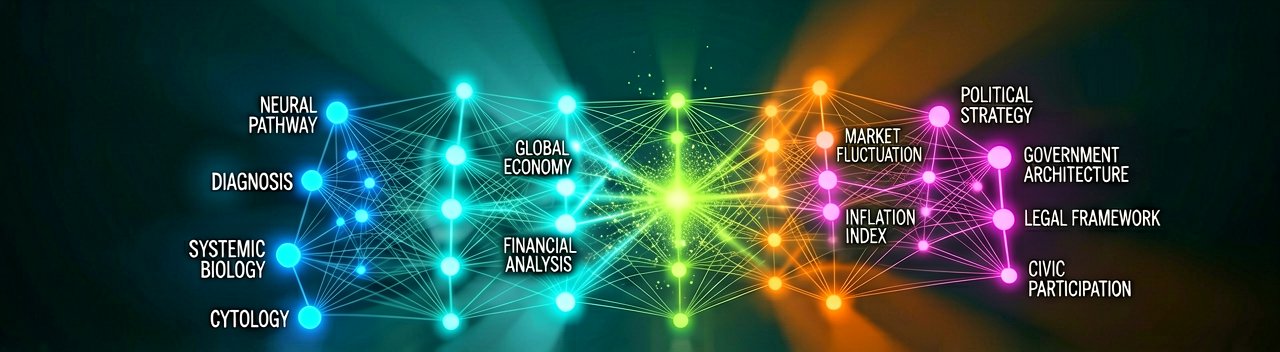
Physician Ryan A. Metcalf presented work on using AI to determine blood transfusion necessity—a common, lifesaving treatment that is also costly and often overused. The challenge: helping doctors decide who truly needs transfusions without sidelining clinical judgment at the bedside. This isn't abstract theory; it's about the physical reality of a doctor standing over a patient, weighing algorithmic recommendations against years of training.
Economist Ellis Scharfenaker raised questions about who controls AI's growing economic power as it reshapes work. The technology promises to reduce drudgery and improve safety but also risks intensifying surveillance, deskilling, and inequality. Scharfenaker noted the sessions revealed shared blind spots across departments, which he called arguably more useful than shared interests.
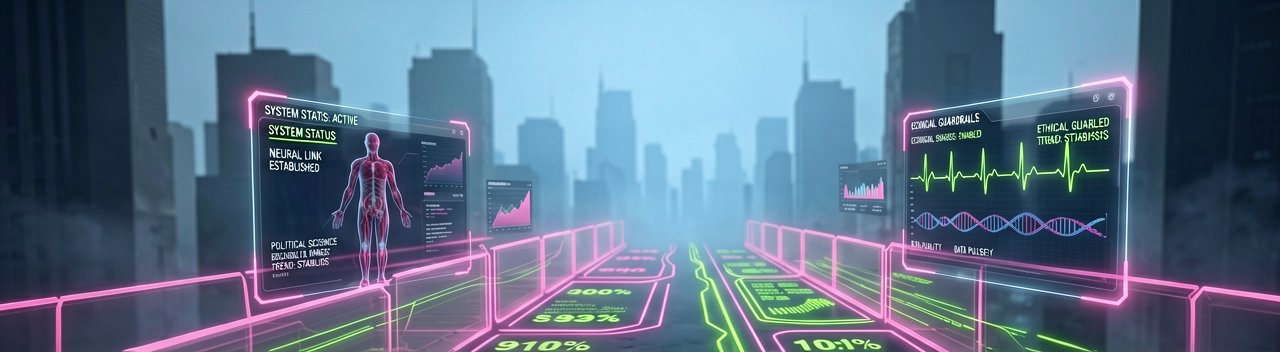
Political scientist Yuree Noh uses AI to analyze massive global datasets on censorship and surveillance. She's wrestling with how to ensure large language model judgments hold up across countries—including authoritarian ones—without reinforcing biases that could shape policy. "I'm thinking about aid allocation, for example," Noh said. "What if these systematic biases are affecting those who have the least power to push back?"
The workshop's hallmark was its open problem session: a dozen researchers pitched big questions to the room, then invited interested colleagues into breakout groups to work toward solutions. The format was highly experimental (the organizers admitted they had no idea if this would work in an interdisciplinary setting). Participants received direct, substantive feedback on problems they were actively stuck on.
Noh described one new idea: whether telling an AI model what kind of political system a country has would sharpen its analysis—or skew it. Another involved using donated chatbot data or secure platforms like Signal to hear from people who might stay silent in a standard survey. These aren't theoretical exercises; they're practical constraints researchers face when building systems that touch real lives.
Nguyen and Phillips are building the university's first AI and ethics course cross-listed in philosophy and computing. They used the event to start building an interdisciplinary cohort around the subject. "Either side going it alone tends to miss vast swathes of what's really important," Nguyen said. "The best work I've seen in research and in teaching has come from people working together."
According to the official University of Utah report, the workshop featured four longer talks alongside the interactive problem sessions. The event was sponsored by the One-U Responsible AI Initiative, with Nguyen serving as faculty fellow and Phillips as a Faculty Engagement Committee member.
The official workshop schedule included speakers from English, philosophy, computing, and educational psychology departments. Topics ranged from loneliness and AI literature limits to social media in the age of AI and psychotherapy with large language models.
Scharfenaker emphasized that AI has the potential to undermine public university values such as access, critical inquiry, and democratic knowledge production. The university's job, he said, is "not to ride the wave of AI enthusiasm but to subject that enthusiasm to the kind of critical scrutiny that only genuine academic inquiry can provide."
Noh reinforced a broader point: the hardest problems in AI aren't necessarily technical—they're often conceptual and political. "Who decides what 'repression' means, for example? What counts as ground truth when even human coders disagree?" she asked. "I hope future iterations of this event allow us to explore things like this—the messy, human side of the work."
Moving forward, Phillips and Nguyen plan to hold one or two half-day workshops per semester to build a lasting cohort around AI and ethics. The initiative expects to continue facilitating conversations between people who would normally not get a chance to talk.
Whether this experimental format produces lasting collaborations or just another academic exercise remains to be seen. The real test isn't the workshop itself—it's whether these conversations translate into actual policy changes, curriculum updates, or research that prevents harm before AI systems deploy at scale.
Artūras Malašauskas is an AI Systems Integrator with 20+ years of production-grade web engineering experience. He has designed, shipped, and scaled enterprise Python/PHP systems for logistics, SaaS, and public-sector clients. For the past year, he has focused exclusively on AI integrations: deploying open-source LLMs, building generative media pipelines (image, audio, video), and engineering multi-agent workflows for real production environments. His standard: reproducibility, security, cost-efficient inference—no vaporware. He documents and evaluates emerging AI tooling, separating verified capabilities from marketing noise. Technical editor at: muza-ai.eu, ai-verslas.lt, ai-naujinos.lt Connect on LinkedIn
Comments