eGain Launches Evaluator Tool to Test AI Answers for Legal Risk
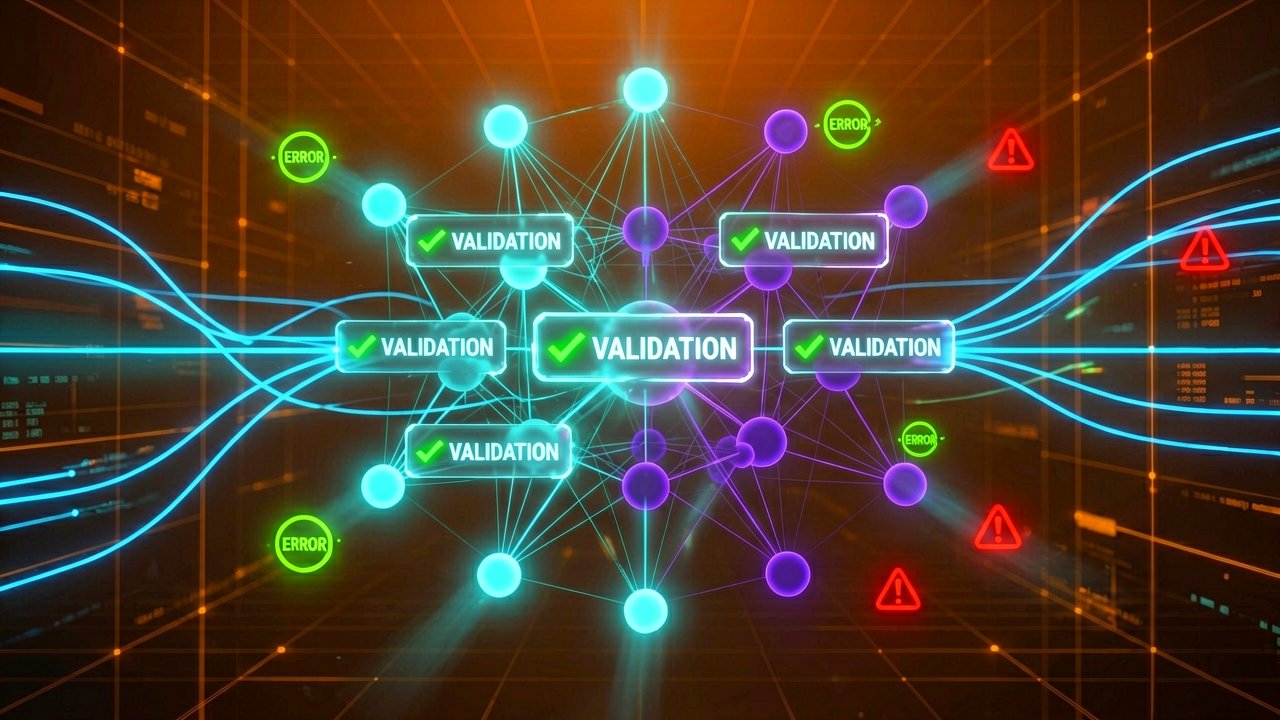
Enterprises deploying generative AI face a growing problem: answers that drift, compliance language that becomes outdated, and knowledge gaps that compound until they surface as customer or business problems. eGain announced the general availability of eGain Evaluator on May 6, 2026, a product specifically designed to address these operational challenges in AI-generated customer engagement.
The announcement comes via GlobeNewswire press release, positioning the tool for organizations where inaccurate or non-compliant AI answers can carry financial and legal consequences. This is not a theoretical concern. In regulated industries like financial services, telecommunications, and insurance, a wrong answer can lead to regulatory penalties, not just lower customer satisfaction scores.
Traditional quality assurance for AI deployments relies on periodic spot checks and escalation reports. When a problem surfaces, diagnosing it involves manually tracing failures across indexing, retrieval, and generation layers. There is no reliable way to know whether one fix would break something else (a problem that has plagued users for years, frankly).
eGain Evaluator addresses these challenges through three core capabilities. Test Management allows teams to build and run test sets against AI knowledge configurations before go-live, replacing ad hoc review with a repeatable, auditable validation workflow. Quality Management monitors live interactions continuously, scoring AI-generated answers against defined criteria and flagging issues before they reach end users. Performance Management tracks quality trends over time, connecting answer gaps to specific knowledge issues and giving teams the data to prioritize fixes.

Industry publication Call Centre Helper notes the tool is especially useful for organizations updating or switching AI models. When deploying new large language models, enterprises can benchmark answer quality for the new model and reduce risks before switching. This matters because model updates can introduce subtle changes in how answers are generated, potentially violating compliance requirements that were previously met.
The physical reality of using this tool involves clicking through dashboards that show quality scores trending over time, running scheduled test sets that validate knowledge changes automatically, and receiving guided recommendations that help teams fix knowledge and configuration gaps. It is not a magic button. Teams still need to understand the underlying knowledge driving AI answers and make corrections. The tool provides the operational infrastructure to do that systematically, not just reactively.
Ashu Roy, CEO of eGain, stated: "Getting AI live is only the first problem. The harder problem is keeping answers accurate, compliant, and improving over time as your business changes. eGain Evaluator gives organizations the operational infrastructure to do that systematically, not just reactively."
This launch follows a series of AI-focused initiatives from the company. In April 2026, eGain was named a finalist in two National AI Awards categories. Earlier that month, the company introduced enterprise connectors for Copilot, Claude, Gemini, and Cursor integrations. In March, they launched an AI Knowledge Suite for retail banking targeting growth and compliance.
The market response to AI-tagged announcements has been modest. Historical data shows AI-related news for EGAN stock has led to average single-day moves of 0.6%, indicating generally moderate but mixed market responses to similar AI product and platform updates. Investors may watch adoption of Evaluator alongside broader AI Knowledge Hub traction and any future updates to financial performance.
For enterprises, the question is whether continuous quality assurance becomes a standard requirement for AI deployments in regulated environments. The tool provides a closed-loop system to prevent issues, continuously testing and monitoring AI answer quality across search, self-service answers, and AI agent conversations. Whether organizations actually invest in this layer of governance remains the real question.
Artūras Malašauskas is an AI Systems Integrator with 20+ years of production-grade web engineering experience. He has designed, shipped, and scaled enterprise Python/PHP systems for logistics, SaaS, and public-sector clients. For the past year, he has focused exclusively on AI integrations: deploying open-source LLMs, building generative media pipelines (image, audio, video), and engineering multi-agent workflows for real production environments. His standard: reproducibility, security, cost-efficient inference—no vaporware. He documents and evaluates emerging AI tooling, separating verified capabilities from marketing noise. Technical editor at: muza-ai.eu, ai-verslas.lt, ai-naujinos.lt Connect on LinkedIn
Comments