Autodesk Joins WEF Water-AI Nexus Advisory Council
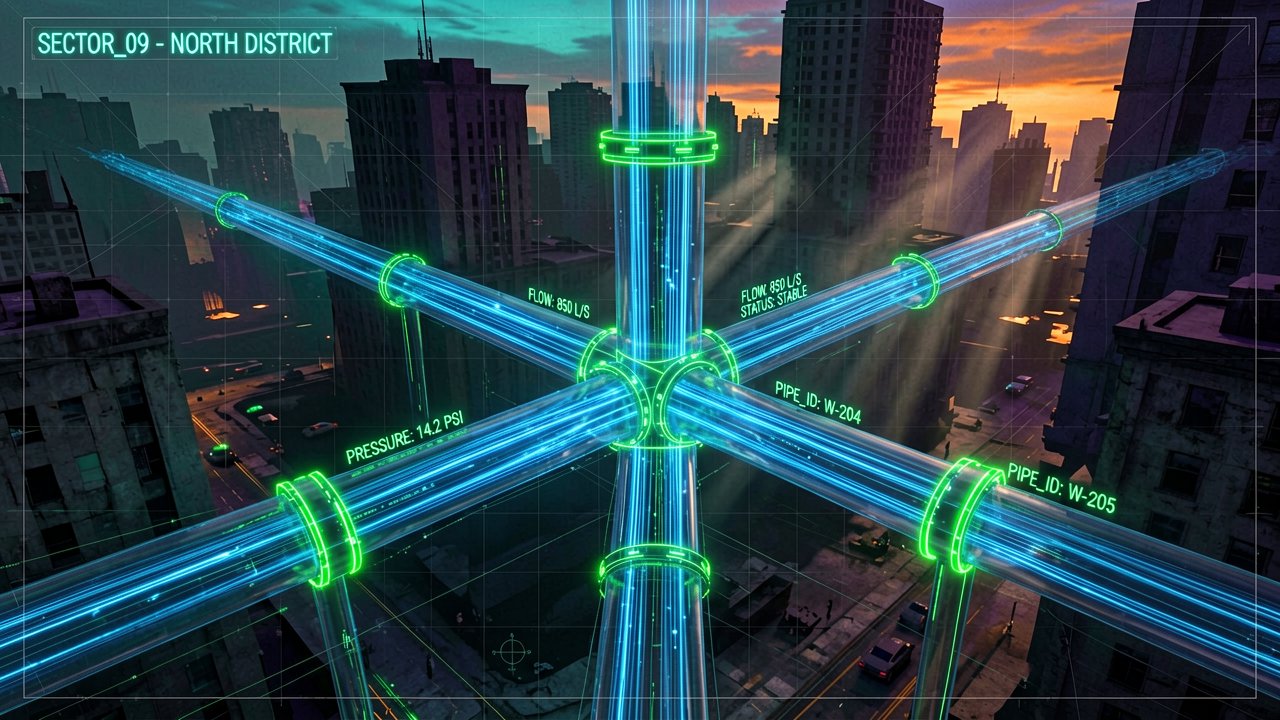
The software company Autodesk has officially joined the Water-AI Nexus™ Center of Excellence Advisory Council, a global initiative convened by the Water Environment Federation (WEF). The move places Autodesk alongside founding partners including Amazon, CDM Smith, Grundfos, HDR, Raftelis, and Xylem in a cross-sector effort to navigate AI's relationship with water resources.
According to the official announcement from Autodesk, the council addresses what the company describes as a dual mission: advancing AI-enabled innovation while supporting responsible water management. This is not merely a branding exercise. The initiative tackles two distinct problems simultaneously—how AI can improve water infrastructure operations, and how the AI industry's own data centers consume water at scale.
The tension here is real. AI models require massive computational power, which means data centers need cooling systems that draw from local water supplies. At the same time, utilities are deploying machine learning to detect leaks, predict maintenance needs, and optimize distribution networks. Ralph Exton, executive director of WEF, framed it bluntly: "AI has the potential to transform how we manage water, from improving system performance to informing long-term resilience. At the same time, we must ensure that the growth of AI is aligned with responsible water use."
Independent reporting from PRNewswire confirms the expansion includes multiple industry associations alongside technology providers. The full roster now includes the Association of Metropolitan Water Agencies, the National Association of Clean Water Agencies, and the Smart Water Networks Forum, among others. This breadth matters because water infrastructure decisions span municipal, industrial, and agricultural sectors—each with different regulatory frameworks and operational constraints.

At the core of this work is data integration. AI's effectiveness in water management depends on access to high-quality, connected information across infrastructure lifecycles. Disconnected systems and siloed workflows limit what machine learning can actually achieve. Engineers need to simulate scenarios, identify risks earlier, and optimize performance over time. In practice, tools like InfoDrainage's Machine Learning Deluge help identify flood risks during the design phase rather than after construction is complete.
Consider the physical reality of this work. An engineer using hydraulic modeling software clicks through interface panels, adjusts parameters, and waits for simulation results to render. If the data comes from disconnected sources—separate SCADA systems, legacy CAD files, manual spreadsheets—the AI model is only as good as the weakest data link. Integrated digital environments change that workflow. Teams can now test how a pipe network responds to extreme weather events before breaking ground. That's not theoretical. Firms like Project Centre are already using these tools to identify flooding hotspots and deliver more resilient outcomes for clients.
The advisory council will guide priorities through thought leadership, participation in events, and collaboration on programming. The Water-AI Nexus Center of Excellence will convene partners at major global forums in 2026 and 2027, including the Global Water Summit in Madrid, Singapore International Water Week, and WEFTEC in New Orleans and Chicago. These aren't just networking events. They're where standards get discussed, where vendors pitch solutions, and where utilities compare notes on what actually works in the field (and what doesn't).
Keith Hobson, WEF President, emphasized the dual focus: "From data centers to utilities, the challenge is clear: AI must be developed in ways that respect water limits, and water systems must be equipped with smarter tools." The phrasing is deliberate. "Water for AI" acknowledges that the technology sector's infrastructure demands water. "AI for Water" recognizes that utilities need better tools to manage scarcity, aging pipes, and climate volatility.

For Autodesk specifically, this aligns with existing capabilities in its building information modeling and infrastructure software. The company's platforms already support digital twins—virtual replicas of physical systems that can be tested and optimized. Adding AI-driven analytics to those workflows means utilities can predict where a pipe will fail before it bursts, or where a stormwater system will overflow during a 100-year flood event. The software doesn't fix the pipe. It tells you where to look.
There's also a regulatory dimension. Water utilities operate under strict compliance requirements. Any AI tool deployed in critical infrastructure must meet safety standards, explain its recommendations, and handle edge cases without catastrophic failure. The advisory council's inclusion of associations like the National Association of Water Companies and the International Desalination and Reuse Association suggests the initiative will address these governance questions, not just technical ones.
The timing reflects broader industry pressures. Aging infrastructure, constrained budgets, workforce gaps, and increasing climate volatility are all converging. Utilities need to do more with less. AI promises efficiency gains, but only if the underlying data is reliable and the models are validated. The Water-AI Nexus initiative positions itself as a neutral convener—WEF's role as a nonpartisan federation gives it credibility with both public utilities and private technology vendors.
Whether this translates to measurable outcomes remains to be seen. Advisory councils often produce white papers and roundtables. Actual deployment of AI in water systems requires capital investment, regulatory approval, and operational buy-in from utility staff who may be skeptical of black-box algorithms. The initiative's success will depend less on who joins the council and more on whether the recommendations lead to concrete changes in how water infrastructure is designed, built, and operated.
Autodesk's participation signals that the software industry recognizes water as a constraint, not just a resource to be managed. Data centers are already facing scrutiny over their water consumption in drought-prone regions. By joining this council, Autodesk positions itself as a stakeholder in the broader conversation about sustainable digital infrastructure. That's pragmatic positioning, not necessarily altruism.
The real test comes when utilities start making procurement decisions. Will they prioritize AI tools that demonstrate water efficiency? Will data center operators reduce their water footprint? The advisory council can guide the conversation, but market forces and regulation will determine what actually gets built. Time will tell if this collaboration moves beyond announcements and into implementation.
Artūras Malašauskas is an AI Systems Integrator with 20+ years of production-grade web engineering experience. He has designed, shipped, and scaled enterprise Python/PHP systems for logistics, SaaS, and public-sector clients. For the past year, he has focused exclusively on AI integrations: deploying open-source LLMs, building generative media pipelines (image, audio, video), and engineering multi-agent workflows for real production environments. His standard: reproducibility, security, cost-efficient inference—no vaporware. He documents and evaluates emerging AI tooling, separating verified capabilities from marketing noise. Technical editor at: muza-ai.eu, ai-verslas.lt, ai-naujinos.lt Connect on LinkedIn
Comments