Synology Launches AI Advisor For Technical Support Guidance
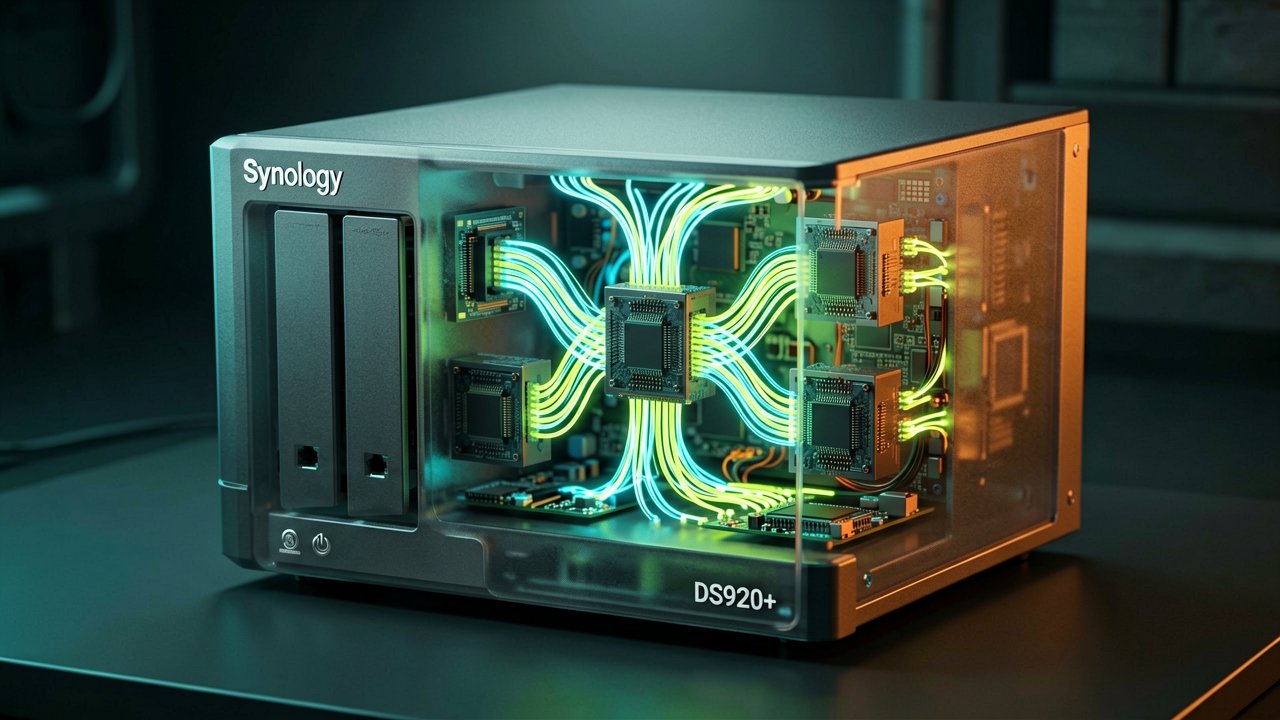
Storage hardware manufacturer Synology has officially launched AI Advisor, an intelligent assistant embedded directly into its official website. The tool aims to simplify information discovery for users navigating the company's extensive product catalog and technical documentation. Unlike many competitors rushing to integrate third-party generative AI models, Synology is taking a different approach with this release.
The announcement came on May 4, 2026, via the company's official press channels. Synology's press release details the core architecture and privacy commitments behind the new service. Steven Liang, Manager of the Generative AI Application Group at Synology, stated that the system integrates over a decade of the company's AI expertise into a single interface.
Here's where this gets interesting for enterprise customers. The AI Advisor uses a self-hosted large language model that operates entirely independent of third-party AI providers. No conversation context leaves Synology's infrastructure. This matters because most AI-powered support tools today send your queries to external APIs, creating potential data exposure risks that IT departments hate (and rightfully so).
The company plans to transition the service to a dedicated Synology infrastructure later in 2026. This move will guarantee 100% data residency and keep all user interactions within what they call a secure, sovereign ecosystem. For organizations with strict compliance requirements, this distinction separates Synology from competitors using cloud-based AI services.

From a user experience perspective, the AI Advisor integrates with existing Synology tools like the NAS Selector and NVR Selector. Users get guided through preliminary sizing and product recommendation workflows tailored to their deployment needs. The system understands query intent and context, directing users to relevant support articles, downloads, or configuration guides. This creates a faster transition from question to solution without the usual friction of navigating nested menus.
Try typing a query into the interface. You'll see the "AI Advisor is generating an answer. Please wait…" message appear. The physical reality of using this tool involves clicking through product pages, reading specs, and waiting for responses. That's the tangible experience, not just abstract promises of efficiency.
Secondary coverage from SMEStreet corroborates the timeline and technical specifications outlined in the official announcement. The outlet notes that the AI Advisor ensures reliable insights while significantly reducing resolution time for users worldwide. This aligns with Synology's stated goals of streamlining the customer journey.
The architecture employs what Synology calls an "agent-as-tool design" with dynamic knowledge injection and context optimization. There's also a continuous evaluation pipeline built in, allowing the system to refine itself over time. These innovations will extend across the Synology product lineup, advancing what the company describes as its vision of secure, intuitive solutions.
Accessibility improvements accompany the AI Advisor launch. The website update brings support for global web accessibility standards, ensuring an inclusive experience for audiences worldwide. This wasn't just an AI feature drop; it was a broader platform modernization effort.
Consider the competitive landscape. Most storage vendors are still figuring out how to integrate AI into their support workflows. Synology's decision to keep the model self-hosted and on-premises (eventually) positions it differently from companies relying on external AI infrastructure. The trade-off? Potentially slower iteration on model improvements compared to cloud-native AI services.
The AI Advisor is available now on Synology's official website. Users can access it directly without additional software installation or account creation. The interface appears on the main navigation, making it immediately visible to visitors browsing the site.
Privacy policy language on the site states that by using the AI Advisor, users agree to Synology collecting and processing their conversation. This disclosure appears alongside the chat interface, requiring acknowledgment before interaction begins. Transparency is there, though the actual data retention policies warrant closer reading for compliance officers.
For IT administrators evaluating this tool, the key question becomes whether the self-hosted model delivers sufficient accuracy compared to larger, more general-purpose AI systems. Synology claims the system continuously refines itself through evaluation pipelines, but real-world performance data remains limited at launch.
The company's track record with DSM 7.3 and other recent software updates suggests competence in maintaining long-term support infrastructure. However, AI models require different maintenance patterns than traditional software. Continuous learning systems can drift or degrade without proper monitoring.
Whether this actually reduces support ticket volume or just shifts the burden to different channels remains to be seen. The tool guides users through product selection and technical documentation, but complex issues will still require human intervention. That's the reality of AI-assisted support today.
Synology's approach reflects a broader industry tension between convenience and control. The company prioritizes data sovereignty over the convenience of leveraging established third-party AI platforms. For some customers, this will be a decisive factor. For others, the trade-off may not be worth it.
The AI Advisor represents a significant investment in customer-facing infrastructure. Whether users actually find it useful enough to change their support behavior remains the real question.
Artūras Malašauskas is an AI Systems Integrator with 20+ years of production-grade web engineering experience. He has designed, shipped, and scaled enterprise Python/PHP systems for logistics, SaaS, and public-sector clients. For the past year, he has focused exclusively on AI integrations: deploying open-source LLMs, building generative media pipelines (image, audio, video), and engineering multi-agent workflows for real production environments. His standard: reproducibility, security, cost-efficient inference—no vaporware. He documents and evaluates emerging AI tooling, separating verified capabilities from marketing noise. Technical editor at: muza-ai.eu, ai-verslas.lt, ai-naujinos.lt Connect on LinkedIn
Comments