Lumai Launches Iris Optical Computing Server for AI Inference
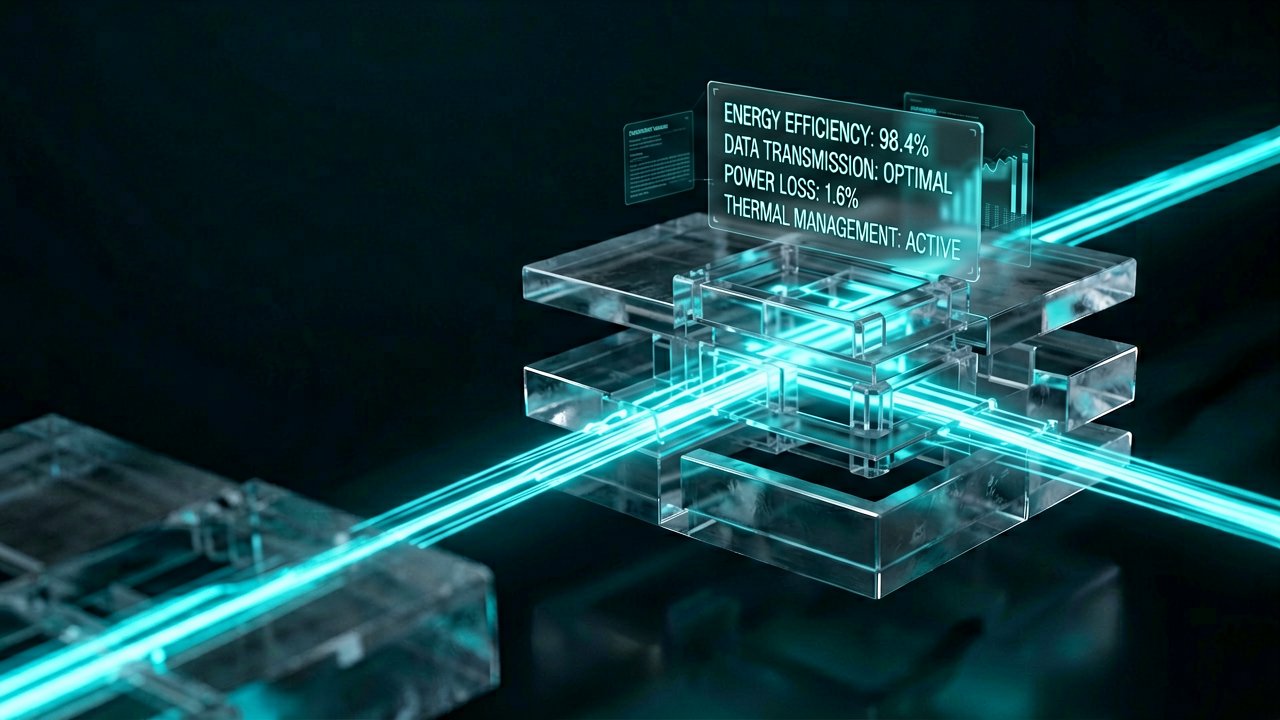
The AI infrastructure landscape is getting crowded, but Lumai is taking a fundamentally different approach. The company announced its Iris family of optical computing servers on April 28, 2026, positioning the technology as a post-silicon alternative to conventional GPU-based systems. Unlike traditional processors that move electrons through silicon, Lumai's architecture performs matrix multiplication using light in three-dimensional space.
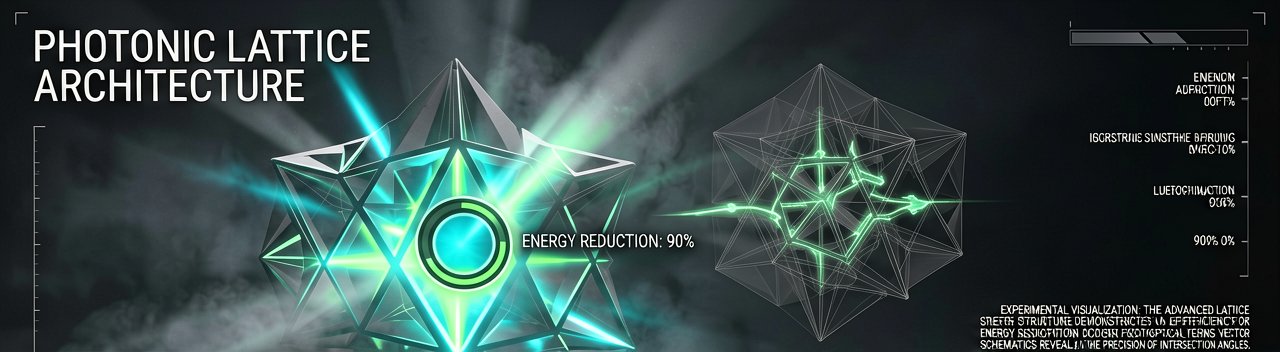
At the heart of the system is an Optical Matrix Multiplier that encodes data as light and processes it through lasers and membranes. The company's official announcement states the technology can achieve up to 90% lower energy consumption compared to conventional architectures. That's not a marginal improvement—it's an order-of-magnitude shift that matters when data centers are already hitting power walls.
Phil Burr, head of product for Lumai, explained the core mechanism in an interview with HPCwire. "At the heart of AI, it's about vector-matrix or matrix-matrix multiplication," Burr said. "What we do is we encode those incoming vectors in light. We effectively do a copy for free in light by passing that vector in through a lens. And then we copy that vector across a matrix. So we encode matrix values in the transmissivity of that membrane."
The physics here is worth unpacking. Light doesn't generate heat the way electrons do when they collide with atoms in a silicon lattice. This means the system can scale matrix operations without the thermal penalties that plague conventional chips. Lumai's technology handles matrices up to 2,048 by 2,048 in a single operation—something that would require subdividing and data movement on traditional hardware (which is where most of the energy waste happens).
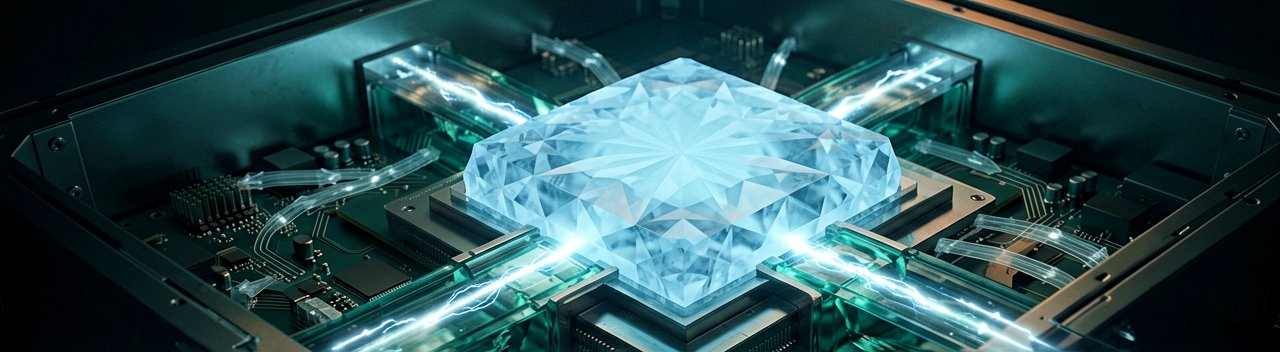
The Iris Nova server, the first product in the family, is available now for evaluation by hyperscalers, neo-clouds, enterprises, and research institutions. It runs Llama 8B and 70B models using a hybrid processor that combines digital processing for system control with an optical tensor engine for core mathematical operations. This hybrid approach ensures the system can integrate into existing data center workflows without requiring a complete infrastructure overhaul.
Volume products are scheduled for later deployment. Aura is slated for 2028, while Tetra is penciled in for 2029. The timeline reflects the reality that optical computing infrastructure needs time to mature, even if the core technology is ready for evaluation today.
Energy efficiency isn't just a marketing claim—it's becoming a hard constraint for AI deployment. According to the International Energy Agency, global data center power demand will double by 2030. Nearly half of all data center projects in the U.S. face delays or cancellations this year due to electricity and component availability. Lumai is positioning its technology specifically for the prefill stage of AI inference, which is compute-bound and benefits from processors that can chew through large matrices quickly.
The software stack isn't as exotic as the hardware might suggest. Lumai plugs into existing data flows, and applications can be developed using frameworks like PyTorch. The company develops hardware-specific kernels that allow developers to program Iris servers using familiar tools. This reduces the friction of adoption—developers don't need to learn an entirely new programming paradigm to use the technology.
Lumai's optical computers utilize commercial off-the-shelf technologies available in data centers today, including the same types of lasers used for silicon photonics. "So there's already volume manufacturing essentially," Burr said. "We don't need to create any new materials. And so actually in volume this will be lower cost than an Nvidia GPU." That's a bold claim, but it hinges on the scaling characteristics of 3D optical computing.
There is a cost of conversion from digital to optical, Burr acknowledged. The power cost of that conversion is proportional to the width of the vector, whereas the performance scales with the square. As matrix size increases, the efficiency advantage grows. This is the peculiar scaling characteristic that makes the technology viable for large-scale AI workloads (and less useful for smaller operations where the conversion overhead dominates).
Dr. Xianxin Guo, CEO and co-founder of Lumai, framed the announcement as a transition point. "As the industry transitions into the inference era, we are simultaneously crossing the threshold into the post-silicon era," Guo stated. "By shifting the computation paradigm from electrons to photons, Lumai can deliver an order-of-magnitude increase in performance with significant energy savings."
The company has already garnered recognition for the technology. Lumai received the Falling Walls Award for Science Breakthrough of the Year 2025 and won 'Best Overall Technology' at the OCP Future Technologies Symposium. The Advanced Research and Invention Agency (ARIA), a UK government-backed funder, has partnered with Lumai to explore the shift beyond traditional digital computing paradigms.
Silicon scaling has pretty much stopped, Burr noted. Each new generation offers small improvements while requiring significantly more power and cost. The packages get bigger and hotter. When you look at roadmaps from conventional digital systems and compare them to software demand projections, the two things don't match. That gap is where Lumai is trying to insert itself.
Whether the technology delivers on its promises at scale remains to be seen. The evaluation period for Nova will reveal if the energy savings hold up in real-world deployments and if the hybrid architecture can handle the decode stage of inference, which is typically memory-bound rather than compute-bound. The prefill stage is where optical computing shines, but AI workloads aren't monolithic.
The real question isn't whether optical computing works in a lab. It's whether it can compete with the entrenched GPU ecosystem when you factor in software compatibility, supply chain maturity, and the sheer momentum of existing infrastructure investments. Lumai has the physics on its side, but the market has its own inertia. Whether users actually pay for it remains the real question.
Artūras Malašauskas is an AI Systems Integrator with 20+ years of production-grade web engineering experience. He has designed, shipped, and scaled enterprise Python/PHP systems for logistics, SaaS, and public-sector clients. For the past year, he has focused exclusively on AI integrations: deploying open-source LLMs, building generative media pipelines (image, audio, video), and engineering multi-agent workflows for real production environments. His standard: reproducibility, security, cost-efficient inference—no vaporware. He documents and evaluates emerging AI tooling, separating verified capabilities from marketing noise. Technical editor at: muza-ai.eu, ai-verslas.lt, ai-naujinos.lt Connect on LinkedIn
Comments