Assort Health Deploys AI Agent for Proactive Patient Outreach

Healthcare startup Assort Health has launched an outbound AI agent designed to handle the tedious work that front office staff typically avoid: calling patients to reschedule appointments, collect payments, and close care gaps. The feature, called Assort Activate, represents a shift from reactive inbound call handling to proactive patient engagement across the entire care journey.
According to Fierce Healthcare's coverage, the AI agent is already deployed across more than 1,000 providers. The company originally launched in November 2023 with inbound voice agents that triage patient calls, answer FAQs, and route callers to the right clinic staff. Now it's extending that platform to outbound workflows.
Here's the physical reality of what this replaces: six to eight people on phones during a snowstorm, manually dialing hundreds of patients to reschedule appointments. At Boston Bone and Joint Institute, a six-location orthopedic provider, that manual process consumed entire shifts. The new system handled 53% of rescheduling automatically after weather closures forced office shutdowns.
Assort Health leverages a dataset of over 150 million patient interactions, 62,000 complex care protocols, and 1.6 million unique decision pathways from practices across 22 specialties. This isn't generic automation. The system carries forward context like language preferences, timing, and interaction history across every patient touchpoint (which drastically reduces the friction of repeating yourself to different callers).

Jon Wang, founder and co-CEO of Assort Health, explained the distinction to Fierce Healthcare: "Patient outreach is far more nuanced than automated reminders. It's multi-step referral follow-ups, no-shows with specialty-specific scheduling constraints, care gaps that go unaddressed because no one has time to make the call." The outbound agent connects to the provider's electronic health record and practice management software to schedule appointments and resolve issues directly.
The technology uses what the company calls "patient journey memory" — a shared intelligence layer that remembers prior interactions. So the follow-up call knows what the first call said. Each touchpoint gets more informed and personal over time. That's what makes this compounding rather than just automated, according to Jeffery Liu, the other co-CEO.
Early deployments show specific conversion rates that matter to practice administrators. Annapolis Internal Medicine reported 61% success on annual flu shot campaigns. Referral scheduling conversion rates hit 64%. For payment collection, 42% of patients paid their balance within seven days. These aren't vanity metrics — they directly impact cash flow and provider schedules.
Katie Stoll, patient access and technology manager at Boston Bone and Joint Institute, called the AI agents "game-changing" for the organization serving 20 physicians and 21 advanced practice providers. She noted the transparency: staff can see who rescheduled, who didn't, and who needs follow-up. The communication organizes itself from the patient side, showing why appointments are canceled and enabling immediate rescheduling without back-and-forth.
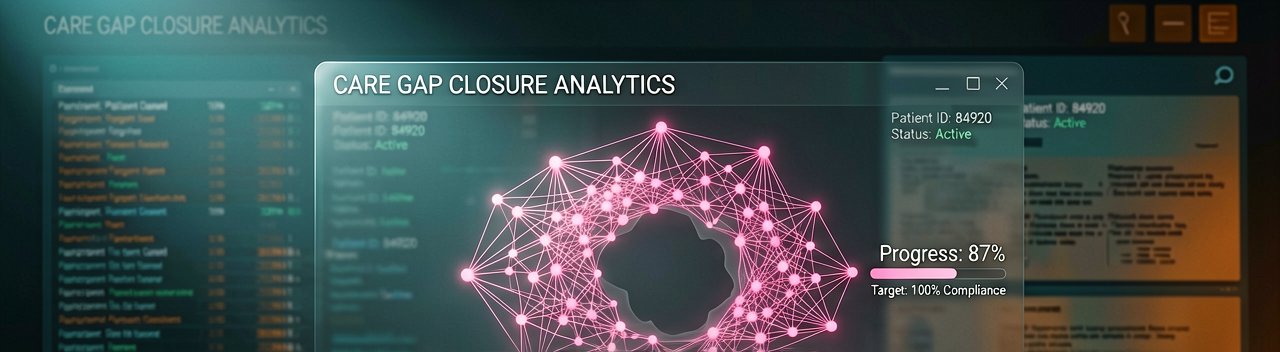
From a staff perspective, the system frees up capacity for patients already in the office or on the phone. Being able to utilize AI helps teams be more present with the person in front of them while minimizing hold times. That's the operational benefit beyond the automation itself.
The outbound capability applies learnings from inbound voice AI development. The system handles complex specialty workflows and writes every outcome directly back to the EHR. One cancellation triggers two parallel actions: filling the open slot from a waitlist and rescheduling the cancelled patient. Both appointments confirm immediately, the schedule updates, and the loop closes with zero staff involvement.
What started as inbound voice AI has evolved into a full AI agents platform spanning intake, scheduling, referrals, payments, and ongoing patient engagement. All connected. All learning from each interaction. The question isn't whether the technology works — the conversion rates suggest it does. The question is whether practices will trust it enough to deploy it at scale without human oversight on every call.
Medical practices today are stretched thin. Inbound call volumes alone consume most of what front office teams have capacity to handle. This tool addresses the work that matters but gets deprioritized when phones ring. Whether providers actually pay for it at scale remains the real question.
Artūras Malašauskas is an AI Systems Integrator with 20+ years of production-grade web engineering experience. He has designed, shipped, and scaled enterprise Python/PHP systems for logistics, SaaS, and public-sector clients. For the past year, he has focused exclusively on AI integrations: deploying open-source LLMs, building generative media pipelines (image, audio, video), and engineering multi-agent workflows for real production environments. His standard: reproducibility, security, cost-efficient inference—no vaporware. He documents and evaluates emerging AI tooling, separating verified capabilities from marketing noise. Technical editor at: muza-ai.eu, ai-verslas.lt, ai-naujinos.lt Connect on LinkedIn
Comments