VIAVI Unveils CyberFlood CF1000 for 400G Security Testing
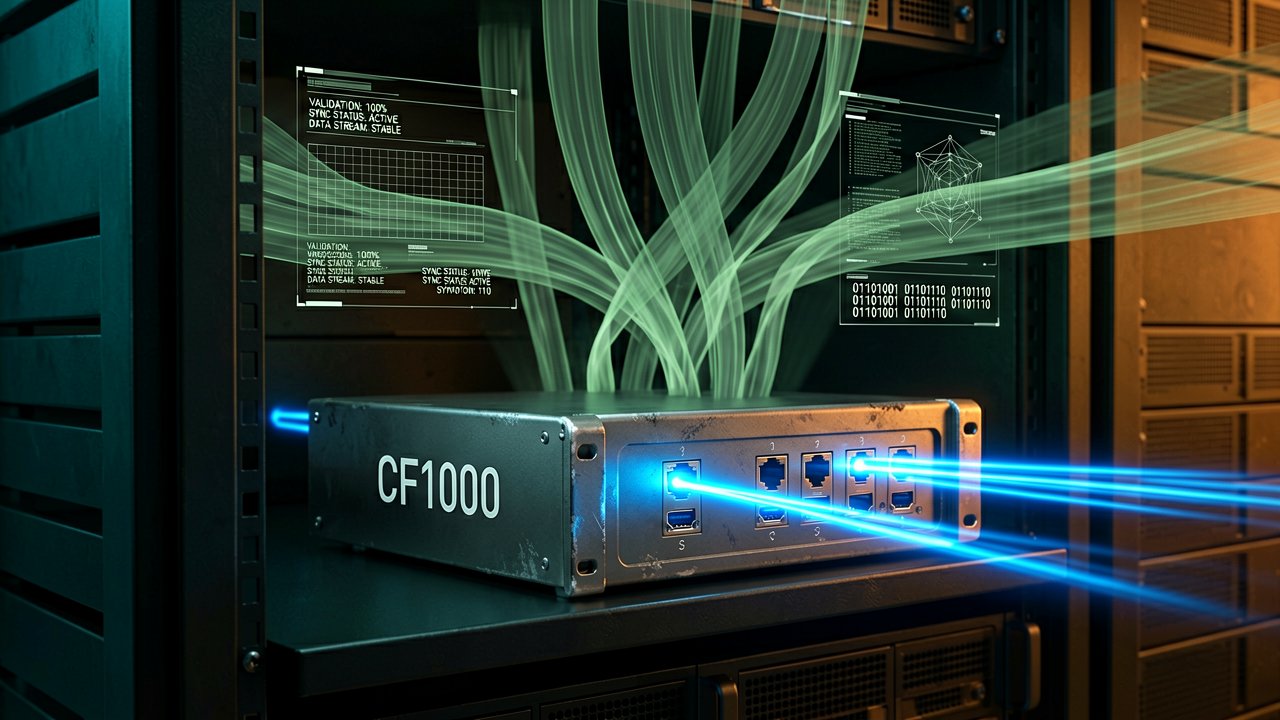
VIAVI has introduced the CyberFlood CF1000 Appliance, a native 400G security and application performance test platform designed for validating multi-terabit security and AI data center infrastructures. The announcement, released May 5, 2026, positions the system as a response to increasingly complex validation requirements in modern network environments.
The CF1000 targets network equipment vendors, hyperscale data center operators, and service providers who need to test critical infrastructure under real-world encrypted and dynamic mixed traffic conditions. This includes Next-Generation Firewalls (NGFWs), Application Delivery Controllers (ADCs), DDoS mitigation systems, VPN gateways, zero-trust architectures, and AI inference fabrics.
According to the official press release, the appliance delivers native 400G security testing in a compact 2RU form factor. It supports four 400G OSFP ports and eight 100G QSFP28 ports, enabling up to 1.2Tbps of real-world application traffic testing without requiring external switching infrastructure.
Physical constraints matter here. A 2RU chassis means the unit occupies roughly 3.5 inches of rack space. That's the difference between fitting it into a crowded data center row or needing to clear out an entire cabinet section. The port configuration also means technicians can plug in standard OSFP and QSFP28 transceivers without adapters.

For encrypted traffic validation, the platform provides industry-leading Transport Layer Security (TLS) performance. It supports more than 500Gbps of encrypted throughput and up to 800,000 TLS v1.3 connections per second. This matters because most enterprise traffic is now encrypted, and traditional test systems struggle to validate performance under these conditions.
The CF1000 extends CyberFlood's capabilities with highly scalable AI inference traffic emulation. This enables realistic testing of large language model (LLM) performance and AI-driven application workloads at terabit scale. Customers can evaluate end-to-end AI inference infrastructure and LLM application performance, assessing critical trade-offs between cost efficiency and user experience.
Dell'Oro Group projects the global network security market to exceed $30B in 2026, with growth driven by Zero Trust initiatives, AI workloads, and continuing cloud expansion. While software-delivered security is growing fastest, high-capacity physical platforms remain critical for validating performance limits before deployment.
Mauricio Sanchez, Senior Director, Enterprise Security and Networking at Dell'Oro Group, noted that platforms capable of realistically testing security and application infrastructure at scale are becoming essential for vendors and operators to reduce risk and confidently deploy next-generation networks.
Sashi Jeyaretnam, Senior Director, Security Product Management at VIAVI, stated that the move to ultra high-speed, highly secure AI networks has fundamentally changed the way security and performance must be validated. The challenge has intensified as organizations build infrastructure to enable the agentic era, which requires that quantum security, AI inference workloads, and AI-enabled security policies all work seamlessly together.
By bringing together massive-scale encrypted traffic generation, continuous threat vector emulation, quantum-safe cryptography validation, and AI inference workload emulation on a single platform, CF1000 eliminates validation gaps inherent in traditional test systems. This consolidation reduces the need for multiple specialized test appliances (which means fewer cables to manage, fewer power outlets to hunt for).
The platform is designed to validate today's encrypted traffic demands at scale and help organizations prepare for increasingly encrypted networks and emerging quantum-era threats. Quantum-safe cryptography validation is becoming increasingly relevant as post-quantum cryptographic standards mature and organizations begin migration planning.
What's not disclosed is pricing or general availability. VIAVI did not provide cost information or a specific ship date in the announcement. This is common for enterprise test equipment, where pricing often depends on configuration, licensing, and integration requirements.
For network operators, the CF1000 represents a shift toward integrated validation platforms that can handle the complexity of modern infrastructure. The combination of 400G native testing, encrypted traffic validation, and AI workload emulation addresses multiple pain points in a single appliance.
Whether the market adopts this approach at scale remains to be seen. The $30B security market projection suggests demand, but test equipment purchases are often delayed during economic uncertainty. Organizations may wait to see real-world deployment results before committing capital to new validation infrastructure.
Artūras Malašauskas is an AI Systems Integrator with 20+ years of production-grade web engineering experience. He has designed, shipped, and scaled enterprise Python/PHP systems for logistics, SaaS, and public-sector clients. For the past year, he has focused exclusively on AI integrations: deploying open-source LLMs, building generative media pipelines (image, audio, video), and engineering multi-agent workflows for real production environments. His standard: reproducibility, security, cost-efficient inference—no vaporware. He documents and evaluates emerging AI tooling, separating verified capabilities from marketing noise. Technical editor at: muza-ai.eu, ai-verslas.lt, ai-naujinos.lt Connect on LinkedIn
Comments