Old Newton Airport Site in Andover, NJ Eyes AI Data Center Conversion
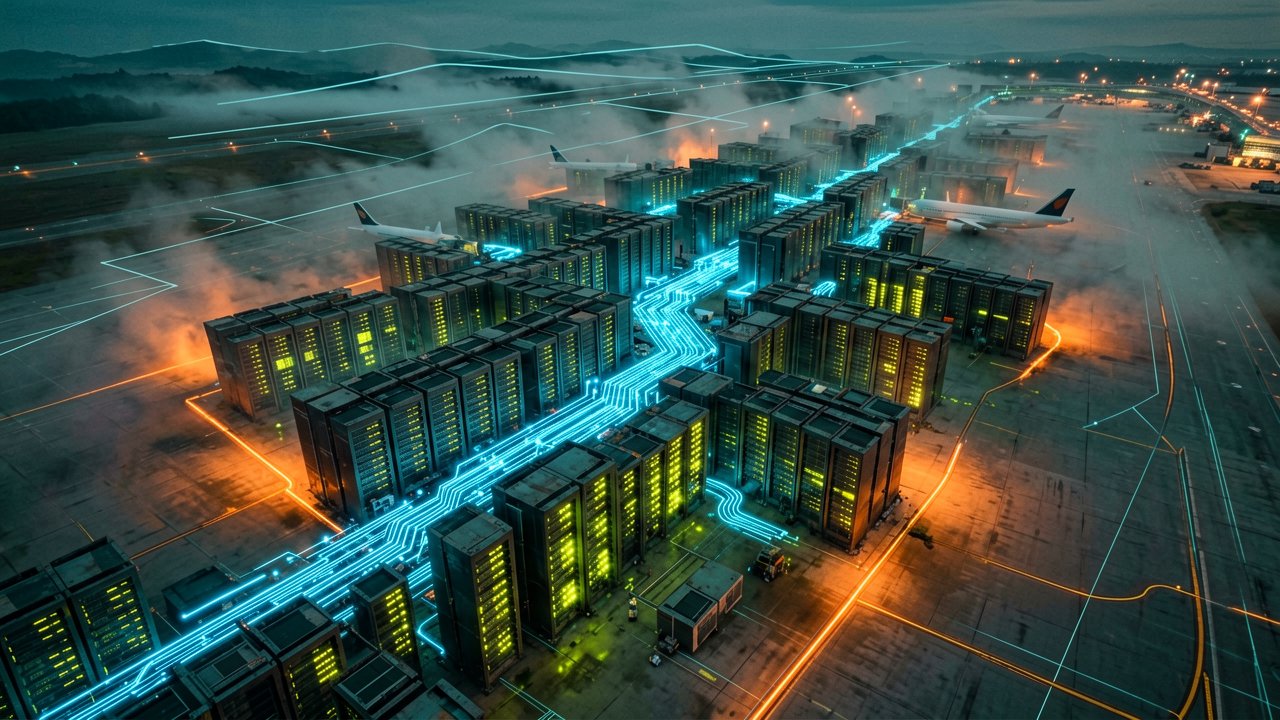
The roughly 97-acre property at 248 Stickles Pond Road in Andover Township has sat largely undeveloped since Newton Airport closed in 2013. Now, township officials say a developer is proposing to transform the site into an artificial intelligence data center that could generate between $4.5 million and $5.2 million annually through a payment-in-lieu-of-taxes agreement.
That revenue would be a massive jump from the current $29,000 the land produces under farmland assessment. For a township with an $11.4 million annual budget, the math is compelling. But the path to approval has triggered a contentious legal battle.
Mayor Thomas Walsh Jr. insists the township has been transparent about the possibility. "This has not been hidden by anybody," Walsh told NJ.com in April 2025. "We've been very, very open about everything we do."
Residents disagree. In an April 24 legal notice, attorney Anand Dash challenged two ordinances passed by the township committee, arguing they violate state Municipal Land Use Law and were crafted to benefit a single developer. The filing alleges the changes were made to benefit Andover HPC Development, a Delaware-based company that registered to do business in New Jersey in December 2025 and lists the Stickles Pond Road property as its address.

The zoning changes are specific. In September 2025, officials approved an ordinance allowing data centers in a redevelopment zone along Route 206. In April, they voted to raise the height limit for facilities in that zone to 65 feet—approximately six stories. That would allow new construction to tower over surrounding buildings.
Here's the catch: no site plan or formal application for the Stickles Pond Road site has been filed with the township's land use board. That's a required step before any project can move forward. No developer has closed on purchasing the property either, township officials said. Andover HPC Development could not be reached for comment.
Walsh said discussions about a potential data center at the site were raised publicly as far back as August during a committee meeting. He noted the property was already approved for a 660,000-square-foot warehouse in 2024 with little public opposition. A developer later approached the township about building a data center instead, which local officials thought may be less disruptive than a warehouse served by large trucks.
But the environmental concerns are real. Data centers—large, warehouse-like buildings filled with servers that store and process data—have been around for decades to support cloud computing and online services. The rapid growth of high-performance and artificial intelligence facilities has drawn increased attention from residents and officials across the country. These facilities can use millions of gallons of water to keep systems cool and have been linked to rising electricity costs in some communities.
Some neighbors have also complained about the constant humming noise some AI data centers emit. It's not a subtle sound. Imagine standing next to a server farm where cooling fans run 24/7, the low-frequency drone vibrating through your floorboards even with windows closed. That's the physical reality of these facilities.
Andover's mayor said the township council will introduce an ordinance in the coming weeks to add restrictions on data centers. Those could include requiring a closed-loop cooling system, meaning water would be reused rather than continuously drawn from local sources, along with limits on noise and lighting. "We're trying to take care of the negatives," Walsh said. "My main issue is getting the proper message out to the people of Andover Township. We would never do anything to hurt the town."
Still, some residents argue the zoning changes suggest the groundwork for a data center has already been laid without their input. If the ordinances are not rescinded by May 7, the date of the next committee meeting, residents plan to file a lawsuit in Superior Court, according to the April 24 legal notice.
This isn't an isolated incident. Across New Jersey, data centers are being aggressively pursued by municipalities as a new form of economic development. In Kenilworth, a $1.8 billion data center under construction has drawn backlash from locals who say they were unaware of the project until work was already underway. In Vineland, a 2.6 million-square-foot data center is rising. Residents have launched a petition to try to stop the project, saying a constant humming noise from the site is already disturbing nearby residents.
State lawmakers are now pushing to limit AI data centers' impact on utility bills, water use and the electric grid. At least five bills now moving through the state Legislature aim to put new limits on the AI industry. The legislation targets everything from who pays for the electricity at data centers to how much oversight the public has into their operations.
One of the newest data center bills, S731/A796, was approved by the state Assembly last month by a 55-18 vote and is now being debated in the Senate. The law is designed to limit how much New Jersey residents pay to power large data centers. The bill imposes tariffs for "large load" data centers or facilities that use 100 megawatts or more of electricity at a single site. Under the proposal, those facilities would have to pay for at least 85% of the electricity they request for a minimum of 10 years.
Assemblyman Dave Bailey Jr., D-Gloucester, the bill's sponsor, has described the measure as a "prenup" with the industry. He said the new law would allow data centers to come to New Jersey while making sure residents are not left subsidizing their energy use. "Data center growth will drive up the cost of electricity if we don't create guardrails," Bailey said in a statement. "This bill is about protecting ratepayers while supporting responsible economic growth."
Industry representatives argue data centers are a significant driver of the state's economy. Data centers supported more than 96,000 jobs and contributed more than $17 billion to the economy in 2023, according to the Data Center Coalition, a nationwide trade association for the sector. "Data centers are the essential digital infrastructure behind every online purchase, telehealth appointment, online news article, and digital classroom," Khara Boender, director of state policy for the Data Center Coalition, said in a statement to NJ.com.
The Data Center Coalition disputes claims that large-scale facilities harm ratepayers, saying they help fund grid upgrades and can ease pressure on electricity prices over time. "States with the highest load growth experienced reductions in real prices, whereas states with contracting loads generally saw prices rise," Boender said, citing a report from Lawrence Berkeley National Laboratory, a research center in California.
Whether Andover's data center actually gets built remains uncertain. The zoning changes are in place, but no formal application exists. The legal challenge could force the township to reconsider. And even if the project moves forward, state legislation could reshape the financial terms.
Walsh has lived in Andover for more than 65 years. He knows the town. But whether residents will accept the trade-off between millions in tax revenue and the environmental costs of a high-performance computing facility is the real question. Time will tell if the ordinances survive the lawsuit. Whether users actually pay for it remains the real question.
Artūras Malašauskas is an AI Systems Integrator with 20+ years of production-grade web engineering experience. He has designed, shipped, and scaled enterprise Python/PHP systems for logistics, SaaS, and public-sector clients. For the past year, he has focused exclusively on AI integrations: deploying open-source LLMs, building generative media pipelines (image, audio, video), and engineering multi-agent workflows for real production environments. His standard: reproducibility, security, cost-efficient inference—no vaporware. He documents and evaluates emerging AI tooling, separating verified capabilities from marketing noise. Technical editor at: muza-ai.eu, ai-verslas.lt, ai-naujinos.lt Connect on LinkedIn
Comments