Sam Altman Expected to Testify as OpenAI Trial Resumes in Oakland
A federal courthouse in Oakland will host the next phase of one of the most consequential legal battles in artificial intelligence history. Sam Altman, CEO of OpenAI, is expected to testify as the trial resumes following a week dominated by Elon Musk's seven-hour witness appearance.
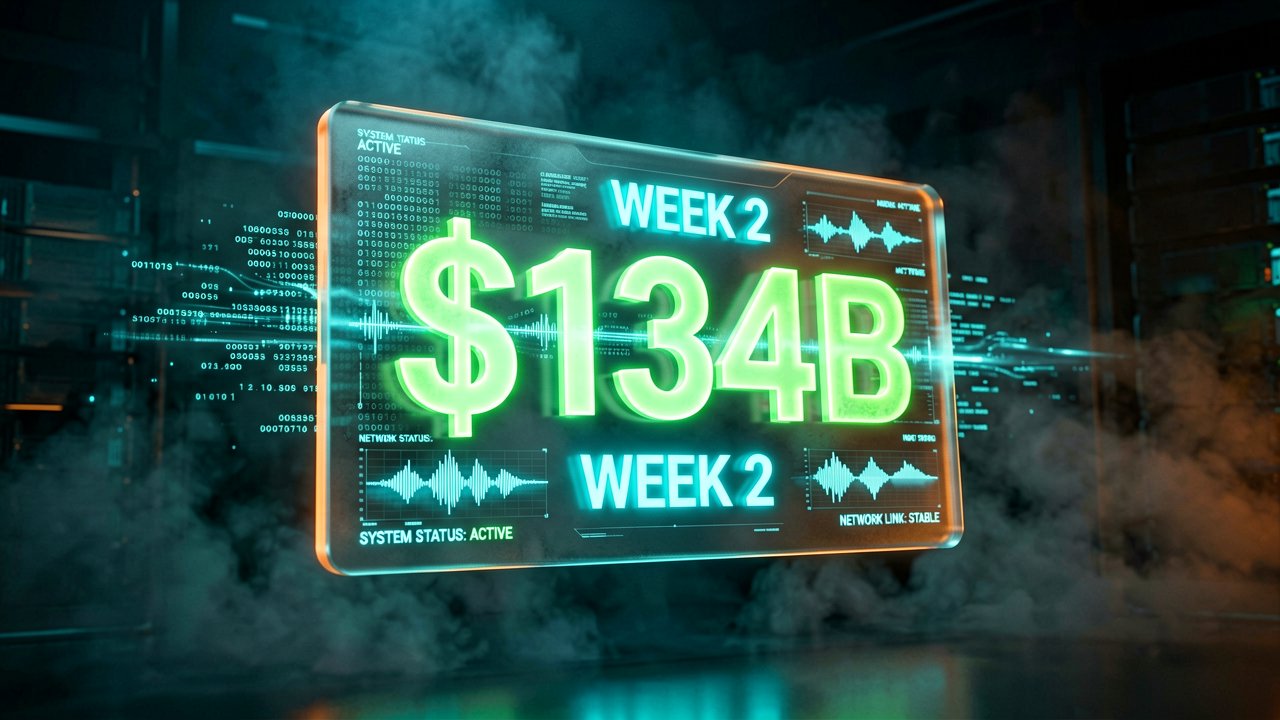
The case centers on Musk's claim that OpenAI abandoned its original charitable mission after his departure from the company's board in 2018. According to NBC Bay Area reporting, Musk is seeking $134 billion in damages, alleging the organization shifted from a nonprofit focused on AI safety to a profit-driven enterprise.
Week one of proceedings established the plaintiff's core argument. Musk testified repeatedly that "you can't just steal a charity," according to CNBC coverage. He claimed his roughly $38 million initial donation was used for unauthorized commercial purposes after Microsoft invested billions and gained access to GPT-3 technology.
The courtroom dynamic has been anything but routine. Musk clashed openly with OpenAI lead counsel William Savitt of Wachtell Lipton, accusing the attorney of asking misleading questions "designed to trick" him. (This is what happens when billionaires argue in federal court.) The judge, Yvonne Gonzalez Rogers, an appointee of former President Barack Obama, has maintained control over proceedings that have included heated exchanges and multiple objections.

OpenAI's defense team has pushed back hard on the charity theft narrative. Savitt told the court that "the Open AI Foundation has been in command of Open AI from the beginning and remains in control of the organization." The firm's attorneys also noted that Musk's own companies operate as for-profit entities and that his contributions to OpenAI came without specific conditions restricting commercialization.
The trial's structure reflects the complexity of the claims. Gonzalez Rogers split proceedings into two phases: a liability phase to determine whether wrongdoing occurred, and a remedies phase to decide appropriate outcomes. The liability phase is expected to conclude by May 21, with the jury's verdict serving as advisory rather than binding.
Physical evidence has played an unusual role in the proceedings. Greg Brockman, OpenAI's president, kept a personal journal that was unsealed as evidence earlier this year. The disclosure highlights how invasive the legal process has become for executives whose private thoughts are now subject to cross-examination.
Market implications extend far beyond the courtroom. OpenAI is valued at over $850 billion by private investors and is set to go public later this year. Meanwhile, Musk's competing AI company, xAI, merged with SpaceX in February 2026. SpaceX has filed confidentially with the SEC for an IPO expected in mid-June that could value the company in the trillions.
During cross-examination, Musk admitted it's "partly" true that xAI used some of OpenAI's technology to train its own models through a process called distilling. He downplayed the reliance, calling it "standard practice to use other AIs to validate your AI." This admission could complicate his narrative about OpenAI's alleged misconduct.
The financial stakes are staggering. Musk's attorneys filed documents seeking up to $134 billion in damages from OpenAI and Microsoft, which is also named as a defendant. His team now argues any "ill-gotten gains" should be returned to OpenAI's foundation. He is also seeking to have Altman and Brockman removed from their roles and to unwind OpenAI's for-profit conversion.
Legal analysts suggest the trial itself may serve Musk's interests regardless of outcome. Vincent Joralemon, director of the Berkeley Center for Law & Technology, noted that creating uncertainty around OpenAI could provide economic benefits for Musk's competing ventures. The dispute plays out in public opinion as much as in court.
Altman's testimony will likely focus on the company's governance structure and the role of the nonprofit foundation in overseeing commercial operations. The defense will need to demonstrate that profit-seeking activities remained subordinate to the charitable mission, a distinction that becomes murky when ChatGPT generates billions in revenue.
Whether the jury believes Musk's characterization of events or OpenAI's defense of its business model remains to be seen. The real question isn't whether the law will be satisfied—it's whether either side actually wins something meaningful from this spectacle.
Artūras Malašauskas is an AI Systems Integrator with 20+ years of production-grade web engineering experience. He has designed, shipped, and scaled enterprise Python/PHP systems for logistics, SaaS, and public-sector clients. For the past year, he has focused exclusively on AI integrations: deploying open-source LLMs, building generative media pipelines (image, audio, video), and engineering multi-agent workflows for real production environments. His standard: reproducibility, security, cost-efficient inference—no vaporware. He documents and evaluates emerging AI tooling, separating verified capabilities from marketing noise. Technical editor at: muza-ai.eu, ai-verslas.lt, ai-naujinos.lt Connect on LinkedIn
Comments