Operant AI Launches Endpoint Protector for Shadow AI Defense

The endpoint security landscape just got more complicated. Operant AI announced the launch of Endpoint Protector on May 4, 2026, positioning it as the industry's first solution designed to discover, detect, and defend against threats across AI tools, coding agents, and Model Context Protocol (MCP) workflows directly at the endpoint level.
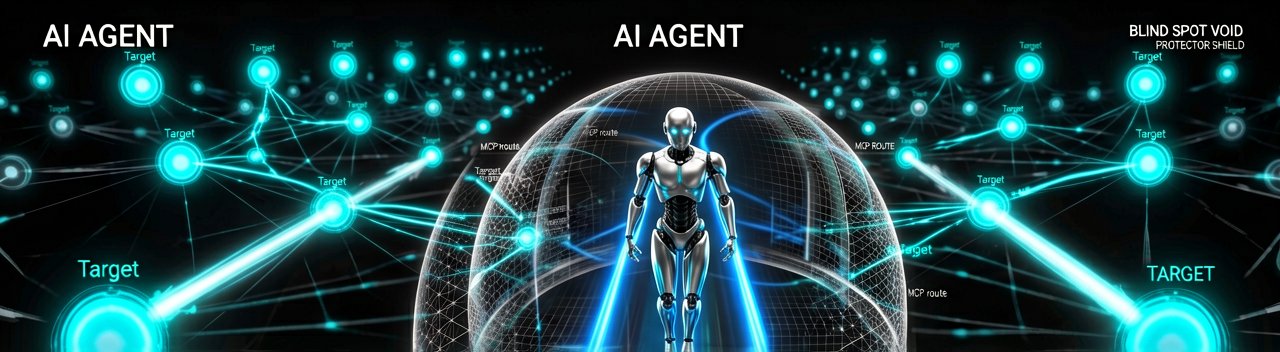
According to the official press release, the product addresses what the company calls the largest blind spot in enterprise security stacks: the semantic layer where AI agents reason and act inside trusted applications over encrypted protocols.
Here's the physical reality of the problem. An engineer opens their AI-powered IDE to refactor code. A finance analyst pastes quarterly projections into a sanctioned AI assistant. A developer deploys an MCP-connected agent that can invoke tools and call services. All of this happens on a laptop, inside encrypted channels, beyond the reach of traditional EDR, CASBs, and network tools that monitor processes and packets but can't inspect what's actually happening inside the agent loop.
"Security leaders are waking up to the reality that their AI exposure doesn't live in one place — it lives everywhere their employees and agents do," said Vrajesh Bhavsar, CEO and Co-Founder of Operant AI. "The endpoint is where AI actually meets the workforce. It's been the largest blind spot in the enterprise security stack — and it's the gap we built the Operant Endpoint Protector to close."
Independent coverage from HelpNetSecurity corroborates the core claims and feature set outlined in the announcement.
Endpoint Protector arrives as a native workstation application for macOS, Windows, and Linux. Security teams deploy it across thousands of endpoints through standard MDM and JAMF workflows. The integration with enterprise identity providers brings contextual IAM and agentic identity enforcement to every user, role, and AI interaction — aligning AI governance with the provisioning and lifecycle controls organizations already trust (which is actually how most enterprises want to handle this stuff).
The product's capabilities break down into five core components. The Enterprise AI & MCP Registry creates a single source of truth cataloging every sanctioned and shadow AI tool, MCP server, skill, plugin, and client with reputation scoring and usage telemetry. Agent Loop Tracing provides continuous monitoring aligned to the OWASP Top 10 for LLM Applications and Agentic AI, catching prompt injection, 0-click attacks, agentic drift, identity anomalies, and PII exfiltration inside encrypted channels that EDR can't inspect.
Data Exfiltration Defense enforces multi-dimensional PII, PCI, and PHI policies inline within prompts, agent loops, and MCP traffic, with auto-redaction for secrets and keys in motion. Access & Execution Governance delivers runtime RBAC for MCP clients, servers, and tools, plus Intent and Scope Guards and model segmentation that keep every agent within its authorized perimeter. Endpoint-Native CodeInjectionGuard provides runtime defense against package and shell execution attacks, with rate limiting, token throttling, and customizable guardrails.
For regulated industries, Endpoint Protector supports private-mode deployment. This includes hybrid architectures where sensitive prompts, agent traces, and detected data remain inside the customer's environment, plus private-SaaS options with full data residency. The compliance backbone spans audit logs and data sovereignty controls across every capability.
Operant AI positions itself as the only vendor featured across all five of Gartner's most critical AI security reports, according to its official website. The company claims this demonstrates unique depth in securing the full spectrum of AI, LLM, API, MCP, and Agent deployments.
The timing matters. Shadow AI has moved from accessing AI in a browser tab to native applications everyone depends on every day. AI IDEs and coding agents are accelerating engineering velocity while introducing new vectors for code injection, secrets leakage, and data exfiltration. MCP — now the connective tissue of the modern AI stack — lets agents invoke tools, call services, and take real-world actions, often across trusted, encrypted channels that traditional security tooling was never designed to inspect.
Endpoint Protector is available today for enterprise customers. Organizations can request demos through Operant's platform page or contact the company directly. Whether CISOs actually deploy it at scale remains the real question — endpoint security tools have a notoriously difficult time balancing visibility with user friction, and adding AI monitoring to that equation introduces new complexity around false positives and agent behavior that's genuinely hard to distinguish from legitimate work.
Artūras Malašauskas is an AI Systems Integrator with 20+ years of production-grade web engineering experience. He has designed, shipped, and scaled enterprise Python/PHP systems for logistics, SaaS, and public-sector clients. For the past year, he has focused exclusively on AI integrations: deploying open-source LLMs, building generative media pipelines (image, audio, video), and engineering multi-agent workflows for real production environments. His standard: reproducibility, security, cost-efficient inference—no vaporware. He documents and evaluates emerging AI tooling, separating verified capabilities from marketing noise. Technical editor at: muza-ai.eu, ai-verslas.lt, ai-naujinos.lt Connect on LinkedIn
Comments