Army Hosts AI Cyber Defense Tabletop Exercise With Tech Executives
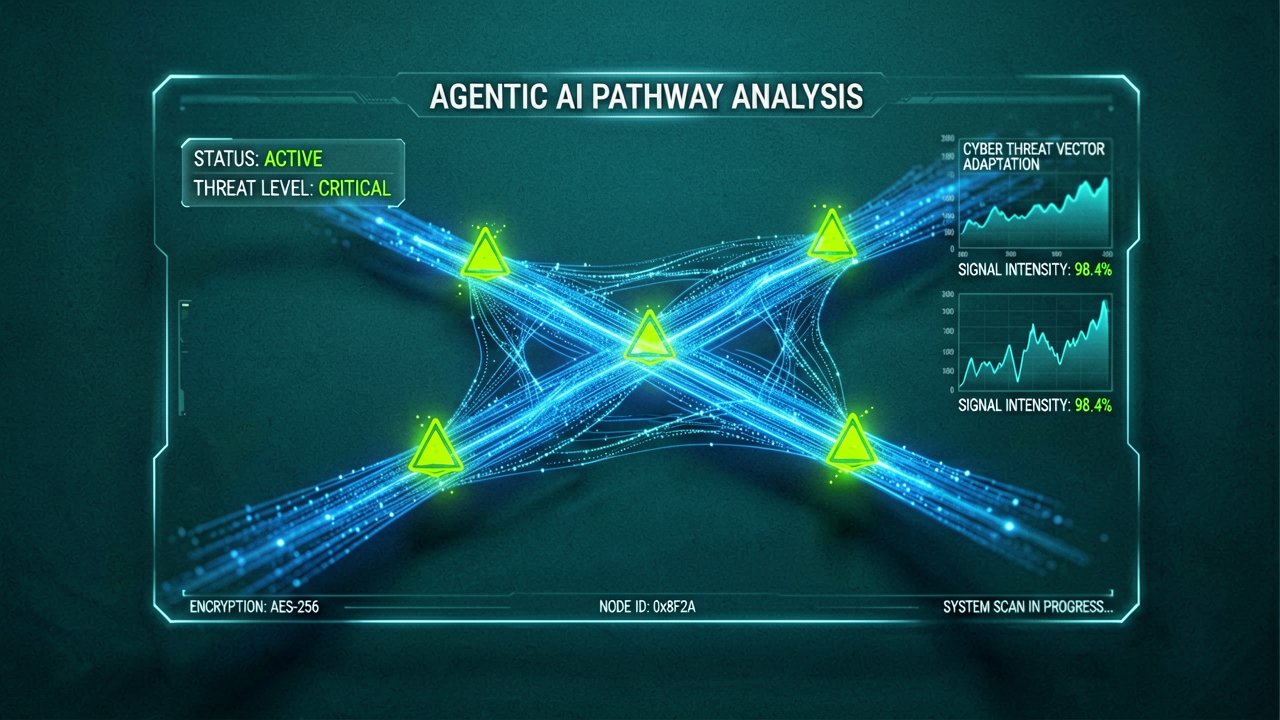
On April 27, the U.S. Army brought together 14 senior cybersecurity executives from leading technology companies at the Pentagon for the second iteration of its artificial intelligence tabletop exercise. The event, known as AI TTX 2.0, marked a deliberate pivot toward accelerating adoption of agentic AI specifically for cyber defense operations.
The exercise drew C-suite leaders from companies including Amazon Web Services, Google, Microsoft, OpenAI, CrowdStrike, and Palo Alto Networks. According to the official announcement from DVIDS, the Office of the Principal Cyber Advisor hosted the half-day event with design support from the Special Competitive Studies Project and partnering organizations including U.S. Cyber Command, U.S. Army Cyber Command, and the Army Cyber Institute at West Point.
The scenario placed participants in a hypothetical Indo-Pacific crisis where an adversary leveraged AI to launch continuous, adapting cyberattacks against Army networks faster than human defenders could respond. Participants were asked to identify scalable, existing AI-driven capabilities that could give Army cyber defenders a decisive advantage. (This is where the rubber meets the road, frankly.)
Brandon Pugh, principal cyber advisor to the secretary of the Army, said the exercise reflects a shift in how the Army engages with industry. "We are not here to develop new requirements from scratch," Pugh said. "We are here to identify scalable, adaptable and existing AI-driven capabilities that can give our cyber defenders a decisive advantage today."
The scenario challenged participants to address two critical problems: developing agentic AI tools that improve cyber defense across the Army's digital terrain, and overcoming vulnerabilities created by heterogeneous networks, legacy systems and uneven modernization. Lt. Gen. Christopher Eubank, commanding general of Army Cyber Command, said the discussion revealed important insights about the human-machine balance.
"Speed wins, scale decides, and you have to determine the difference in speed — human speed, machine speed and organizational speed — and then leverage AI to do the things that it should be doing at speed," Eubank said. The physical reality of this is stark: defenders sitting at terminals watching alerts flood in while AI systems process threat patterns at speeds no human could match.
AI TTX 2.0 builds on the inaugural AI TTX hosted by Secretary of the Army Dan Driscoll in September 2025, which convened approximately 15 CEOs representing more than $15 trillion in enterprise value. That exercise launched Project ARIA — the Army Rapid Implementation of Artificial Intelligence — which established three lines of effort: a model armory delivering AI capabilities to the tactical edge, agentic tools to automate the planning, programming, budgeting and execution process, and AI-driven supply chain management.
Unlike the first exercise, AI TTX 2.0 focused specifically on cyber defense and included examination of policy gaps that may impede enterprise-wide AI adoption. According to Eubank, he took away 19 items for reflection and improvement — none of which were specific products. This matters because it signals the Army is looking at systemic integration rather than point solutions.

Independent reporting from Business Insider corroborates the event details and adds context about the simulated enemy AI adapting during multiple waves of attacks. The outlet notes that recurring solutions focused on pairing AI agents' capabilities in deception tactics — using AI to detect an adversary inside U.S. systems, learn from their behavior, and make them waste time and resources on obstacles.
The Army intends to leverage rapid prototyping authorities resident at Army Cyber Command and the secretary of the Army's acquisition initiatives like FUZE to pilot promising capabilities within 30 to 90 days, with the goal of fielding solutions to operational units shortly thereafter. That timeline is aggressive for military acquisition, which typically operates on multi-year cycles.
Secretary of the Army Dan Driscoll framed the stakes bluntly: "The Army that masters the integration of data, AI compute and human judgment into every warfighting function will have a decisive advantage. The Army that fails to do so will be outpaced, outmaneuvered and unable to achieve its objectives."
The tabletop also surfaced a fundamental question about risk acceptance. "At what stage are machines, [AI] agents, allowed to accept risk versus a human accepting risk?" Eubank asked. Current doctrine requires a human in the loop for all tasks, but the exercise exposed tensions between that constraint and the speed requirements of AI-enabled cyber warfare.
Eubank pushed further: "If we believe the end state is, we're going to use AI to augment humans, we're going to be way behind. We have to get to a place where we're not just augmenting humans. Where does AI have autonomy to do things in the cyberspace defense environment?"
Whether the Army can actually field these capabilities within the promised 30 to 90 days remains to be seen. The real test isn't the tabletop exercise — it's whether legacy infrastructure, procurement bureaucracy, and policy frameworks can move fast enough to match the threat scenario they're preparing for.
Artūras Malašauskas is an AI Systems Integrator with 20+ years of production-grade web engineering experience. He has designed, shipped, and scaled enterprise Python/PHP systems for logistics, SaaS, and public-sector clients. For the past year, he has focused exclusively on AI integrations: deploying open-source LLMs, building generative media pipelines (image, audio, video), and engineering multi-agent workflows for real production environments. His standard: reproducibility, security, cost-efficient inference—no vaporware. He documents and evaluates emerging AI tooling, separating verified capabilities from marketing noise. Technical editor at: muza-ai.eu, ai-verslas.lt, ai-naujinos.lt Connect on LinkedIn
Comments