Citi Launches Arc Platform for AI Agents in Banking Operations

The global banking giant Citi has officially launched Arc, a new internal platform designed to build and scale AI agents across its operations. The announcement marks a shift from passive AI tools to autonomous agents that can orchestrate complex tasks without constant human intervention.
According to the bank's official documentation, Arc functions as a centralized operating system for AI agents, allowing employees to create agents that handle research, synthesis, preparation, and execution tasks. The platform operates within Citi's existing risk framework, with every agent monitored, auditable, and governed.
Consider the physical reality of a wealth division banker's morning. Today, that person spends hours clicking through portfolio dashboards, pulling market data from multiple screens, and manually compiling client briefings. With Arc, a team of AI agents completes this work proactively and delivers information exactly when needed. The banker's role shifts from coordinator to architect and adviser.
This isn't theoretical speculation. More than 80% of Citi's 180,000 employees with access to in-house AI tools already use them regularly, according to the firm's announcement. Most have completed prompt training to maximize tool effectiveness. The bank has also modernized its infrastructure and strengthened its data systems to support these capabilities.
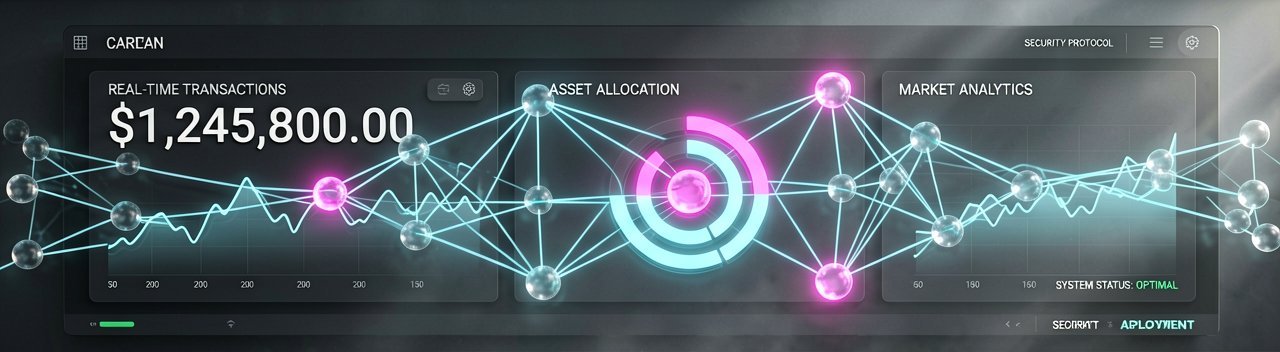
Arc will initially be used by developers to build agents for specific, well-defined use cases before expanding to broader business functions. Over time, colleagues will see new agents integrated into everyday workflows, helping to streamline tasks and surface insights. The rollout strategy keeps the bank at the forefront of AI adoption while maintaining control over deployment.
The competitive landscape is heating up. Citi's official announcement positions this as the next phase in the bank's artificial intelligence journey. The goal remains to make Citi the most AI-empowered financial institution in the world, reached responsibly.
Market projections underscore the stakes. Recent forecasts from Citi estimate the global AI market will exceed $4.2 trillion by 2030, with nearly half—$1.9 trillion—related to enterprise AI. The bank's earlier forecast had put the worldwide AI market at $3.5 trillion, with around $1.2 trillion coming from enterprise AI. That's a significant upward revision (and a signal that banks are betting big).
Independent reporting from PYMNTS corroborates the timeline and scope of the changes. The outlet notes that autonomous AI is shifting from theory into practical commerce, with 43% of retailers piloting autonomous AI and 81% trusting AI's ability to function autonomously when proper guardrails exist.

The governance piece matters more than the technology itself. Employees and managers can monitor agent behavior and stop tasks if needed, preventing agents from going rogue. This addresses a fundamental concern in enterprise AI deployment: control. Without visibility into what agents are doing, how they're doing it, and the value they deliver, banks cannot responsibly scale these systems.
Consumer sentiment presents another hurdle. Research shows 95% of consumers have at least one concern about agentic commerce, though 50% would trust it more if they knew what anti-fraud measures were in place. The broader message: the opportunity is real, but adoption will depend less on novelty than on whether the industry can make the experience secure, understandable, and easy to trust.
Competitors are moving fast. Snowflake's Project SnowWork can autonomously build pitch decks by pulling data from multiple sources, organizing it, and drafting accompanying emails. Sycamore, an agentic AI operating system founded by former Atlassian CTO Sri Viswanath, raised $65 million in seed funding in March. The AI race is playing out on Wall Street as much as it is in Silicon Valley.
Whether Citi's Arc platform delivers measurable efficiency gains or becomes another expensive pilot program remains to be seen. The technology works. The question is whether it changes how banking actually happens—or just adds another layer of complexity to an already dense workflow stack.
Artūras Malašauskas is an AI Systems Integrator with 20+ years of production-grade web engineering experience. He has designed, shipped, and scaled enterprise Python/PHP systems for logistics, SaaS, and public-sector clients. For the past year, he has focused exclusively on AI integrations: deploying open-source LLMs, building generative media pipelines (image, audio, video), and engineering multi-agent workflows for real production environments. His standard: reproducibility, security, cost-efficient inference—no vaporware. He documents and evaluates emerging AI tooling, separating verified capabilities from marketing noise. Technical editor at: muza-ai.eu, ai-verslas.lt, ai-naujinos.lt Connect on LinkedIn
Comments