South Korea Unveils $110 Billion National Growth Fund for Strategic Industries

The Financial Services Commission of South Korea has activated a 150 trillion KRW investment vehicle designed to reshape the country's industrial competitiveness over the next five years. Announced on May 3, 2026, the National Growth Fund represents one of the most aggressive state-backed capital deployment strategies in recent memory, with approximately $110 billion USD earmarked for strategic sectors including artificial intelligence, semiconductors, and secondary batteries.
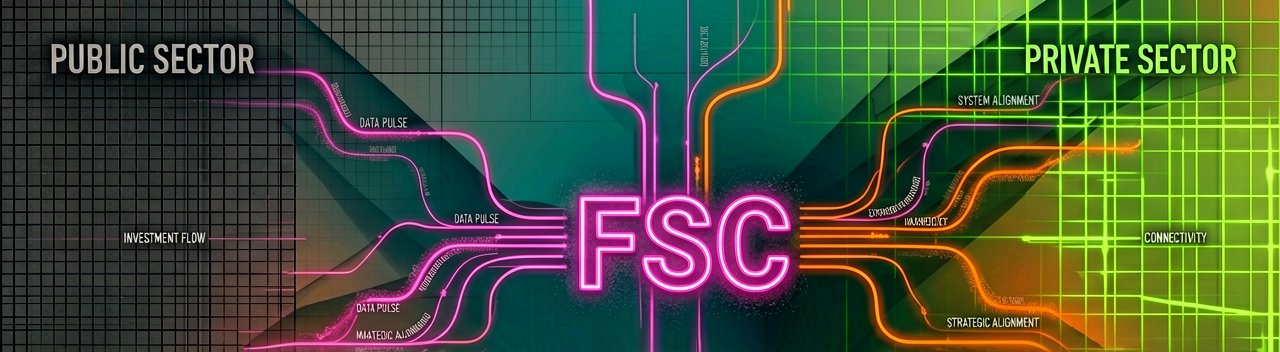
At the core of this initiative is a public-private structure that splits the capital evenly: 75 trillion KRW from government sources and another 75 trillion KRW from private sector participants. The official FSC documentation outlines the fund's composition, noting that the Korea Development Bank will manage the high-tech strategic industry portion while fiscal inputs take a subordinated position to absorb initial losses.
Ordinary citizens can participate through a separate vehicle called the 'National Participation National Growth Fund,' which targets an annual return of around 6% with partial principal protection. The government will cover up to 20% of any losses, and investors committing for at least three years receive income tax deductions of up to 18 million KRW. (This is the kind of incentive structure that makes retirement planning feel less like gambling.)
The first wave of direct investments reveals the fund's priorities with surgical precision. Upstage, a unicorn AI company valued at over 1 trillion KRW, received 560 billion KRW in combined funding. The package includes 100 billion KRW from the Advanced Strategic Industry Fund, 30 billion KRW from the Korea Development Bank, and 430 billion KRW from private investors including SK Networks, Mirae Asset, and Woori Venture Partners.
Upstage's CEO Kim Seong-hoon framed the investment as a sovereignty play, stating the company would develop AI models recognized globally using what he called "the precious money of the people." The funds will advance Upstage's proprietary foundation models, 'Sola Pro' and 'Sola Open,' while securing infrastructure for B2B AI operations. This is the first direct equity investment in an AI model company under the fund.
Infrastructure development receives equally aggressive backing. The FSC approved 400 billion KRW in equity investment for a national AI computing center in Solarsido, Haenam. The facility will occupy 50,000 square meters and deploy approximately 15,000 GPUs and NPUs—critical hardware that developers currently queue for months to access. The special purpose company established for this project may seek up to 2 trillion KRW in additional loans.
Other approved projects demonstrate the fund's breadth. Future Graph, a POSCO Future M subsidiary, received a 250 billion KRW low-interest loan to construct a spherical graphite production facility in Saemangeum. Estgen Bio secured 85 billion KRW for biosimilar production expansion, while Hwasung obtained 16.5 billion KRW for semiconductor process gas operations.
By the end of April 2026, the fund had approved support for 11 projects totaling 8.4 trillion KRW, according to reporting from Seoul Economic Daily. The first phase of institutional investor selection drew 81 companies competing for 11 spots—a 7.4 to 1 competition rate that suggests significant private sector appetite.

The fund's investment methods span four categories: direct equity investment, indirect equity investment, infrastructure investment, and low-interest lending support at approximately 2 percent. This diversity allows the fund to support everything from early-stage tech startups to large-scale facility construction. The government has allocated 50 trillion KRW of the five-year total specifically for AI and semiconductor development.
Physical reality matters here. When engineers finally access the 15,000-GPU computing center, they won't just see faster training times—they'll experience the hum of cooling systems, the click of rack-mounted servers, and the tangible relief of not waiting months for cloud compute slots. That's the difference between theoretical capacity and actual development velocity.
The FSC emphasizes the strategic necessity of 'sovereign AI'—independent AI capabilities that don't rely on foreign technology. Plans include collaboration with a leading domestic portal company to secure high-quality data for Korean language-specialized models. This addresses a genuine gap: most foundation models struggle with Korean nuance and context.
Industry analysts note this positions South Korea differently from competitors who rely primarily on private capital. The government's subordinated investment position—absorbing losses first—creates a risk buffer that encourages private participation. However, the success of this model depends on execution discipline and avoiding political interference in investment decisions.
The fund forms part of a broader ecosystem including direct government investments of 15 trillion KRW, infrastructure investments and loans of 50 trillion KRW, and another 50 trillion KRW in low-interest loans. By combining these instruments, the government aims to create up to 125 trillion KRW in added economic value over five years.
Whether the fund achieves its stated goals remains an open question. The technology sectors it targets face intense global competition, and capital deployment alone doesn't guarantee innovation. The real test will be whether these investments produce commercially viable products that compete internationally, not just domestically subsidized champions. Time will tell if the returns justify the risk.
Artūras Malašauskas is an AI Systems Integrator with 20+ years of production-grade web engineering experience. He has designed, shipped, and scaled enterprise Python/PHP systems for logistics, SaaS, and public-sector clients. For the past year, he has focused exclusively on AI integrations: deploying open-source LLMs, building generative media pipelines (image, audio, video), and engineering multi-agent workflows for real production environments. His standard: reproducibility, security, cost-efficient inference—no vaporware. He documents and evaluates emerging AI tooling, separating verified capabilities from marketing noise. Technical editor at: muza-ai.eu, ai-verslas.lt, ai-naujinos.lt Connect on LinkedIn
Comments