Acron Technologies Acquires AI Video Processing Firm Sightline Intelligence
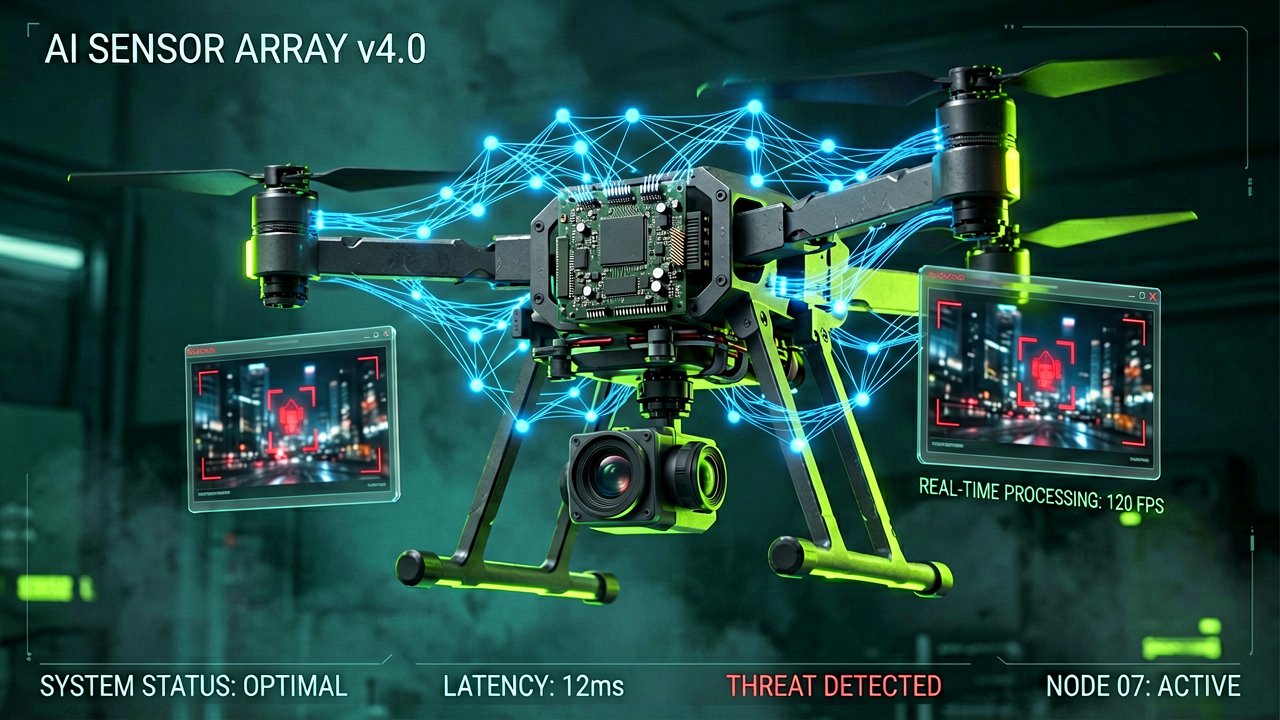
St. Petersburg-based Acron Technologies has acquired Sightline Intelligence, a Portland, Oregon firm specializing in AI-powered video processing hardware and target recognition systems. The transaction closed April 24, 2026, marking another expansion of Acron's defense technology portfolio under private equity owner TJC L.P.
Sightline Intelligence develops edge-based AI processing capabilities that operate without cloud connectivity. This matters in contested environments where bandwidth is limited or unreliable. The technology delivers millisecond Intelligence, Surveillance, and Reconnaissance (ISR) insights for autonomous aircraft and tactical teams. (Latency in these scenarios isn't just annoying—it can be lethal.)
According to reporting from St Pete Catalyst, Acron Technologies/Aviation CEO Alan Crawford described the acquisition as bringing "additional capabilities" to the organization. The company's ultra-low Size, Weight and Power (SWaP) embedded systems process video directly at the edge, eliminating the lag that comes with transmitting footage to distant servers.
Vertical Aviation's coverage of the deal confirms the April 24 closing date and notes that Sightline was previously owned by private equity firm Artemis Capital Partners. The acquisition strengthens Acron's existing electro-optical/infrared hardware and video compression capabilities, creating what the company calls an "industry-leading, comprehensive suite of advanced video technologies."
This isn't Acron's first move in the AI space. The Sightline purchase follows the acquisition of Alereon, Inc., announced April 14. Alereon creates defense ultra-wideband wireless solutions that give soldiers low-weight communication capabilities. Cables present a snag hazard in field operations, but standard WiFi lacks the bandwidth and low probability of interference that ultra-wideband provides.
Acron Technologies operates with a "very thin" corporate layer—fewer than 20 employees at the headquarters level. All the action happens within its standalone businesses. Acron Aviation, a pilot training and avionics solutions provider, moved its global headquarters to the City Center office tower in downtown St. Petersburg in February 2026.
The aviation division has an interesting pedigree. Acron Aviation was once a division of L3Harris Technologies, a national defense contractor. TJC L.P. acquired L3Harris's Commercial Aviation Solutions business in 2025. TJC L.P. also owns the ACR Group, which focuses on satellite-based communication, navigation, and rescue products. All these entities now fall under the Acron Technologies umbrella.
Crawford emphasized that the company is bullish on AI beyond just product development. The technology is used internally for coding assistance and contract processing. "We're not of the approach that it's an opportunity to reduce head count," he stated. "Quite the contrary. We see it as an opportunity to move maybe some tasks that are more repetitive to the technology that's available and it creates more capacity then for our colleagues."
More acquisitions are reportedly in the pipeline. Acron Technologies is also pursuing "organic" investments, currently recruiting engineers to develop artificial intelligence and analytics software. The logic is straightforward: AI can bring tools to market faster because they can be developed more quickly.
Philpott Ball & Werner, LLC and William Blair & Company, L.L.C. acted as lead financial advisors to Acron Technologies on the transaction. Kirkland & Ellis LLP served as legal counsel.
The physical reality of this technology matters. When a tactical team deploys an autonomous aircraft in a disconnected environment, they need real-time situational awareness. The difference between processing video at the edge versus sending it to a cloud server can mean the difference between actionable intelligence and delayed data that arrives too late to matter.
Whether this consolidation of defense AI capabilities translates into market advantage remains to be seen. The defense sector moves slowly, and procurement cycles can stretch for years. Acron has the technology now. Getting it into the hands of operators who need it is the harder part.
Artūras Malašauskas is an AI Systems Integrator with 20+ years of production-grade web engineering experience. He has designed, shipped, and scaled enterprise Python/PHP systems for logistics, SaaS, and public-sector clients. For the past year, he has focused exclusively on AI integrations: deploying open-source LLMs, building generative media pipelines (image, audio, video), and engineering multi-agent workflows for real production environments. His standard: reproducibility, security, cost-efficient inference—no vaporware. He documents and evaluates emerging AI tooling, separating verified capabilities from marketing noise. Technical editor at: muza-ai.eu, ai-verslas.lt, ai-naujinos.lt Connect on LinkedIn
Comments