Google VP Ranganathan Discusses AI's Intelligence Revolution at Rice

The second annual Raleigh White Johnson Jr. Lecture took place April 9, 2026, at Rice University’s George R. Brown School of Engineering and Computing. Partha Ranganathan, vice president and engineering fellow at Google, headlined the event with a talk titled "From Unicorns to Centaurs: Powering the AI Moonshot." The lecture series, established in 2025, brings leading voices in engineering to explore pressing issues at the intersection of technology and society.
Ranganathan, a Rice graduate who earned his master’s degree in computer engineering in 1997 and doctorate in electrical and computer engineering in 2000, now leads innovations in next-generation AI applications and ecosystems at Google. His track record includes more than 100 publications, co-invention of more than 125 patents, and an Emmy Award for technical achievement. The Rice University news release documents the full scope of his remarks and background.
The core of Ranganathan’s presentation focused on the unsustainable trajectory of current AI development. He described AI as "the space race of our time," pointing to the exponential rise in demand for computing power and energy. While advances in computing have historically followed predictable growth patterns, AI is accelerating at a pace that is both technically challenging and environmentally unsustainable. This isn’t abstract theory — it’s the physical reality of data centers consuming megawatts of electricity while cooling systems work overtime to prevent hardware from literally melting down.
To address this gap, he emphasized the importance of co-design — developing hardware and software in tandem — as well as rethinking AI systems more holistically. The event page on Rice’s official events calendar details the lecture abstract, which frames AI infrastructure as requiring "rocket engines" to power the moonshot. This includes vertically-integrated innovations across the entire computing stack, from physical data centers and hardware to software and cloud solutions.
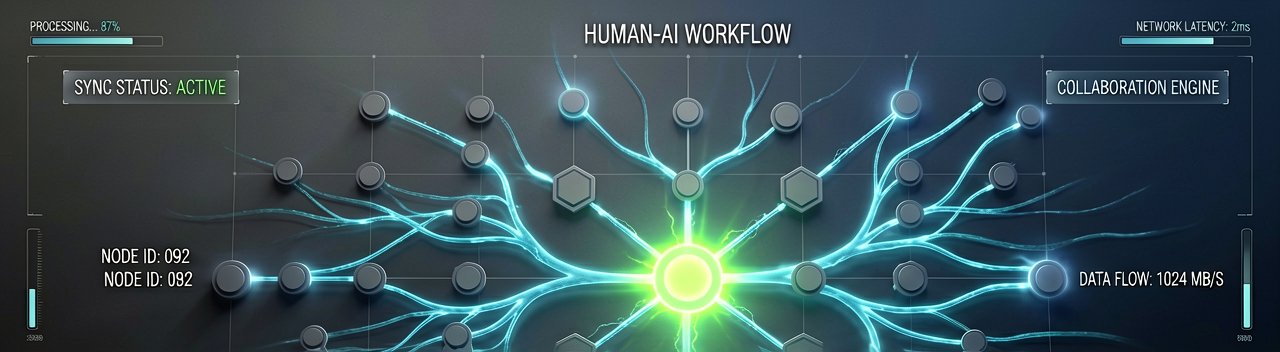
The title itself reveals Ranganathan’s central metaphor. "Unicorns" refers to the cottage industry of AI infrastructure companies that have emerged — the startups and specialized hardware providers building the foundation. "Centaurs" represents the future: symbiotic partnerships between human ingenuity and artificial intelligence. The shift from AI as a back-end tool to a true partner in human ingenuity will increasingly influence how we approach discovery, design and decision-making across fields. It’s a transition from automation to augmentation (which is actually more interesting than most people realize).
Ranganathan also highlighted the need for responsible AI systems that operate transparently and ethically alongside the emergence of more autonomous, "agentic" architectures capable of executing complex workflows. Ensuring efficiency across the full AI pipeline will be critical to sustaining progress at scale. This matters because the current trajectory isn’t just expensive — it’s fundamentally unstable without coordinated intervention.
Luay Nakhleh, the William and Stephanie Sick Dean of Engineering and Computing at Rice, noted that Ranganathan’s work reimagines the future through responsible, ethical, human-centered intelligent systems. "His success exemplifies the caliber of our alumni," Nakhleh said. The dean’s comments underscore the institutional investment in this type of discourse — universities are positioning themselves as neutral ground for examining AI’s societal implications.
Ranganathan concluded by comparing the evolution of AI to the early days of automobiles during the Industrial Revolution. Just as the first Model T resembled a horse-drawn carriage before finding its own form, AI is now moving beyond imitation toward becoming truly "AI-native." The analogy is apt but uncomfortable: early automobiles were dangerous, inefficient, and required entirely new infrastructure before they became indispensable. AI is in that same awkward adolescence right now.

"We are at the cusp of an intelligence revolution," he said. "Much like the industrial and information revolutions, this epoch promises to be transformative and will reshape the foundations of modern society." The language is ambitious, bordering on prophetic, but the technical substance behind it is grounded in real engineering constraints.
The lecture took place in McMurtry Auditorium, Duncan Hall, at 4:00pm CDT. Attendees included Rice faculty, students, and members of the Houston community. The endowed lecture series was established in memory of Raleigh Johnson, a prominent Houston businessman and philanthropist. His family’s support ensures the series continues bringing distinguished scholars to discuss their work and foster engagement between scholars, faculty, and students.
What’s missing from the optimistic framing is the timeline. Ranganathan spoke about co-design and responsible innovation, but didn’t specify when these changes will materialize or what regulatory frameworks might enable them. The gap between identifying problems and implementing solutions remains vast in the AI industry. Whether the "intelligence revolution" delivers on its promises depends less on technical breakthroughs and more on whether engineers, policymakers, and corporations can align their incentives.
For developers and engineers watching from outside the auditorium, the practical takeaway is clear: the era of treating AI as a black-box API is ending. The next phase requires deeper integration across the stack, from silicon to software to human workflows. That’s harder work than most realize, and it won’t happen overnight. The question isn’t whether AI will transform society — it’s whether the transformation will be managed well enough to avoid catastrophic failures along the way.
Artūras Malašauskas is an AI Systems Integrator with 20+ years of production-grade web engineering experience. He has designed, shipped, and scaled enterprise Python/PHP systems for logistics, SaaS, and public-sector clients. For the past year, he has focused exclusively on AI integrations: deploying open-source LLMs, building generative media pipelines (image, audio, video), and engineering multi-agent workflows for real production environments. His standard: reproducibility, security, cost-efficient inference—no vaporware. He documents and evaluates emerging AI tooling, separating verified capabilities from marketing noise. Technical editor at: muza-ai.eu, ai-verslas.lt, ai-naujinos.lt Connect on LinkedIn
Comments