APCCC 2026: Genomics and AI Aim to Reduce Prostate Cancer Overtreatment

The Advanced Prostate Cancer Consensus Conference (APCCC) 2026 convened April 30 through May 2 in a format that has become familiar to urologic oncologists: packed sessions, rapid-fire debates, and voting on contentious clinical questions. One of the more substantive discussions came during the high-risk and locally advanced prostate cancer session, where Dr. Jason Efstathiou tackled a problem that has plagued the field for decades. Can genomics and artificial intelligence actually help minimize over- or undertreatment in prostate cancer?
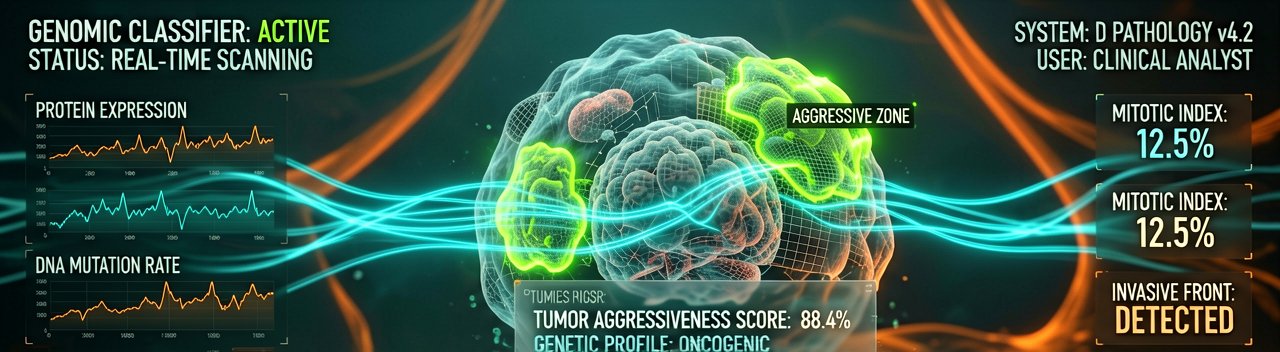
The answer, according to the presentation, is nuanced. Both approaches show promise, but they are fundamentally different tools. Dr. Efstathiou made this distinction clear from the outset. Genomic classifiers and multimodal digital pathology AI models are not interchangeable, despite both appearing in the 2026 NCCN Prostate Cancer guidelines.
Two biomarkers dominated the discussion. Decipher GC is a 22-gene expression classifier that produces a continuous 0-1 score. It is prognostic for distant metastasis and prostate cancer mortality, validated across biopsy, post-radical prostatectomy, high-risk, and salvage settings. The same assay gets used across different clinical scenarios, which is convenient for labs but requires careful interpretation by clinicians.
The ArteraAI Prostate Test takes a different approach entirely. It is a multimodal digital pathology AI model using H&E image features plus clinical variables. No extra tissue extraction is needed beyond digitized slides. The model output depends on the case use, and the endpoint defines what the algorithm "cares" about. This is both a strength and a limitation (a problem that has plagued users for years, frankly).

Dr. Efstathiou outlined five key clinical decisions where these tools might matter. First: active surveillance versus definitive treatment. The goal is avoiding treatment of indolent cancer while not missing occult aggressive biology. A Decipher high-risk score is associated with higher upgrading, upstaging, and adverse pathology risk in favorable risk cohorts. GPS and Prolaris have lower risk selection roles, but often rely on management change endpoints.
Second: should intermediate risk patients receive short-term androgen deprivation therapy? RTOG 9408 assessed radiotherapy with or without four months of ADT. The ArteraAI Prostate MMAI model showed that in the biomarker-negative subgroup, there was no clear outcome benefit from ADT. For the biomarker-positive subgroup, there was a higher estimated absolute benefit. This addresses a common de-escalation question that oncologists face in practice.
Third: high-risk therapy duration and intensification. NRG GU009 (PREDICT-RT) is a parallel phase III randomized trial for high-risk prostate cancer testing treatment de-intensification for men with lower genomic risk and treatment intensification for men with higher genomic risk. Accrual completed in August 2025. There are two ArteraAI Prostate MMAI studies in this disease space, including RTOG 9202 validation among high-risk locally advanced prostate cancer.
Fourth: post-prostatectomy salvage. When is "more" justified? Decipher GC has been tested in RTOG 9601, where the genomic classifier is independently associated with distant metastasis and prostate cancer-specific survival. The question becomes whether adding salvage radiation based on genomic risk improves outcomes compared to waiting for PSA progression.
Fifth: dose, fields, and modality of treatment. This is where the rubber meets the road for radiation oncologists. Should a patient receive whole prostate radiation or focal therapy? Should they get standard dose or hypofractionated? The biomarkers may help answer these questions, but the data is still maturing.
Dr. Efstathiou offered a practical framework for evaluating these tools. Analytical validity: can the test be run reproducibly? Prognostic validity: does it predict the patient's baseline risk? Predictive validity: does it identify differential benefit from a therapy? Clinical utility: does using it improve decisions and outcomes? A biomarker should change treatment only when it changes the estimated absolute benefit, harms, or patient preference enough to alter the decision.
The physical reality of using these tools matters. Decipher GC requires tissue extraction and shipping to a central lab. Turnaround time is typically two to three weeks. ArteraAI Prostate Test uses existing digitized slides, which means no additional tissue handling. But the slides must be of sufficient quality for AI analysis. Pathologists need to review the output, not just accept it blindly.
Several points of caution emerged. Active surveillance is not binary. Biomarkers may change surveillance intensity, not just treatment. Thresholds should not override MRI information, biopsy grade, positive cores, life expectancy, or patient priorities. Prognosis is not the same as treatment selection. A model trained to avoid metastasis may not be designed to predict biochemical recurrence or ADT delayed PSA events.
The official APCCC 2026 program shows this session ran for 10 minutes within a broader 140-minute high-risk prostate cancer block. That's a tight window for such complex material. The voting results that followed likely reflected the field's cautious optimism.
What does this mean for patients? If you're facing a prostate cancer treatment decision, these biomarkers may be part of the conversation. But they are not the whole conversation. Your age, comorbidities, values, and preferences matter more than any single test result. The tools are meant to inform, not dictate.
What does this mean for clinicians? The evidence is accumulating but not yet definitive. Several prospective trials are underway, including NRG-GU010 GUIDANCE among unfavorable intermediate risk disease. Decipher GC low score is testing de-intensification of treatment, whereas Decipher GC high score will test treatment intensification. The primary endpoint for this trial is distant metastasis.
Whether users actually pay for it remains the real question. Insurance coverage for genomic classifiers and AI pathology models varies widely. Some plans cover Decipher GC in specific settings. ArteraAI Prostate Test is newer, and reimbursement pathways are still being established. This creates access disparities that the field needs to address.
The evolution of risk stratification tools since the 1960s—from Gleason Score to AI in 2020—shows progress, but also reveals how much remains uncertain. These biomarkers may identify clinically high-risk but biologically very high-risk patients. However, prospective androgen receptor pathway inhibitor treatment biomarker trials are still key.
Time will tell if this works. The data from ongoing trials will determine whether these tools truly improve outcomes or simply add complexity to already difficult decisions. Until then, clinicians should use them judiciously, understanding both their capabilities and limitations.
Artūras Malašauskas is an AI Systems Integrator with 20+ years of production-grade web engineering experience. He has designed, shipped, and scaled enterprise Python/PHP systems for logistics, SaaS, and public-sector clients. For the past year, he has focused exclusively on AI integrations: deploying open-source LLMs, building generative media pipelines (image, audio, video), and engineering multi-agent workflows for real production environments. His standard: reproducibility, security, cost-efficient inference—no vaporware. He documents and evaluates emerging AI tooling, separating verified capabilities from marketing noise. Technical editor at: muza-ai.eu, ai-verslas.lt, ai-naujinos.lt Connect on LinkedIn
Comments