Hyundai's Pleos Connect AI Assistant Debuts in Grandeur This May
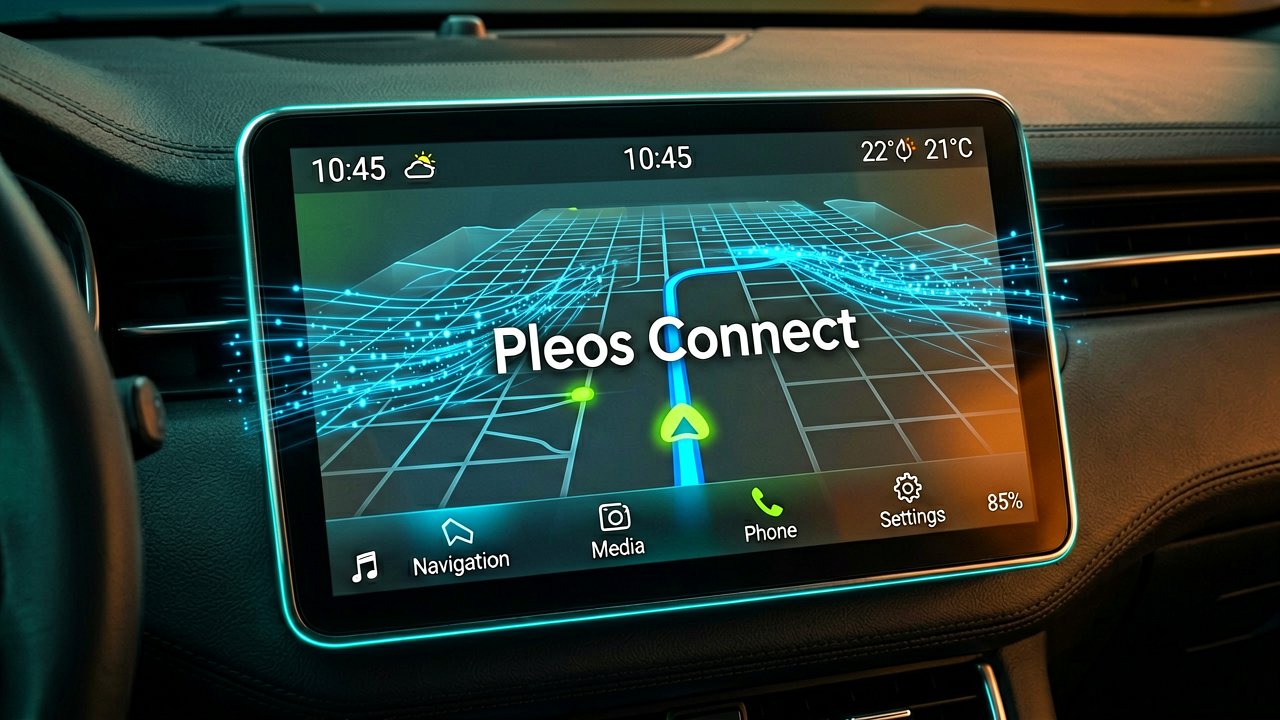
The automotive industry's race for software-defined vehicles just got a new contender. Hyundai Motor Group unveiled Pleos Connect, its next-generation infotainment platform, at a media event held April 29, 2026, at UX Studio Seoul in Gangnam District. The system marks the group's first major step toward transitioning from hardware-centric manufacturing to a software-driven mobility company.
At the core of Pleos Connect sits Gleo AI, a large language model (LLM)-based voice assistant designed to understand context rather than just execute commands. Unlike traditional car voice systems that require precise phrasing, Gleo AI can process multiple instructions in a single request. Tell it to "turn off the air conditioner and change the mood lighting to a forest-like setting," and it handles both sequentially. The system also supports casual conversation and web searches for news, weather, and sports.
The first production vehicle to receive Pleos Connect will be The New Grandeur, launching in Korea this May. Following the domestic debut, Hyundai Motor Group plans a phased global rollout including the recently unveiled IONIQ 3 in Europe. The group's ambitious target: equip approximately 20 million Hyundai, Kia, and Genesis vehicles with Pleos Connect by 2030.
According to the official announcement from Hyundai Motor Group, the system is built on three development pillars: intuitiveness, safety, and openness. These aren't marketing buzzwords—they translate into specific hardware and software decisions that affect how drivers actually interact with their vehicles.

The cockpit design reflects extensive research into driver behavior conducted across UX Studios in Seoul, Irvine, Frankfurt, and Shanghai. Two main displays dominate the interface: a slim screen positioned directly in front of the driver showing speed, media, and turn-by-turn directions, and a large central display divided into three sections for driving information, apps, and a bottom bar for quick access to pinned applications.
Physical buttons remain on the steering wheel and below the central screen. This isn't nostalgia—it's intentional. Drivers can access key controls without touching the touchscreen, reducing distraction during critical moments. A three-finger gesture lets users swipe across the screen to reposition app windows or instantly close unnecessary applications. The gesture works, but you need to practice it before relying on it while driving (a problem that has plagued users for years, frankly).
Navigation has been redesigned around data-driven insights from existing users. Complex graphics give way to simple icons for at-a-glance visibility. The interface is modular—drivers can configure layouts to run navigation alongside other apps simultaneously. Floating cards display full routes and estimated arrival times, keeping critical information visible without cluttering the screen.
The App Market introduces an open ecosystem for third-party services. Applications like NAVER Map, YouTube, and Spotify are available in versions optimized for the vehicle environment. Partnerships will expand content to include games and vehicle management services. Over-the-Air (OTA) updates ensure vehicles receive the latest features even after purchase.

Jongwon Lee, Senior Vice President and Head of the Feature & CCS Sub-Division at Hyundai Motor Group, stated that Pleos Connect combines a mobile-friendly platform with advanced AI technology. He added that the system will provide customers with a higher level of mobility experience and prove the limitless potential of future mobility.
Jongho Lee, Team Lead of the Gleo AI Group at 42dot, described the assistant as an intelligent AI agent that engages in natural conversation like a companion in the passenger seat. The system makes holistic, context-aware judgments rather than responding to isolated commands. Going forward, Gleo AI will continue to evolve with more advanced personalized services tailored to individual driver characteristics.
Independent reporting from Maeil Business Newspaper corroborates the timeline and scope of the deployment. The Korean outlet's headline—"Better Than a Passenger Who Knows Nothing About Cars"—captures the marketing angle, though the technical reality is more nuanced than the comparison suggests.
The production-ready system debuted as the mass-production version of the research concept first unveiled at the Pleos 25 developer conference in 2025. This represents a significant shift from prototype to consumer product, with all the reliability and safety testing that entails.
Hyundai Motor Group's broader strategy extends beyond Pleos Connect. At CES 2026, the group announced an AI Robotics Strategy positioning itself as a human-centric leader in Physical AI. The company plans to integrate technologies across mobility and robotics, leveraging data from manufacturing, logistics, and sales to create continuous improvement cycles for AI learning.
Whether the 20 million vehicle target by 2030 is achievable depends on factors beyond software development. Market adoption rates, regulatory approval in different regions, and competition from established players like Apple CarPlay and Google Android Automotive will determine Pleos Connect's ultimate reach. The technology exists. Whether users actually pay for it remains the real question.
Artūras Malašauskas is an AI Systems Integrator with 20+ years of production-grade web engineering experience. He has designed, shipped, and scaled enterprise Python/PHP systems for logistics, SaaS, and public-sector clients. For the past year, he has focused exclusively on AI integrations: deploying open-source LLMs, building generative media pipelines (image, audio, video), and engineering multi-agent workflows for real production environments. His standard: reproducibility, security, cost-efficient inference—no vaporware. He documents and evaluates emerging AI tooling, separating verified capabilities from marketing noise. Technical editor at: muza-ai.eu, ai-verslas.lt, ai-naujinos.lt Connect on LinkedIn
Comments