Optro Launches MCP Server for Governed GRC Data Access
Enterprise risk management just got a direct line to artificial intelligence. Optro (formerly AuditBoard) announced its Model Context Protocol (MCP) server on April 28, 2026, establishing a standardized interface between enterprise AI models and governance, risk, and compliance data. The integration allows organizations' preferred large language models to query live GRC environments without manual data exports or custom API builds.
The announcement came via PRNewswire, positioning the MCP server as a universal API for AI that eliminates platform-switching friction. According to the company's documentation, the plugin connects directly to customers' Optro GRC environments while honoring existing role-based permissions.
Happy Wang, Chief Product and Technology Officer at Optro, framed the value proposition bluntly: "With MCP, customers will be able to meaningfully cut down the amount of time spent manually copying and pasting data to their enterprise LLM." The integration extends the platform's capabilities by adding a flexible intelligence layer over an organization's entire GRC ecosystem.
Model Context Protocol itself is an open standard—not owned by any single vendor—that functions as a secure interface between AI models and external data sources. In practice, this means approved enterprise AI tools (Claude, ChatGPT, Gemini, Copilot, etc.) can query live Optro data from within existing chat interfaces. No manual exports. No static document uploads. No switching platforms to pull a report you then paste into a prompt.
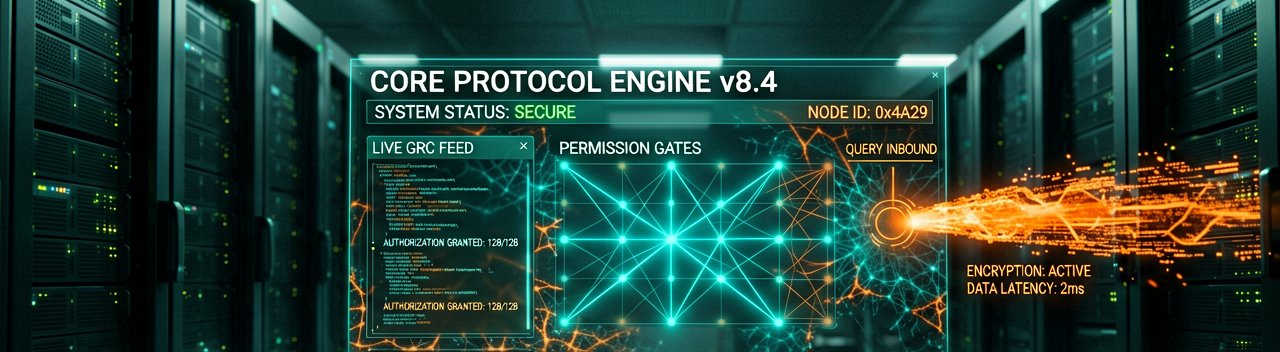
Security architecture matters here. Chief Information Security Officers typically care about three things: authentication, permissions, and data exposure. Optro's MCP implementation enforces access at the user level. The AI can only retrieve data that the user already has permission to access in Optro. If a user can't see a record in the product, the AI can't see it either. The permission model doesn't expand. It doesn't override. It simply extends existing controls into the AI layer.
Emmanuel Benton, Director of Professional Practices Group Internal Audit at Verizon, provided a customer perspective: "By connecting our enterprise AI with our GRC environment, we can move away from manual reporting and toward a future where we can remediate threats before they become loss events. It's the difference between managing a tool and leveraging a strategic intelligence layer." (That's the kind of quote that makes product teams feel good about their work.)
Use cases break down across three core GRC functions. For audit teams, real-time querying of active and historical data replaces manual report reformatting. Simple prompts surface audit delays, escalating exceptions, or resource misalignments for board-level reporting. Risk teams can identify patterns before they become loss events by pulling live risk registers and key risk indicators. AI instantly aggregates risk scores and flags where residual risk trends past tolerance. Compliance teams query control status and framework coverage without manual prep cycles.
There's a caveat worth noting. MCP amplifies what is already in place. It does not correct for gaps. Organizations with current, well-maintained GRC data environments will see the strongest results from day one. Those who have let data hygiene drift will still benefit from the integration, but the quality of what the AI can surface will reflect the quality of the underlying data. That's not unique to MCP. It's true of every AI deployment worth the investment.
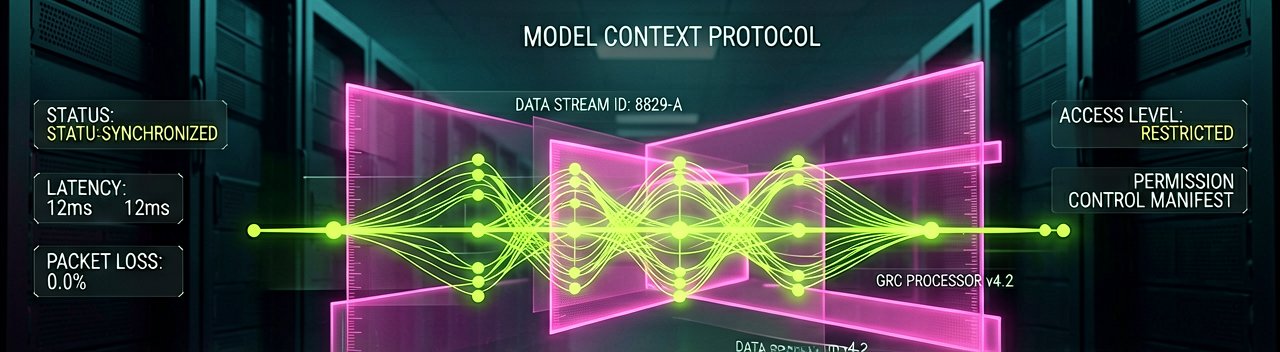
Anton Dam, VP of Engineering for Data and AI/ML at Optro, wrote in the company's technical blog that the organizations seeing real returns from AI in GRC are the ones that got the data foundation right first. Optro customers already have a significant head start there. The data foundation is there. The governance infrastructure is there. MCP connects that readiness to the AI tools already in use.
Because MCP is built on a publicly defined open standard, customers aren't locked into one AI provider as the market shifts. If an organization moves from one model to another, the Optro connection moves with it. That interoperability matters in an enterprise environment where AI vendor selection can change quarterly based on pricing, performance, or compliance requirements.
More than 50% of the Fortune 500 trust Optro to elevate audit, risk, and compliance. The company was named a Leader in the 2025 Gartner Magic Quadrant for Governance, Risk and Compliance Tools, Assurance Leaders. The MCP server launch represents the next phase of that positioning—moving from a GRC platform to an agentic system of action.
Whether this actually reduces the friction of AI adoption in GRC teams remains to be seen. The technology is sound. The security model is conservative. But the real test is whether GRC professionals will trust AI-generated insights enough to act on them without manual verification. That's the harder problem to solve.
Artūras Malašauskas is an AI Systems Integrator with 20+ years of production-grade web engineering experience. He has designed, shipped, and scaled enterprise Python/PHP systems for logistics, SaaS, and public-sector clients. For the past year, he has focused exclusively on AI integrations: deploying open-source LLMs, building generative media pipelines (image, audio, video), and engineering multi-agent workflows for real production environments. His standard: reproducibility, security, cost-efficient inference—no vaporware. He documents and evaluates emerging AI tooling, separating verified capabilities from marketing noise. Technical editor at: muza-ai.eu, ai-verslas.lt, ai-naujinos.lt Connect on LinkedIn
Comments