Samsung Q1 2026 Earnings Hit Record Highs on AI Memory Surge
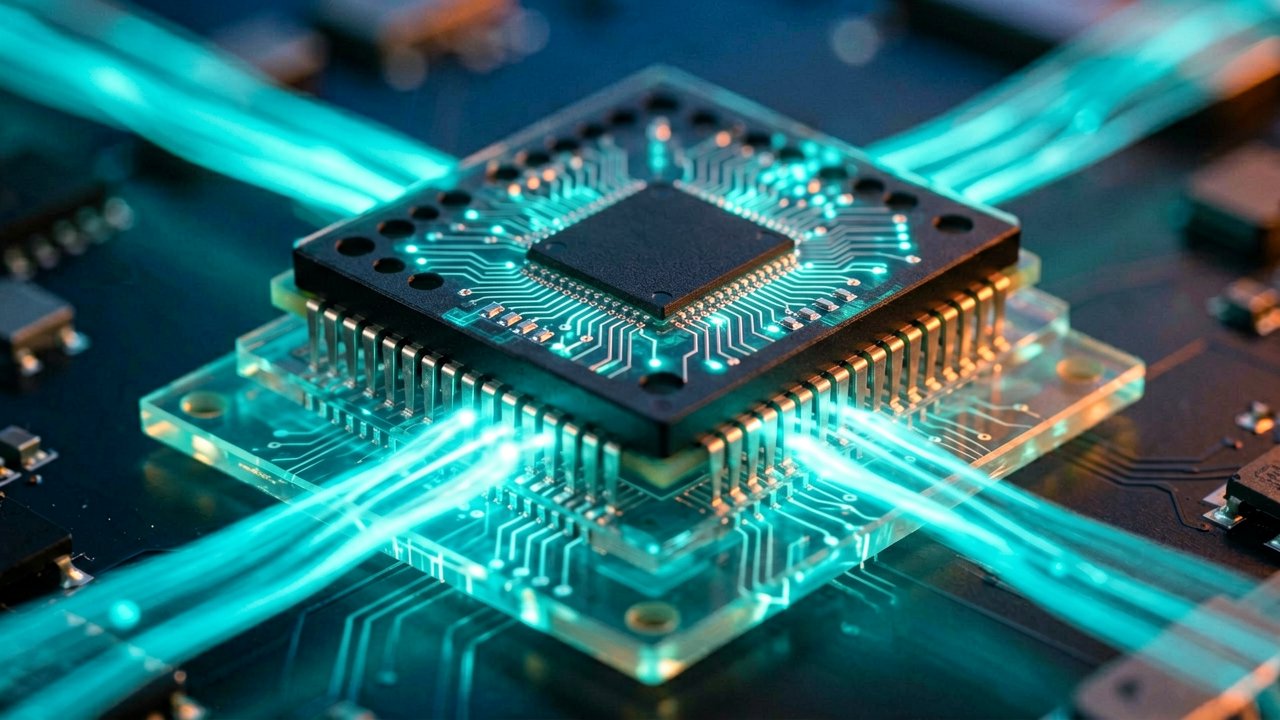
The South Korean technology giant Samsung Electronics announced its first quarter 2026 financial results on April 30, 2026, marking a dramatic turnaround from the semiconductor doldrums of the previous year. The company posted consolidated revenue of KRW 133.9 trillion, an all-time quarterly high representing a 43% quarter-on-quarter increase. Operating profit reached KRW 57.2 trillion, also a record, according to the official earnings release.
These numbers are not just incremental improvements. The operating profit alone exceeded Samsung's entire full-year 2025 profits of KRW 43.6 trillion. That's a single quarter outperforming a full fiscal year. The quarterly profit climbed more than 750% from a year earlier, driven almost entirely by the chip business.
The Device Solutions (DS) Division was the undisputed engine of this growth. It posted KRW 81.7 trillion in consolidated revenue and KRW 53.7 trillion in operating profit for the quarter. Those profits accounted for more than 90% of the company's total earnings. Chip sales reached 81.7 trillion Korean won, up 225% from last year. The Memory Business set an all-time high for quarterly revenue and operating profit, capitalizing on industry-wide memory price increases and technological leadership.
High-bandwidth memory, or HBM, has become the critical component in this equation. Samsung initiated the industry's first mass product sales of HBM4 and SOCAMM2 for NVIDIA's Vera Rubin platform. This is significant because HBM4 is the sixth generation of HBM technology and the most advanced version to date. It's expected to be the main AI memory chip used in NVIDIA's next-generation architecture designed for powerful AI workloads in data centers.
However, the HBM race remains competitive. Samsung has been racing to catch up to rival SK Hynix in the lucrative technology, announcing in February that it had started shipping its first HBM4 chips to unnamed customers. That's nearly a year after SK Hynix began delivering its first HBM4 samples. According to data from Counterpoint Research, SK Hynix continued to lead HBM with a 57% revenue market share in the final quarter of last year.
Ray Wang, analyst at SemiAnalysis, noted that Samsung has made improvements in HBM4 and the gap against SK Hynix is narrower versus previous generations. Yet we continue to see SK Hynix leading the HBM race versus its peers. The competition is fierce, and margins in this space are razor-thin for anyone not at the cutting edge.
The Foundry Business presents a more complicated picture. Earnings declined as a result of off-peak seasonality, but the division continued to maintain design wins focused on high-performance computing (HPC) and established a foundation in the silicon photonics business. Development of the 1.4nm node remains on track, with the Business also pursuing the expansion of large-scale 2nm customers. In H2 2026, the Foundry Business plans to start ramping up production of the second-generation 2nm process for mobile products, as well as the mass production of 4nm memory products and LPUs for AI and HPC customers.
The Device eXperience (DX) Division posted a QoQ sales increase of 19%, supported by the launch of new flagship smartphones. Despite higher cost pressures, the Division expanded the sales of high-value-added products across businesses to preserve profitability. The MX Business saw sales and profit increase as a result of its premium product mix, securing single-digit profitability via proactive cost optimization. In H2 2026, the MX Business plans to pursue comprehensive growth by solidifying flagship-led sales and upselling initiatives while staying ahead of evolving customer needs by strengthening the product development of foldables.
Samsung Display Corporation (SDC) posted KRW 6.7 trillion in consolidated revenue and KRW 0.4 trillion in operating profit for the first quarter. For the small and medium display business, SDC reported a decline in earnings due to seasonal effects and the impact of higher memory prices, while its large display business maintained stable sales on robust demand for OLED gaming monitors. In H2 2026, SDC expects continued market uncertainty and low visibility in small and medium displays, and it will pursue higher revenues via premium products with differentiated technology as well as 8.6G IT OLED mass production.
Looking ahead, the company expects server memory demand to remain strong into the second half of the year as hyperscalers continue to accommodate AI adoption and demand for agentic AI accelerates. The Memory Business anticipates demand to remain strong amid AI infrastructure expansion and is scheduled to deliver its first HBM4E samples to solidify technical leadership. The Business also aims to proactively capitalize on early demand for new GPUs and CPUs to be launched in the second half of 2026.
Independent reporting from CNBC corroborates the timeline and scope of the changes, noting that Samsung's shares jumped about 0.9% in Korea after the earnings release, bringing its year-to-date gains to around 90%. The earnings extend momentum from the final quarter of last year, when Samsung surpassed its prior record of 17.6 trillion won set in the third quarter of 2018.
The physical reality of this boom is visible in data centers worldwide. Memory chips that were once commoditized are now scarce, with manufacturers prioritizing production for higher-margin AI applications. Supply constraints have pushed up prices for memory used in consumer electronics. This is the kind of market shift that happens when infrastructure demand outpaces supply (a problem that has plagued users for years, frankly).
Whether this momentum sustains through the rest of 2026 remains the real question. The company has outlined ambitious plans for H2 2026, including ramping up production of second-generation 2nm processes and mass production of 4nm memory products. But the semiconductor industry is notoriously cyclical, and the AI infrastructure buildout may not maintain its current pace indefinitely. Samsung's ability to maintain its technological edge against SK Hynix and other competitors will determine whether this quarter's record becomes a new baseline or a peak.
Artūras Malašauskas is an AI Systems Integrator with 20+ years of production-grade web engineering experience. He has designed, shipped, and scaled enterprise Python/PHP systems for logistics, SaaS, and public-sector clients. For the past year, he has focused exclusively on AI integrations: deploying open-source LLMs, building generative media pipelines (image, audio, video), and engineering multi-agent workflows for real production environments. His standard: reproducibility, security, cost-efficient inference—no vaporware. He documents and evaluates emerging AI tooling, separating verified capabilities from marketing noise. Technical editor at: muza-ai.eu, ai-verslas.lt, ai-naujinos.lt Connect on LinkedIn
Comments