SenseTime Unveils SenseNova U1 Unified Multimodal AI Model

On April 28, 2026, SenseTime officially released and open-sourced its SenseNova U1 series, marking a significant architectural shift in multimodal AI development. The company's announcement details a model that unifies understanding, reasoning, and generation within a single framework rather than relying on stacked components.
According to SenseTime's official documentation, the model is built on the NEO-unify architecture introduced in March 2026. This design completely eliminates both the visual encoder (VE) and variational autoencoder (VAE) that have anchored nearly every modern multimodal model.
Instead of routing images through a separate perception stack and text through a language model, then bridging them with adapters, the system models language and visual information end-to-end as a unified compound. Pixel-to-word information is inherently and deeply correlated from the ground up.
The current open-source release introduces the lightweight SenseNova U1 Lite series, available in two configurations: SenseNova U1-8B-MoT built on a dense backbone, and SenseNova U1-A3B-MoT using a mixture-of-experts (MoE) backbone. Both are released under Apache 2.0, permitting commercial use and allowing weights to be pulled and self-hosted.
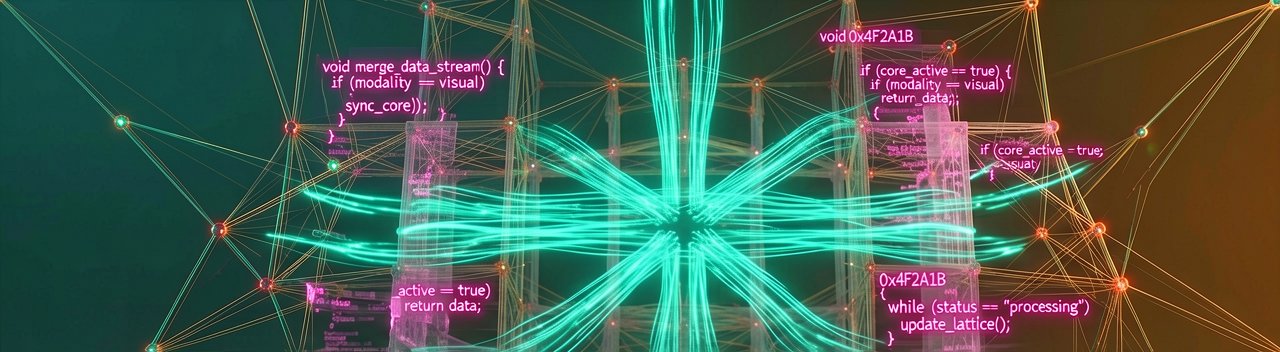
This architectural choice matters because conventional multimodal models typically adopt a compartmentalized design. Information must be transferred across separate components, incurring overhead and often compromising semantic or visual fidelity. To offset these structural limitations, such models generally require significantly more parameters, increasing complexity without fully addressing the underlying inefficiencies.
By fusing language and vision at a foundational level, the architecture significantly reduces information loss and enables efficient multimodal understanding and generation, even at a relatively compact model scale (which is exactly what developers have been waiting for, honestly).
Benchmark results highlight the performance characteristics of the SenseNova U1 Lite series. Across evaluations covering image understanding, image generation and editing, spatial intelligence, and visual reasoning, the models deliver leading results among open-source models of comparable scale.
With its compact 8B MoT configuration, SenseNova U1 Lite matches, and in certain cases exceeds, the performance of larger commercial closed-source models. In general image generation benchmarks, it achieves commercial-grade output quality comparable to Qwen-Image 2.0 Pro and Seedream 4.5, while delivering meaningful gains in inference speed.

In the more demanding area of complex infographic generation, a task that has historically posed challenges for open-source models, SenseNova U1 Lite attains commercial level performance. This demonstrates strong control over layout coherence and text rendering accuracy.
Building on the strengths of the NEO-Unify architecture, SenseNova U1 is the first model in the industry to achieve continuous image-text creative generation. Through native cross-modal understanding and generation, the model preserves fused visual and textual signals within contextual information, ensuring strong stylistic consistency.
Users can generate high-quality outputs within a single, one-shot model call, delivering significant efficiency gains compared with traditional multimodal approaches. The infographic and document generation capability closes a gap that previously required expensive closed-source pipelines.
The model targets PPT decks, structured posters, and data-heavy diagrams at roughly one-tenth of the cost of closed-source alternatives, while running fully open on infrastructure teams control directly. For B2B builders and visual content workflows operating at scale, the cost delta is the practical unlock.
Native interleaved generation allows U1 to produce coherent interleaved text and images in a single pass. Think practical guides, travel diaries, and educational walkthroughs that blend clear prose with generated visuals. Neither standard language models nor image generators can produce this kind of output in one continuous flow.
In domains such as logical reasoning and spatial intelligence, SenseNova U1 is able to understand complex layouts and fine-grained relationships in the physical world. This capability provides a critical foundation for future embodied AI systems, enabling robots to complete the full cycle of perception, reasoning, and precise task execution within a single model.
Such an end-to-end approach represents an important step in advancing both technological development and industrial deployment. The model could eventually act as an embodied brain for machines, where perception, reasoning, and action are handled within a single system.
Independent reporting from Panda Daily corroborates the technical specifications and release timeline. The outlet notes that SenseTime was once among the top AI players in China, but has recently faced increasing competition and external pressure.
With the launch of SenseNova U1, the company is clearly aiming to reclaim its position in the fast-moving AI landscape. The combination of open-source strategy, hardware adaptability, and unified model design could give SenseTime a unique edge as the industry shifts toward more integrated AI systems.
One of the key highlights of SenseNova U1 is its focus on speed. SenseTime claims the model can generate and interpret images significantly faster than competing models developed by US companies. This performance boost is especially important given the ongoing US restrictions that limit Chinese firms from accessing advanced AI hardware.
SenseTime has optimized the model to run efficiently on locally produced chips, which could make it more practical for deployment within China's tech ecosystem. By focusing on open-source development, the company is also aiming to build a broader developer community and accelerate innovation around its platform.
The SenseNova U1 Lite series is now fully open source and available for deployment and online use. Developers can access the models on Hugging Face, while a GitHub repository provides an extensive set of generation examples and prompt-engineering guides.
Online experience and access will be available soon via SenseTime's office AI assistant, "Office Raccoon." The company plans to continue advancing along this technical pathway, and will release larger-scale models capable of delivering world-class performance at significantly lower computational cost.
SenseTime reported 2025 revenue of RMB 5.01 billion, up 32.9% year-on-year, while continuing to narrow annual losses and invest in large-model infrastructure. The SenseNova model family launched in 2023 and has progressed through several generations, with SenseNova 6.5 in mid-2025 pushing toward early multimodal fusion at the encoder level.
Whether developers actually adopt this architecture over established alternatives remains the real question. The unified approach is elegant in theory, but the market will decide if it delivers enough practical value to justify the migration cost.
Artūras Malašauskas is an AI Systems Integrator with 20+ years of production-grade web engineering experience. He has designed, shipped, and scaled enterprise Python/PHP systems for logistics, SaaS, and public-sector clients. For the past year, he has focused exclusively on AI integrations: deploying open-source LLMs, building generative media pipelines (image, audio, video), and engineering multi-agent workflows for real production environments. His standard: reproducibility, security, cost-efficient inference—no vaporware. He documents and evaluates emerging AI tooling, separating verified capabilities from marketing noise. Technical editor at: muza-ai.eu, ai-verslas.lt, ai-naujinos.lt Connect on LinkedIn
Comments